I went to Mass and little remained apart from today’s gospel reading – the Beatitudes.
How happy are the poor, in spirit. Theirs is the kingdom of heaven.
(Matthew 5:1-12)
But what does ‘poor in spirit’ mean?
I went to Mass and little remained apart from today’s gospel reading – the Beatitudes.
How happy are the poor, in spirit. Theirs is the kingdom of heaven.
(Matthew 5:1-12)
But what does ‘poor in spirit’ mean?
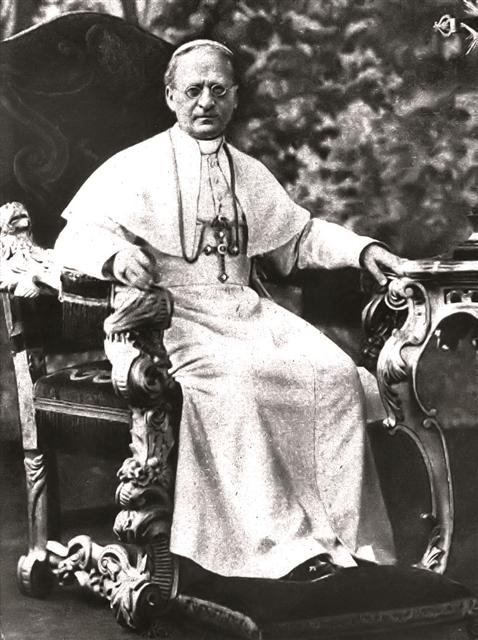
I was reading Martin Gilbert’s Kristallnacht over the weekend. The cruelty of it all made me weep. But I was struck by a comment of the then Pope Pius XI. He said that spiritually we are all Jews – “that we are all Semites.”
I feel that too: that we are everything to the Jewish race and that we should support them in their desire to create and protect their homeland. Spiritually, I am a Jew.
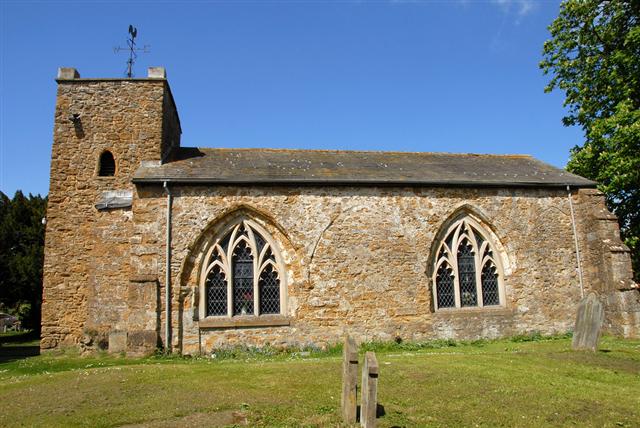
The Church at Stainton Le Vale was closed, so I had a look at the grave stones. By chance, the reading on one of them is the same as today’s reading – Saturday for the ninth week in ordinary time.
I have fought the good fight to the end. I have run the race to the finish. I have kept the faith. (Second letter of St. Paul to Timothy)
The people who put this on their gravestone were called Spalding. The writing was so much erased I could not make out their Christian names. They died in their sixties in 1876 and 1881.
Who were they? What race had they won and how? No one will ever know, but I’m sure they were good agricultural folk.
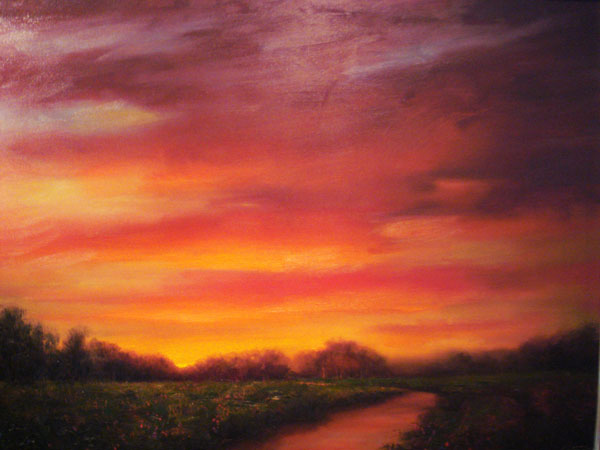
The countryside in the last weeks of May and first week in June is glorious.
Everything is glowing in lush abundance. The Lavender and Lilac are out yellow and purple and the grass grows even brighter green. This far North in Lincolnshire the evenings are wonderfully long. At a quarter to ten, everything was still daylight and the sky had become a glorious mottled pink. Within the brightest pink I saw a plane Soaring above me, carving a golden furrow through the sky.
Today’s psalm is 118:
The lovers of your law have great peace.
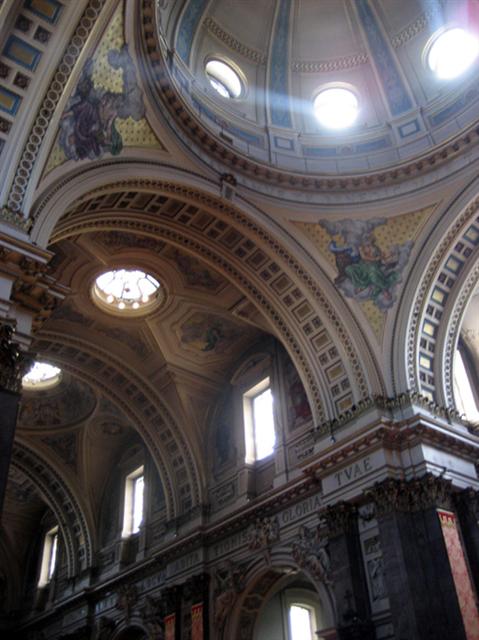
I went for the first time in a long time to the evening mass at the Brompton Oratory.
This mass is in Novus Ordo and is beautiful. Afterwards, there is a veneration of the Blessed Sacrament. A quiet hour can be passed in first meditating the gospel acclamation:
Your words are spirit, Lord
And they are life.
You have the message of eternal life.
I always find this gospel reading difficult to follow fully.
The Sadducees, who denied that there was a resurrection, put the question to Jesus as to what may happen to the widow of seven brothers after the resurrection. Whose wife would she then be? (Mark 12:18 – 27)
Jesus’ answer is plain enough.
For when they arise from the dead, men and women do not marry. No, they are like the angels in heaven.
But what, if there is an afterlife, is it like? It is impossible to conceive and to reconcile all these conundrums. Will we know who we were in heaven?
Will we meet who we knew? Will we know them?
Probably all these questions just beget doubts and it is best to just live life for the present. The next life can take care of itself.
The reading today from the Second Letter of St. Peter struck me as particularly beautiful and apposite:
May you have more and more grace and peace as you come to know our Lord more and more. By his divine power, he has given us all the things that we need for life and for true devotion, bringing us to know God himself, who has called us by his own glory and goodness. In making these gifts, he has given us the guarantee of something very great and wonderful to come: through them you will be able to share the divine nature and to escape corruption in a world that is sunk in vice. But to attain this, you will have to do your utmost yourselves, adding goodness to the faith that you have, to your goodness understanding, to your understanding self-control, to your self-control patience, to your patience true devotion, to your devotion kindness towards your fellow men and women, and to this kindness, love. 2 Peter 1:2-7
It is true that if we make the effort to honour God, more peace can come to us – but that is the difficult part for me, if not impossible.
But to attain this, you will have to do your utmost yourselves, adding goodness to the faith that you have, to your goodness understanding, to your understanding self-control, to your self-control patience, to your patience true devotion, to your devotion kindness towards your fellow men and women, and to this kindness, love.
This is where we all fall down.
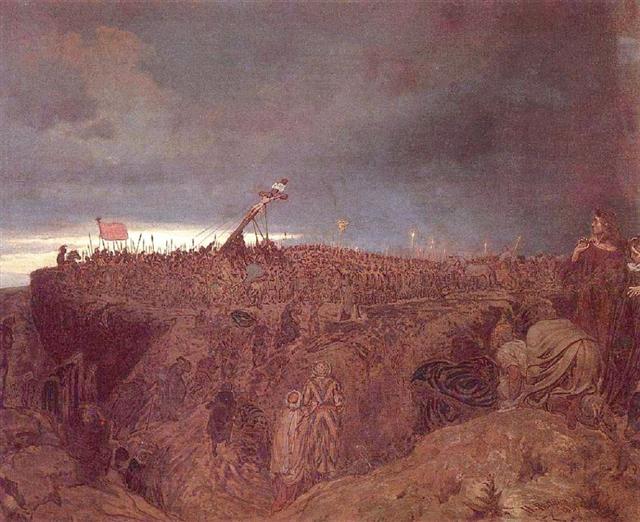
I was trying to sleep without much success and I concentrated on the final tragic mystery of the Rosary – the death and crucifixion of Jesus.
It is only when we visualise this and put ourselves in the scene that the mystery strikes us. It is an extraordinarily comforting thought that our religion is based on the concept of a God prepared to die for us. But was he God?
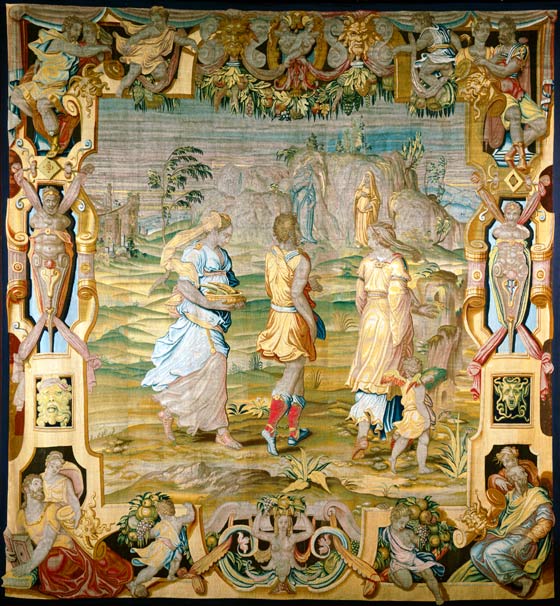
Tucked away in an upper gallery of the V&A is a tapestry. You can see it peeping above a stairway from the entrance hall, but from a distance it looks dull. It is the story of the Life of Man by Giorgio Vasari 1511–74. The tapestry shows man midway in the pilgrimage of life, climbing the mountain of salvation accompanied by two female figures – Faith and Innocence – and a winged child representing divine love.
It is from the Palazzo Vecchio in Florence. It is only up close that it comes alive and only when given the explanation can one make sense of it. With a glance from afar, it is just another faded tapestry, but in reality it is a moving all allegory of life formed by many thousands of delicate threads. Not one in a hundred passing through the busy entrance hall give it a second look, but if you sit and ponder it for some time it comes alive. Such is life.
A line from the Mass readings stuck in my mind.
If you are a speaker, speak in words which seem to come from God. (1st Letter of St. Peter 4:7-13)
Alas! How very seldom have I ever done that!
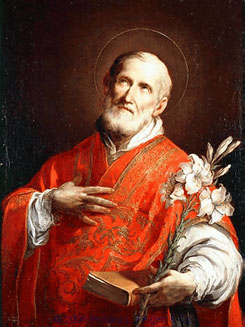
By chance, I went to mass today at the Brompton Oratory and found it was the feast day of St. Philip Neri (b. 1515). A man of exceptional charm and a child of the Renaissance, he spent hours in the streets of Rome talking to young people. He is the founder of the Oratory.
As I sat and prayed there, I looked at a large picture of him in the sanctuary preaching in Rome. I had never noticed it before. In this time of uncertainty it struck me that the root of happiness was in doing what ever the Holy Spirit requires. We do not know where it will lead us and can only accept what happens to us. Others are often a better judge than oneself.
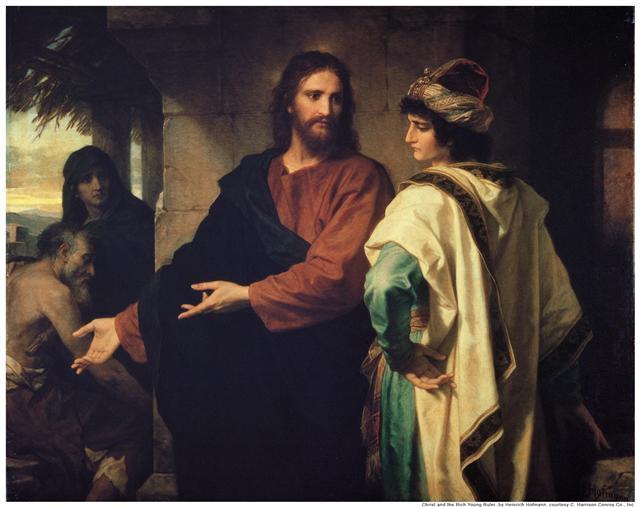
After the excitement of Easter, we are back to ordinary time and green vestments. This can be viewed as ‘boring time’ or as a time of growing. The gospel of today always strikes me as pointing to our greatest problem. The young man in the story has done everything right, but one thing he cannot do.
Jesus looking upon him loved him, and said to him, “You lack one thing; go, sell what you have, and give to the poor, and you will have treasure in heaven; and come, follow me.” At that saying his countenance fell, and he went away sorrowful; for he had great possessions. (Mark 10 17–27)
So we too go away sad and do things in a small, un-heroic way.
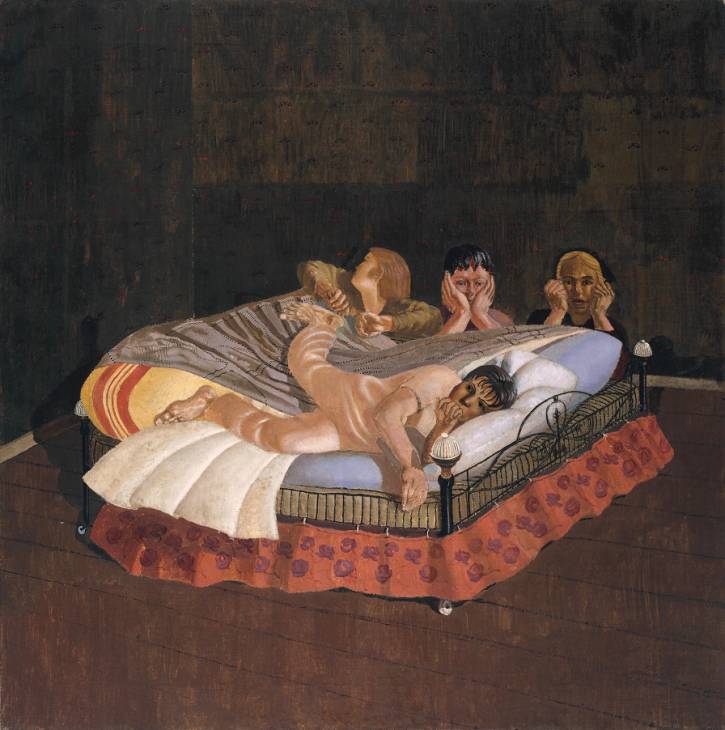
Much of the Tate Modern is designed to shock or at least impress. Much of it is self obsessed or even vulgar. But in one of the galleries you will find this picture by Stanley Spencer.
It is a modern view of the healing of the Centurion’s servant from St. Luke’s Gospel. In the mute features of the participants the women praying and the man ill on a large bed is a powerful evocation of faith in prayer.
I wish I could say that the Gospel reading on the breath of life made the most impression on me today (and this is a most wonderful feast day). I always wonder what languages the disciples went out to speak. Presumably it was Greek and Latin as well as Aramaic.
But what struck me most today was that upon leaving our cottage at lunchtime, the children had been playing on the swing. As we left it was still gently swinging. Very soon it would stop and our memory of it gone – an allegory of our passing influence on events.
We went to a most wonderful event: the seventieth wedding anniversary of Ray and Dora Hart at Holy Rood Church, Market Rasen. Seventieth wedding anniversaries must be exceedingly rare.
I can’t imagine more than a handful take place each year in the county if not the country. I have calculated that if ever I were to achieve such an amazing goal, I would have to be married for another 45 years and live to 104 — tough challanges for anyone. The priest said that in forty years of priesthood, he had never presided over a seventieth wedding anniversary.
Marriage is the very cornerstone of society. Ray and Dora may have lived ordinary lives, but they are an extraordinary testament to faithfulness and a virtuous society. They were married in May 1940 — a few days after Winston Churchill became Prime Minister.
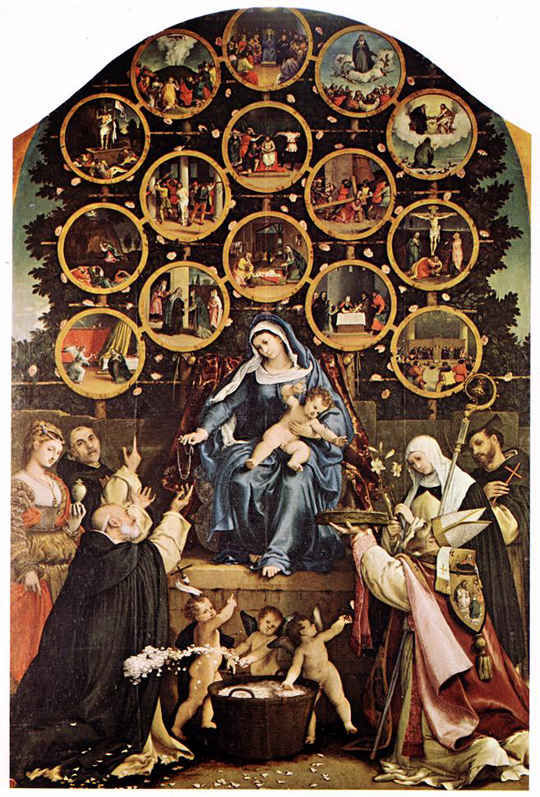
I was trying with difficulty to sleep so I attempted John Paul II’s decade of light in the Rosary on the life of Christ. I could remember the order to some extent:
-The Baptism of Christ
-The wedding feast at Cana
-The Transfiguration
-The Institution of the Eucharist
But what was the fifth mystery? I decided to contemplate the raising of Lazarus.
A picture came to mind in Downside Abbey found in the guidebook, ‘optimistically’ attributed to Bossano, of the raising of Lazarus, but the face in this picture of Christ is so tranquil and beautiful it always stays with me. The legs akimbo of the dead Lazarus are like the legs of a dead friend I once witnessed. Here was hope for the future of life after death.

I was dreaming that I had to climb a mountain to see. I’m not sure who we were. We found an easy way up by going inside the mountain and pushing against a series of doors to make progress. When we emerged on the other side of the mountain there was an easy road and a bicycle to take me where I wanted. The dream seemed to be a very good metaphor for trust in faith.
While I was with them, I protected them in your name that* you have given me. I guarded them, and not one of them was lost.
(John 17:11-19)
I was having trouble sleeping, so I started saying my rosary. It was calming, but I noticed that by the time I got to the second sorrowful mystery, I was falling asleep. I should have been meditating on the agony of the garden, but I was asleep, just as the desciples were.
But life to me is not a thing to waste words on, provided that when I finish my race I have carried out the mission the Lord Jesus gave me – and that was to bear witness to the Good News of God’s grace.
(Acts of the Apostles 20:17-27)
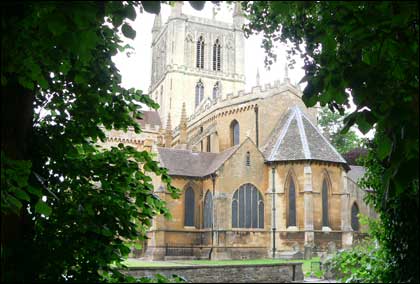
We went down to Downside for the day. It is always a pleasant break from London, especially in warm early Summer Sunshine. I found these good words in the parish mass book there:
God be in my head and my understanding
God be in my eyes and my seeing
God be in my mouth and my speaking
God be in my heart and my charity.
These words stuck in my mind from the gospel.
Thus it is written, that the Christ should suffer and on the third day rise from the dead, and that repentance and forgiveness of sins should be proclaimed in his name to all nations, beginning from Jerusalem.
(Luke 24:46-53)
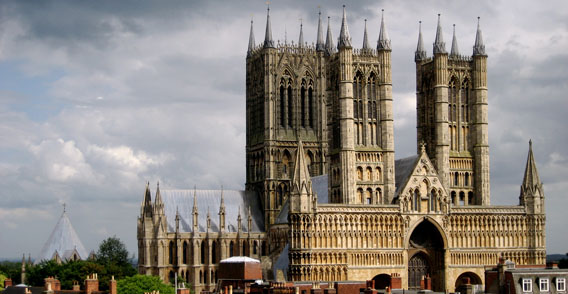
I read from three of my favourite novels in the Chapter House of Lincoln Cathedral: J.R.R Tolkien – ‘The Return of the King,’ Hardy, ‘Tess of the D’Urbervilles’ and AJ Cronin, ‘The Keys to the Kingdom.’
There is a particularly moving passage at the end of the latter work, when the aged protagonist, Fr. Francis Chisholm, an aged and largely unsuccessful (although much loved), Catholic missionary, is told by his friend Mr. Chia that he wishes to convert. It is moving because although seemingly a failure, he has, in the most important aspects of life, been a success.
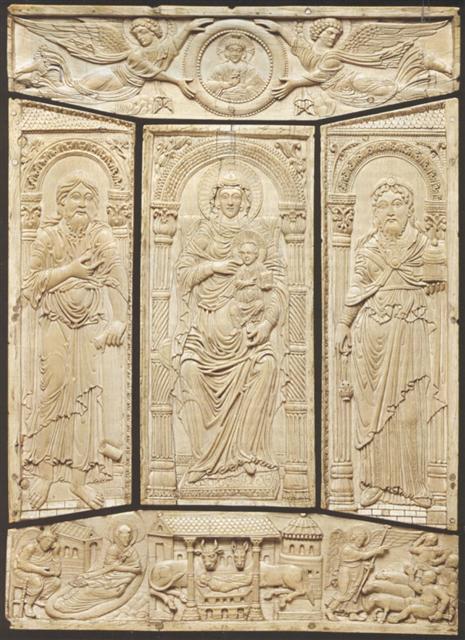
In the first room of the Renaissance gallaries of the V&A are the inlaid, bound covers of the Lorsch Bible. It is extraordinary to gaze at the intricate workmanship of this Dark Age artefact from the Court of Charlemagne. Now, over a millenium later, the beautiful workmanship is curiously evocative of a vanished spiritual age.
The first of three birthdays in May of my children. It was nice to get out of the house and be with the family. A day with the family is never wasted, unlike many in the office.
A little while, and ye shall not see me: and again, a little while, and ye shall see me, because I go to the Father.
(John 16:16–20)
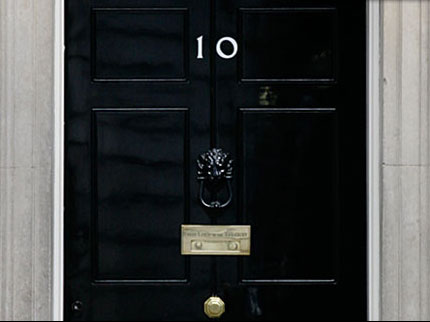
Great excitement – the first day of a new government! I went to a quiet mass and thought on the gospel.
I have yet many things to say unto you, but you cannot bear them now.
(John 16:12-15)
We have been asked to sign up to a coalition and have a referendum which will change a centuries old voting system. I cannot, in all this excitement, concentrate on a word of the Mass.
Not one of you has asked where I am going
(John 16:5-11)
It strikes me that we all too rarely ask where Jesus went and where we are.
Days come when nothing feels right and Man makes little difference.
I do not feel troubled, but rather uncertain. Having caught a chill on the railway platform yesterday, nothing could warm me up — even in the Gospel words which passed me by:
I have told you this so that your faith might not be shaken.
Only one phrase from the gospel sticks in my mind.
Peace I bequeath to you, a peace the world cannot give. This is my gift to you. Do not let your hearts be troubled or afraid.
(John 19:23-24)
In the afternoon, I went to a moving ceremony on the platform of a very quiet Market Rason Station. No trains come on Sunday. Worse luck. The service was in memory of an RAF Valiant bomber which crashed nearby in May 1964, killing the entire crew. It’s good that so many years later we remember just one training accident.