Author Archives: admin

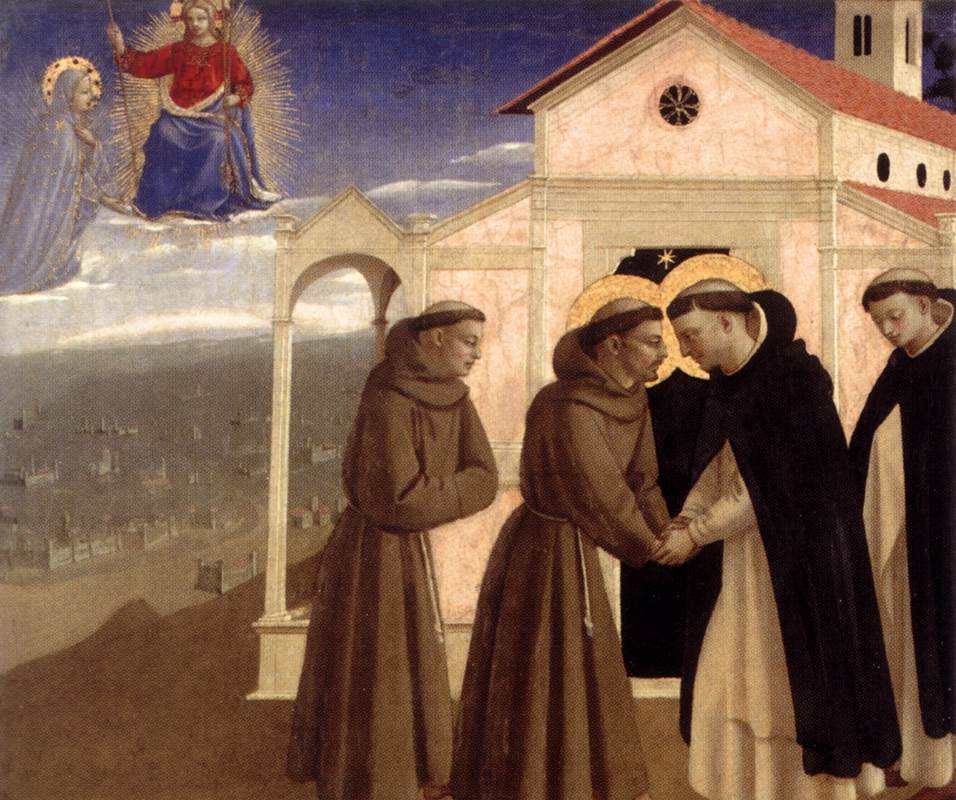
St Francis of Assisi

The Mass is packed in the small chapel in the Cathedral. The priest asks us to, I think, “vivre un reve”, to live a dream, our dreams, in a dream! I am sure all due appropriate to St Francis.

Later on the boat, the sun sets in a glorious autumn brightness.

The whole sea is spottled golden. The sky, thin fillets of it were redder than I have ever seen before.

A Pilgrimage to St Odile

We went on a pilgrimage to the Monastery of St Odile in the Vosges – well a sort of pilgrimage, a friend said it was a beautiful place to visit and the photo of the buildings on a high rock looked nice. So we went. I expected another dead, half-ruined monastery.

Instead we found a vibrant pilgrim place. I realised that as soon as we arrived and saw the plaque of John Paul’s visit in 1988.

High on its celtic stones lies the Monastery of St Odile. Great boulders and huge views over the Plaine d’Alsace stretch out to infinity.

Bands of horizontal mist lie in every fold of every valley retreating into a grey insubstantial distance.

The basilica is open. We arrive and by chance a Mass starts. Here in this place we think of a celtic princess, blind from birth, rejected by her father, hidden, and somehow cured.

Down the hills is the “Source”. Here St Odile tapped the rock and cured a leper. Here we put the cooling water on our eyes and hope for her cure too.

We leave reluctantly, driving through the vineyard villages, picture postcard in their country Germanic beauty, vines even growing over the road: a great arcade.

But we remember St Odile on her high rock.

The Lord gave, the Lord has taken back

SUNDAY

I was in the Cathedral listening to today’s Gospel, the story of the rich man and Lazarus. Of course the demanding part of the story is that the rich man actually did nothing wrong. He did not abuse or maltreat the poor man. He just ignored him or perhaps was not even aware of him. We are told not to give money to beggars. They will spend it on drink. I was careful to give money to the next person begging!

MONDAY

Today’s reading is the familiar one from the book of Job.

What would be our reaction to these terrible disasters? Dumb shock, misery, and despair, I suspect; certainly not Job’s words.

“The Lord gave, the Lord has taken back. Blessed be the name of the Lord.”

This after he has heard the terrifying news of the loss of all his property and those dearest to him.

TUESDAY

St Therese of the Child Jesus

I was in Strasbourg Cathedral and as usual the priest gave a most beautiful mass and sermon.

Just six exercise books of notes was all Therese left at her death age 24 after a wholly uneventful life, but what glory followed and how simple is her concept of spirituality: a love of little things.

WEDNESDAY

I nearly couldn’t get up for the 7.30 Mass at the Nunciature but it is always worth going. Not least because the downstairs room is so small and intimate.

They are going to add a sixth panel to the saints of Europe in their small stained glass window in their basement chapel: dedicated to St John Paul II.

Twenty-Fifth Week in Ordinary Time

SUNDAY

Another long train journey, this time quieter, and then Mass in the Cathedral.

MONDAY

Feast of St Padre Pio

I went to Mass in the Abbey. What did Padre Pio have? He died a few days after the fiftieth anniversary of his stigmata. Were they real? Did he imagine them and they appeared? What sort of man was he?

It was a glorious September day and we walked to Pentire Point.

We saw what you rarely see in England: the sun at 7.18 dipped right into the sea, no haze. Before doing so the sea became a brilliant speckled gold.

TUESDAY

This was a glorious September day of mist and sun and cloud.

“Like flowing water is the heart of the King in the hand of the Lord. Who turns it where he pleases.”

The water surges indeed where it pleases, crowing out the rocks round Polzeath but in Daymer Bay it is quiet. So quiet the water creeps up to the hills almost by stealth. Walking back from Rock there was not a moment to lose. We hitch up trousers and wade round the rocks and into safety.

WEDNESDAY

A long walk from Padstow round the point to Trevone Head and back to Padstow. Some rain and the sea calm way below. The tide so low in Padstow Bay that one can see the water rippling over the “Doom Bar”, the sandbank that has wrecked so many sailing ships desperately seeking shelter in a storm.

The 25th September it is our 29th wedding anniversary, a shelter in a storm.

“Two things I beg of you. Do not grudge me them before I die. Keep falsehood and lies from me. Give me neither poverty nor riches.” (Proverbs)

THURSDAY

“Southward goes the wind, then turns to the north: it turns and turns again, back to its circling goes the wind.” (Ecclesiastes 1:2)

For a time upon the coastal path I was alone. No one visible as the path wound its way to the summit, below only the sea, the waves gentle swelling before a crashing view, the sun appearing and disappearing, the wind coming and turning.

FRIDAY

I was reading one of my son’s school books – a simple introduction to Christianity. It said something like, “We believe that Christ rose from the dead, it follows that we too can rise from the dead if He did.”

So simply put, but it struck a chord and a belief stirred. If I now believe that Christ rose from the dead, then it follows that, after all, amazing there might be life after death.

SATURDAY

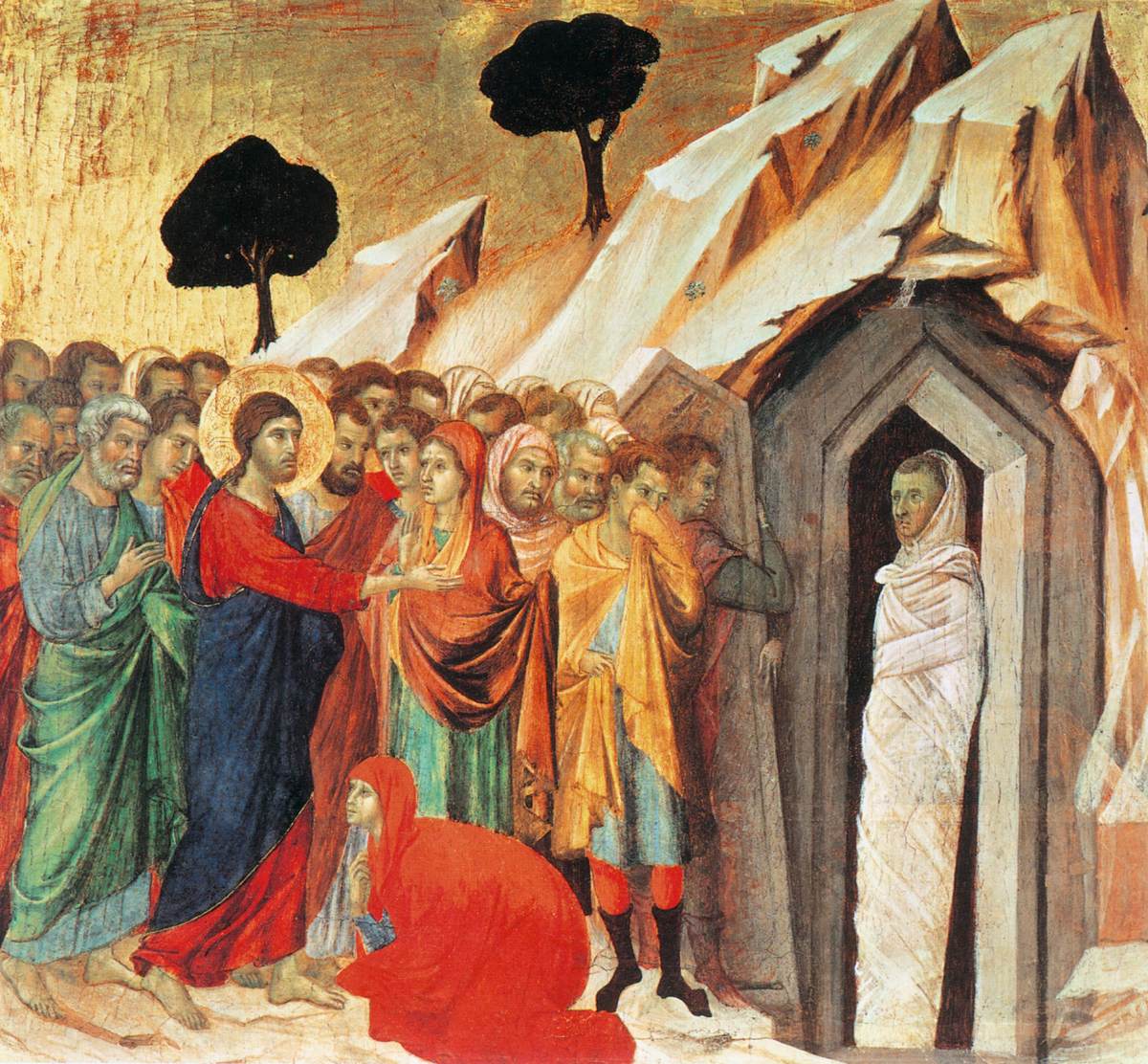
As usual, or as often happens, I was saying the Rosary in the middle of the night. I came to the Mysteries of Light and the raising of Lazarus. I saw in my mind’s eye the picture of the scene in the Abbey and now in my mind’s eye I saw an enfolding light spreading into the darkness…

“I am a man under authority myself”

MONDAY

Mass in the Cathedral. It is the story of the centurion who will not put Jesus to any trouble. Such certainty is unsettling.

“I am a man under authority myself.”

“I say to one man go, and he goes.”

TUESDAY

I was walking in the hills above Walesby and looked back over the valley. Of course the view is magnificent.

You look down the line of the side of the wolds, the hills gently sloping into the great plain stretching away to the Lincoln edge, twenty miles away.

But what was remarkable about this day was that there was not a breath of wind. The trees were not moving. Looking down on this scene was like looking down on one of those large model train sets. Little brown homes and toy-like trees, so still as if they were made of plastic. No one was moving in this utterly still tableau. It was a scene redolent of the instant of time.

WEDNESDAY

“We played the pipes for you. And you wouldn’t dance. We sang dirges, and you wouldn’t cry.” (Luke 7:31)

What does this mean exactly and how does it inspire the well-known modern hymn? Or rather what do its words mean?

THURSDAY

To an Away Day in Oxfordshire. Lots of colleagues telling us how we’re printing surveys and putting up billboards advertising themselves.

I remember as a young MP doing the same and then we helped someone without telling anyone and an old man in the village, he noticed what you did. Before we just thought you were just a pushy chap, now maybe we see there’s more to you. So now I just do my duty, help people when they ask for help.

FRIDAY

A long train journey to Edinburgh. I don’t mind the cramped feeling; it’s the constant talking. Why do we not have more desire for silence?

“Turn your ear to me: hear my words.” Ps 16

SATURDAY

The wedding was by the side of a loch in the Trossachs. A slight early autumn joy, the heather still the same colour, no wind, the water on the loch as still as glass, the hills capped by white mist.

Sunday to Sunday

SUNDAY

I was asked to do the reading in our local church at Hainton.

St Paul asks a Philemon to look after Onesimus, clearly a slave. He describes him “not as a slave any more but something much better than a slave: a dear brother.”

MONDAY

Psalm 8: Domine, dominus noster / O Lord, our God

I am working through the Psalms in our local Anglican church. Reading, sitting alone in the empty church, looking at the Latin. They are extraordinarily compelling.

TUESDAY

I go to the Knights of Malta Mass in St James, Spanish Place. This was one of the embassy churches. It is since rebuilt, but beautiful. One has in this place and with this mass, largely in Latin, a sense of continuity.

Continuity is an aspect sorely missed.

WEDNESDAY

I was invited and nearly didn’t go because I was so tired to the Copt celebration in St Margaret’s, Westminster. I’m glad I went. They had kept a seat for me, and they need supporting.

It’s a strange atmosphere: Orthodox, but with an Arabic rather than a Russian tinge. The singing and cymbals strangely rhythmic. Did St Mark really found them? Does it matter? They certainly found monasticism, the hermetic and cenobatic kind.

Through two thousand years of persecution, even into this present week of burning churches, they have kept the Faith.

THURSDAY

The great passage from Luke 6:27-38 so majestic in its poetry, ending with the final daunting challenge: “the amount you measure out is the amount you will be given back,” something we never heed, know but do not act upon, understand but ignore, accept grudgingly, give a little hope for more.

FRIDAY

We travel to Walsingham for the OMV pilgrimage. A long drive but grateful to arrive. The priest quotes Newman. What was it? The thought sits elusive at the back of my mind.

It is in dying, in making mistakes, we learn. No it is that “in changing, we become perfect.” Or something like that. We constantly have to change, but we don’t wan’t to, so do we reject perfection? Of course we do: it is too demanding.

Later I sat in the Anglican Shrine, alone, late at night. It closes late: more churches should close late. It is at nighttime, in quiet, that thought comes easier. In the Anglican Shrine is a replica of the Little House of Nazareth. It may be a replica but in its attention to what might have been it has power.

I realise that it is irrelevant if religion is true. Because for me it has the power to make me happy. Atheists may scoff at it being a kind of opiate for the brain but it is not chemically induced. It is induced by the rationality of thought and search.

SUNDAY

We have our final mass at Walsingham. With all the other groups it cannot have the power of the other two, but the magic of the place persists on the journey back. It is in this place where eternity is nearer, closer than elsewhere.

Going through the Psalms

MONDAY

In our small country church I have been very slowly going through the Psalms in the Anglican Prayer Book. I like the way each psalm in our King James version is headed by the Latin, a meditation in itself.

Thus Psalm 1:

Beatus vir, qui non abit / Blessed be the man that hath not walked in the counsel of the ungodly.

I can imagine Oliver Cromwell reading that. We know he had a pretty dim view of the Parliament of his time, even those on his side: witness Pride’s Purge. I wonder what he would have thought of today’s Parliament.

TUESDAY

Talking of the seventeenth century, my son found on Google a biography of an Edward Leigh. A Civil War Parliamentary officer, he sat in Parliament and was ejected by Cromwell in Pride’s Purge. Edward Leigh wanted a constitutional settlement with the King. A noted biblical scholar, he was very interested in religious writing. He did quote a lot of it himself. After being thrown out of Parliament he retired into private life and lived quietly well into the Restoration period.

WEDNESDAY

Perhaps the seventeenth century Edward Leigh would have sat in his quiet country parish church and looked at Psalm 2 as I am doing now.

Quare fremuerunt gentes / Why do the heathens so furiously rage together

THURSDAY

There was a little debate in Parliament on the birth of Prince George. I took the opportunity to speak on the limits to reason. Why is it that the Monarchy which is so irrational is so popular whilst so many modern-day politicians are so rational believing in modernity and equality in all things yet distrusted.

Perhaps the appeal of religion is its very irrationality.

FRIDAY

Back in our church looking at Psalm 3 now.

Domine quid multiplicati / Lord how are they increased that trouble me

SATURDAY

I went for a long walk down the edge of the Wolds from Sixhills into the darkening valley and up again. The harvest is still busy but coming to an end, the distant sound of great machines churning, splitting, and grinding the goodness out of the soil. Summer giving way to an earlying autumn twilight, the last of the sun glinting dully off the stones of the old priory. What must they have seen.

Belief

An important day for me. I was awake once again thinking that, deep down, I didn’t really believe in the after life. And then I reflected on what I did believe.

After thirty years of trying, I do believe in the historical Christ. I do believe He lived. I do believe He did die on the Cross. I do believe that after His death He rose and walked the earth and talked to people.

Suddenly I realised, almost reluctantly, that I do have faith. If I don’t yet have belief in my own survival after death, perhaps it is a lack of self-confidence or worth. I do believe we are individuals, not just part of a running stream.

More and more my heart is opening out to the belief that where Christ went we can follow. Because I only believe in Him. I believe Him. I believe His promises and His promises are explicit. Where or why in our huge universe He arrived here I do not know, but why should it be so extraordinary that God loves us?

An Anniversary

I went down to the Abbey to celebrate the Abbot’s 25th anniversary of his priesthood. A restrained and thoughtful service, only the gentle chants, no glorification.

I found out that the Abbot is just one day younger than me: born on 21 July 1950. I said to him I might not be able to make his 50th anniversary. He said he hoped we might if we were the same age. But death does not worry him. It is only a culmination of his life.

Resurrection

I went to see my boat. It is in a bad way. Up in dry land, the mast down, the paint badly eroded by age. This little boat is the best part of forty years old.

But Naomi will rise again. It will be rigged and re-painted. I cannot let this little ship die. Boats unlike cars are remarkably capable of resurrection. That is their charm.

The Big Vote

The day of the big vote on Iraq – sorry, Freudian slip: Syria. I spoke eventually, put my view across. I wanted to vote against, but the PM appealed to me personally, said it would weaken the government, so I relented and abstained.

I am proud to have voted against the Iraq War. I would and said I would have voted against any real war this time. The important thing is that enough of us stood firm. It won’t happen. Peace has been given a chance, but at what price?

The Hounds of War

I was back in the silent local medieval church, looking at Psalm 5: “Ponder my words, O Lord. Consider my meditation.”

This is what we hope for. That we are listened to. We want it. We half believe it.

And now into this rural silence are beginning to break the sounds of the hounds of war in far away Syria. Hatred and violence are edging outward.

O God of Righteousness

A quiet day in the country. It is so very quiet here and in the warmth if you sit outside all day you can start to listen to the silence, the gentle sound of the breeze, birds, even insects and watch a bee bumbling for a minute at a hive.

By the evening, sunlight was streaming through atree where thousands of midges danced. I tried to watch the flight of one: impossible for more than a few seconds. They were endlessly moving but never going anywhere, like us.

In the morning I went to the church and looked up Psalm 4: “Hear when I call O God of my righteousness.” What does it mean? Is the psalm talking of one’s own righteousness or others? Is God listening?

To Him are we just a cloud of midges dancing in the evening sun?

Living for God

Sunday was the last day in our parish of a visiting priest, Father Francis. If anyone doubts the value of a holy life, a celibate life, devoted to God, look at a man like this. He told us it was 58 years to the day since he had left home to become a friar. He is 75.

So many people at 75 live fundamentally selfish lives. Here is a 75-year-old travelling the country giving weekday masses to 5 or 6 people. His sermons were brilliant.

This Sunday he preached to the value of entering by the narrow gate. Fundamentally the message is always the same and nothing new. What pleasure can be got and given just looking after five people. For more than those given by people with great positions.

Come, Holy Spirit

Why are we full of resentment at our lot? However happy, we always want more. I would have loved to have had a chance to do more in government. It has not happened.

I mentioned this to a priest: he gave me good advice. The Holy Spirit, least regarded of the Trinity, is the fire, the pilot light of perseverance that keeps going. Keep plodding on, said the priest. Ask the Holy Spirit for help.

Start every day with this prayer: “Come Holy Spirit, be my best friend. Fill my heart and enkindle it with the fire of your love.”

And at the end of the day say: “Holy Spirit, how did we get on?”

Naomi

I was dreaming. I was in a London bus: my father called to me from the valley. He was there, clear as daylight in every detail. I was busy, a job to do, I stayed in the bus. The bus was empty. So too was the flat I let myself into.

Why is it in dreams that we live in what is correct, not in the present? In my dream my father was alive. I could see him anytime. But of course in reality I have not seen him for twenty years. He has been dead for twenty years.

If I had been aware of this in my dream I would have rushed over, eager for his news. But in dreams or my dreams we are only allowed to speak to live people. Perhaps it is because our inner consciousness has no experience of death, so imagination cannot pass over.

The reading today is about Naomi who goes to live in Moab. My little boat is named Naomi. I did not give her this name. I always wonder why she got the name. Anyway, Naomi returns and so has my little craft so far every time.

Jephthah

The tale of Jephthah (Judges 11:29-39) is tragic. He makes a vow to sacrifice the first person to emerge from his tent if he defeats the Ammonites and it turns out to be his daughter, his only child.

Is he to be commended for holding true to his vow? Yes, but he was prepared to be unthinkingly ruthless with someone else’s child.

This is the way of those with power I find, and their decisions seldom rebound on them. Asquith losing his son Raymond in the First World War is a rare exception.

Who wants to be King?

The reading today from the Book of Judges 9:6-15 is most interesting and pertinent. Ambimelek it seems a rather nasty man has killed loads of people including his brothers to become King of Israel. The dream of his brother Joatham brings him down to earth.

The trees debate amongst themselves who should be king. The olive tree, the fig tree and the vine all decline the offer. Why should they want to be the tallest in the forest when they can produce the delights of oil, wine, and fruit? Only the useless thorn tree takes up the offer.

What does this tell us? We strive for position, for kingship in many forms, but we ignore what we already have and give and what by position we could lose. Let the thorns be happy in their positions.

Gideon

Gideon starts weak as a second generation Israelite who never knew Moses yet only becomes strong with God’s help.

The Gospel today about the rich man having no more chance of reaching Heaven as a camel threading a needle is not so much an attack on wealth but on dependence.

Those who are rich or powerful rely too much on themselves. True happiness can only come with a sense of dependence on the ultimate, wherever that may be.

Speculation on Wealth

What does the refusal of the young man to give up his wealth say to us? Here he was being offered a position as the thirteenth disciple. He had obeyed all the commands of the law. Yet he walked away, sadly.

I realise that because too I am not prepared to give up everything I too walk away sadly. Yet is it not the will, the lack of interest in ambition or home enough? To wear the essentials of some small property lightly disregarded but necessary like washing teeth.

We all walk away, sadly because there is one thing we will not give up. Is it, for me, still ambition?

But all this is idle speculation. Look upon the clouds swirling around the full moon. That is the reality of the instant.

Choices and Strife

The Gospel is particularly demanding today and our sermon drummed it home. Christianity is not easy. The choices can lead to strife in the home. But do entirely free choices lead to any less strife?

Before I went to bed I looked at the full moon in the clear Lincolnshire sky, the craters on the northern rim close enough to be touched. The Lord of the Rings had just finished on the television, the music as the credits rolled inspiring. The garden and the valley entirely, magically clear in the full moonlight. Magical.

Towards the light

I went for a walk up the hill, beyond the lake. It was deep twilight, almost dark, a tinge of a lighter sky in the far west. Here in the Lincolnshire wolds, all was quiet. There were sheep high upon the hill and I sat down on the cool grass beside them.

In the far distance upon the horizon, a bright light remained. Something quite prosaic no doubt, a barn door open, even a harsh security light, but here in this comfortable gloom it held a hint of hope.

Thus in an empty country, long ago, a vague questioning wind the only sound, most shepherds have sat long ago and seen a light and wondered what did it portend and, curiosity aroused, they walked towards it.

I for my part walked slowly back into the dark valley to the yellow light of my cottage.

The Assumption of the Blessed Virgin

We had to drive back to London for A-level results. So it was a long haul, ploughing up the motorway for twelve hours at 110 kmh, hardly stopping.

I looked longingly at the distant churches flashing by in the French countryside. Perhaps there was a nice mass going on there, but maybe not.

We ploughed on.

Mount Nebo

In today’s reading, Moses looks down on the Promised Land from Mount Nebo. In the past, I imagine him standing on a little hill looking over a green and pleasant land, beyond a good sized river.

Yet when one stands on Mount Nebo, the view in reality is intensely forbidding. There is no green: just a vast view of burning desert. One looks down from a great height over the Dead Sea and the Jordan is only a distant trickle. The mountains, white, yellow, bakingly hot and dry, rise out of the heat, haze before you.

But the vision of Moses is all the more profound for this. His imagination must have stared beyond what befell his eyes in to the future when his people would make a garden beyond this desert.

St Jane Frances de Chantal

I went to mass in the local Augustinian hostel. A delightful small mass, very simple and, in its way, spiritual. The chapel is a modern one; the clear windows looking out over the Mont Blanc range.

This week is the feast day of St Jean Frances de Chantal (1572-1641), a mother of six children. When her husband died, she became a disciple of St Francis de Sales and founded the Order of the Visitation.

Strange to be sitting here in places where she must have walked and ridden, looking at the same countryside that she and Francis looked upon.

In today’s Gospel, we are told “Unless you change and become little children you will never enter the kingdom of Heaven” (Matthew 18). But what does that mean? A charming thought at first. It’s true that little children are spontaneous but they can also be, well, shall we say very difficult and self-absorbed too. But it is an honest self-absorption, a living in the present, an absence of regret for the past or ambition for the future.