Category Archives: General

Osgodby

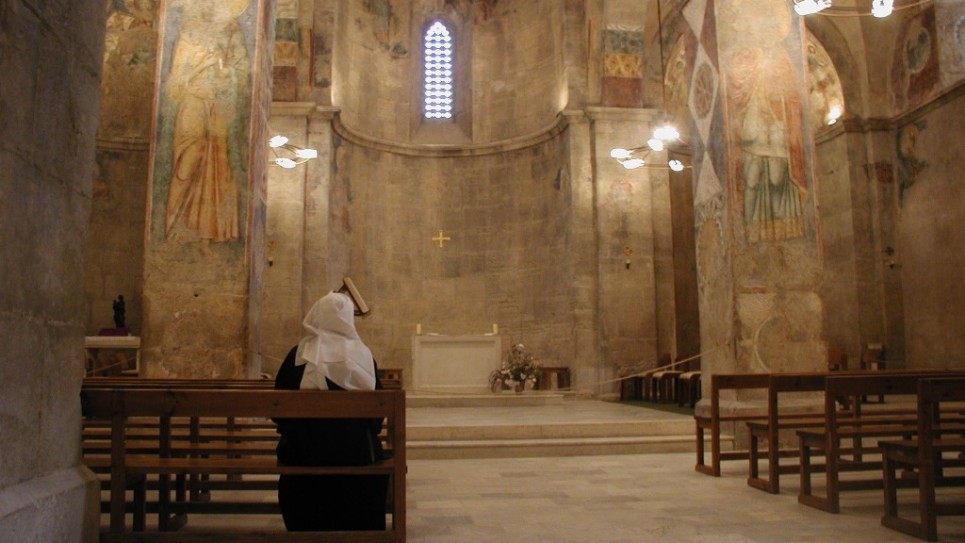
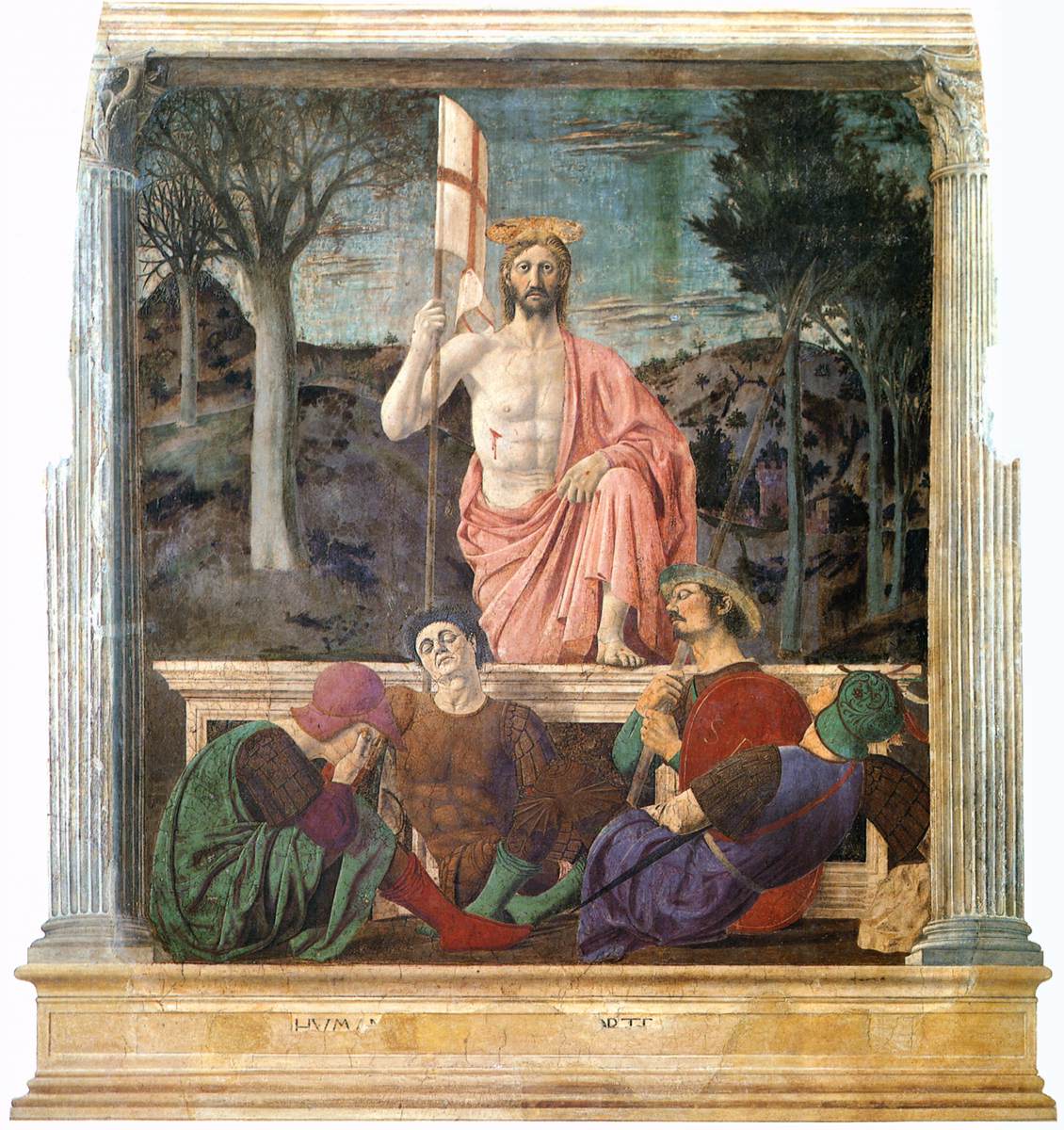
On Sunday, the last in Lent, we went to Mass at the small upstairs chapel at Osgodby, built in 1793. I was reading a passage in the parish newssheet from our resident local hermit, Rachel Denton. Something she wrote struck me. That religion is not something that you do but what it does to you, how it changes you. It changes you. It can but doesn’t have to be active. Later that night, I was half dreaming that I needed to do something, perhaps write this every day, then almost like a sharp pain, I knew that I didn’t, that the parish newssheet was right. What mattered is not what you do but what happens to you.

In the reading of the last week of Lent for Monday, Jesus goes to have supper with Lazarus. He just happens to have raised him from the dead but the Jews, fearing the commotion, resolve to kill Lazarus as well as Jesus. I have always wondered about this. What happens to him? Is he bumped off soon? Isn’t that rather sad that his second time on earth is so short? Isn’t it all rather unfair? The ups and downs of life.

Tuesday had started well. A cheque arrived from the taxman for a thousand pounds – a rebate. And then on the way to Mass in the evening my accountant texted me to say, mistake, tear up the cheque, I owe them £5,000. I was depressed, the Mass was already over but the Rosary was going on. As I stared up at the image of the Virgin Mary, I thought “Oh well, what does it matter”. I probably owe them the money anyway, if they waste it, and there are more important things like my daughter’s successful small operation that day!

“Better teach the people something good for the future than resign oneself to work institutions already in existence.” – John Bright

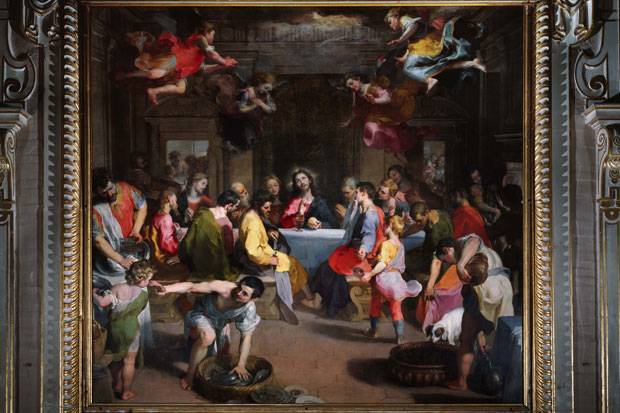
Wednesday is really for me the last day of Lent because tomorrow we leave for the Abbey and Easter triduum. The last reading tells us of Jesus instructing his disciples to arrange the Passover supper in “so-and-so’s house”. I have always wondered who is “so-and-so”. He’s obviously missed out on an opportunity to be world-famous. But of course So-and-So is not named because he is all of us. Jesus is coming to have supper with us and tomorrow we will start our journey with him. Let’s have a lovely Easter.

Old Canvas and Holy Blood

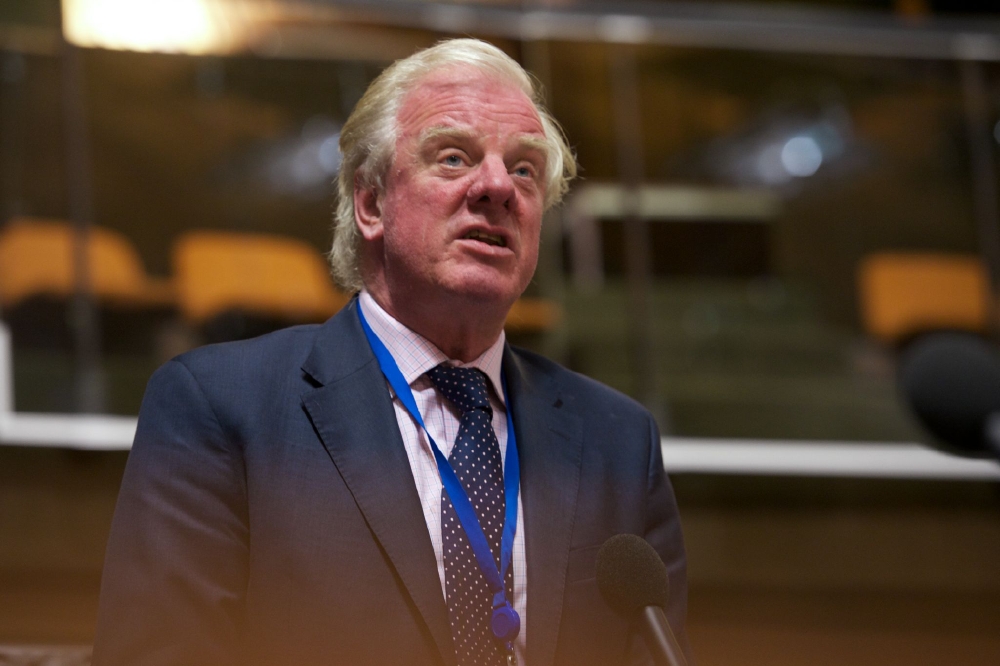
On Wednesday we had a memorial Mass for David Atkinson. I did not know him well or what he did as an MP except that he seemed often away on Council of Europe business but it seems as if he was a bit of a hero. He constantly put himself out and sometimes in danger to help democracies in the East and persecuted Christians.

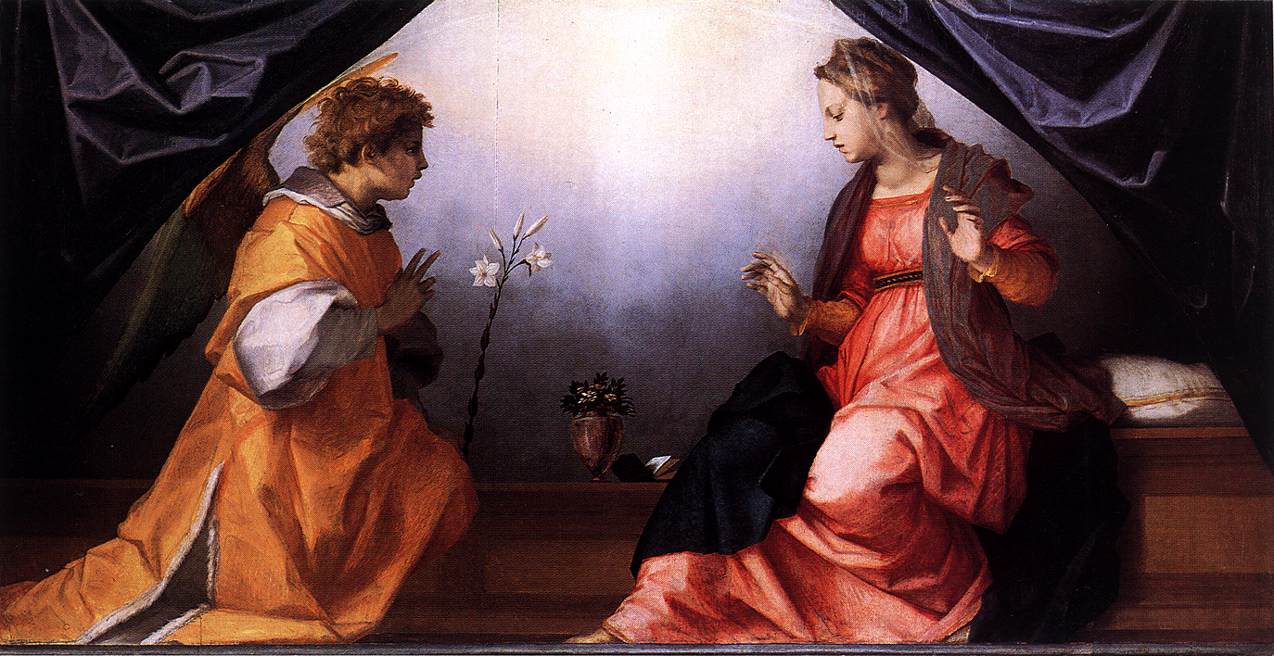
On Saturday I was searching around for an old canvas to paint on and found the outline of an Annunciation – the figures so poorly drawn that the only way to make the picture bearable was to smudge it heavily and make all the outlines hazy. But I suppose that is what faith, or my faith, is like: if the details are too sharply drawn, they don’t make sense.

The reading on Sunday was about a grain of wheat having to die so it can produce wheat. That was happening to my picture: by the time the picture was nearing completion on Monday, in all its naivete, it was the feast of the Annunciation but isn’t Annunciation about acceptance?

On Tuesday before our debate on assisted dying that I spoke in, we went to Micky Mosley’s funeral. A brilliant man, with private wealth, he could have done anything. He chose to look after others. I think we won the debate on euthanasia. Ultimately, true worth cannot be measured by humans.

On Friday I went by chance into the Basilica of the Holy Blood in Bruges when the exposition was taking place. We were asked to approach the relic, pray, and leave money. I couldn’t get as spiritually involved as I would like. But even if a DNA test proved that the ‘blood’ came from the tenth century, that’s still centuries of devotion. I was however suddenly inextricably moved by Simon Marmion’s Mater Dolorosa and the Man of Sorrows, a powerful ‘primitive’ Dutch masterpiece.

On Saturday, I came across a truly inspiring part of the biography of John Bright by Bill Cash. Bright is offered but refuses high office in the Palmerston government. Not primarily because he disagrees with Palmerston, even despises him, not just because he is disinterested in the frippery of office, but because he thinks it much more important to help educate the people about ideas for freedom than just make existing institutions work better.

But then I thought surely it was different then, those were heroic days. Bright was fighting for free trade and the secret ballot, but I realised too that the people are enslaved today, too. They are taxed, their money forcibly taken at an infinitely higher rate than in Bright’s day. They have to go (unless they are very fortunate) to state schools where a politician decides what is taught, who teaches, who can come to school, where they are prevented from using the money they have to give to the state towards truly independent education. A bureaucrat decides what drug you can be given irrespective of a lifetime paid in taxes to the health service. A prime minister can decide to re-define everybody’s marriage. We really are not free, there is freedom’s work to be done!

As I was walking around Palace Green in Durham that evening, to the backdrop of the great Norman cathedral, I thought that it was an open-air version of the darkened abbey church at night where the spirit could soar and be closer to God.

Existence and Being

As always in the monastery the atmosphere takes hold slowly, only with some chance repetition of words does it begin to take hold, but I found something in Thomas Merton’s book Elected Silence that made a great impression on me. As a young man by chance he reads about medieval philosophy and in particular the notion of Aseitas. Aseitas (aseity) simply means the power of a being to exist absolutely in virtue of itself, require no cause, no other justification for its existence except that its very nature is to exist. There can be only one such being: that is God. And to say that God exists a se, of and by reason of Himself, is merely to say that God is Being itself. “Ego sum qui sum.”

Like the young Thomas Merton this explanation immediately made a big impression on me. I have always been troubled by the existence of God because I have seen Him as, like us, doing things, as a kind of prime mover. As I went to sleep I now had a view of him in my mind’s eye as being at the centre of all things but unmoving complete, not making or unmaking, caused by nothing, fulfilled in itself by its own existence. With no more a beginning or an end than the concept that 2 and 2 equals 4. I began to see, however vaguely, that when everything else in the universe moves and is moved, there must be something at its heart that never moves, just is.

On Monday morning, sitting in the quiet of the monastery, I read:

“When God says that He is being, if what He says is to have any intelligible meaning to our minds, it can only mean this: that He is the pure act of existing. Pure act: therefore excluding all imperfection in the order of existing.”

“Beyond all sensual images and all conceptual determinations God affirms Himself as the absolute act of being in its pure actuality. … Being is being,”

It seemed almost suddenly that years of my mental buffeting around the notion of God were mere illusions. Merton quotes St Paul: “The letter killeth, but the spirit gives life.” My mind was still fumbling, still confused but a step seemed to have been made.

On Monday I was dreaming gently on this theme that God is just actuality, complete in Himself or Itself. In my dream, I saw God as a kind of crusty rock, vast, immovable, but then in my dream something seemed missing. I realised it was love. God was not just a Rock of Ages nor a mathematical formula from physics nor a philosophical concept. God was love. But a certainty remained at the source of the message there must be something unchanging.

In Tuesday’s reading, the lame man asks Jesus to cure him, because every time he tries to go into the pool by Bethsaida.

“Sir, I have no one to put me into the pool. For when the water is disturbed and I am going down, another goes down before me.”

My faith is like that: the water is disturbed for an instant, I believe, and then before I can immerse myself I am too late.

The Third Week in Lent

On Sunday I listened to the Provincial of the Jesuit order in England give one of the finest sermons I have heard. The reading was about Jesus flinging the money changers out of the Temple. But we were asked to visualise the different courtyards of the Temple. The outer, open to gentiles, and many changes, and the inner courtyards ending with the Holy of Holies. We have in Lent to look at these inner courtyards of our soul. What is it that is going wrong, that is selfish? What is keeping us from God?

In Monday’s reading, Jesus reminds us that a prophet is never listened to in “his own country”. That night I was thinking on this and in a half doze had my “wall” dream to follow on from the “room dream”. I stopped for a moment and looked hard at an old wall, only a small part of it, at the delicate colouring of the brickwork, the loose bits, the clumps of growth, and stayed for some time in front of that wall. I have no idea if God exists or if we really exist as entities or are we just part of everything, but in reality the wall does not exist.

Therefore whether or not God exists, this is a pointless ‘rational’ argument. For us, in our minds, He exists. The passage in this week’s psalms that stayed with me was the ninety-fourth – in particular these words: “O that today you would listen to his voice! Harden not your hearts as at Meribah, as on that day at Massah in the desert.”

It seems to me that the worst thing we can be guilty of is indifference. If we feel depressed, start grumbling like those Israelites who grumbled at Moses at their fate, that is the worst outcome. Never despair.

On Thursday the reading of the Gospel dealt with the two people who come into the Temple: the tax collector who beats his chest and the satisfied one who thinks he is virtuous. Which one are we? I fell at the first step because I am still not blessed with faith absolute in its certainty. And do we love other people as ourselves? No, but we can start to love them as individuals, if not yet as groups or impersonal objects.

I was thinking of this on Friday when meeting people and on Saturday visiting a college. Everyone, individually you meet has a worth, an interest, but I am still a longer way from even aiming at the first two steps: loving God with all my heart and loving my neighbour as myself. Perhaps the soothing balm of the water of the Samarian well on Wednesday is the only hope. This is surely a potent image. The water from the physical well that sustains our thirst for a time, the water from the spiritual well that is everlasting.

On Saturday evening there was a programme about the novelist William Golding. One thing he said struck me as true: there is a division between the spiritual and material self but neither ever goes away. In Lord of the Flies he investigates the power of evil in all of us, lurking below the conventions of society but perhaps also there is another way at looking at it – the power of good is in all of us.

Turning Our Gaze Outward

The Chief Rabbi, Lord Sacks

The second week of Lent

I was talking to a priest in confession and as usual admitting my lack of progress with selfishness. Of course we cannot give up selfishness for Lent like we can give up chocolate. It is the very essence of our being. But he reminded me of the words of the Chief Rabbi that in pursuing religion thought we move away from selfishness. Here was a particularly powerful phrase. I turned it over and over in my mind during the night. And then next morning I had forgotten it entirely and try as I might for days it eluded me.

On Wednesday I was talking to a friend. He gave me some useful advice that we can give nothing to God. Obviously He needs nothing from us, whether he exists or not, but all we can do is to offer up our selfishness in trying to help others. Easier said than done.

On Thursday something I had to do the next day was irritating me. Then I listened to the story of Lazarus and Abraham. This always has a disturbing effect on me. Because the point is that the rich man was not a bad man. He did not do anything wrong. He just did not see Lazarus. I often feel I am like that.

And then on Friday, reading through an article by the Chief Rabbi, wading through it at last at the very end, almost giving up, I found the phrase: Faith is the redemption of solitude. The Chief Rabbi writes “I once described faith as the redemption of solitude. It sanctifies relationships, builds communities, and turns our gaze outward from self to other, giving emotional resonance to altruism and energising the better angels of our nature.”

As the second week in Lent came to an end on Saturday I dreamt that I had to take some important business colleagues to a vital meeting. But, as in dreams, I continued on wandering off on my own into a room and spending hours waiting and wasting time. I call it my “room” dream. Instead of getting on with the essence of things we waste time on superfluities and ourselves. In the dream, as a result of this time wasting, the business project goes disastrously wrong.

The Mikhailovsky Palace

In the Michael Palace of St Petersburg there is an extraordinary collection of Russian historical painting. Perhaps through a nation’s art you can get closer to the soul of the nation than in any other way.

I know that “Holy Russia” is only part of Russia and was for seventy years undermined by the state but it is re-emerging and it may be a good thing that it is.

The fragile conundrum of silence, hypnosis, and faith

The first week in Lent

I had a dream in which I was talking to my father. When we try and remember dead people they are indistinct. But when we dream about them it is as if they are really present – they are as if alive.

Why is this? Is it because by some trick of the brain, we can delve deep inside, where perfect memory resides? Is it because there is, in fact, no place of perfect recall, but the brain tricks us or is it because the dead person is actively still alive to us? In this fragile conundrum of silence, hypnosis, and faith lies the essence of the religious question. We can only pray.

On Tuesday, the Gospel reading asks us to pray and gives us the Lord’s Prayer. On Wednesday at early Mass I listened to the story of Jonah and his efforts to avoid his fate as we all do. On Thursday, as night was falling, I was in Red Square in Moscow at the end of a tiring day of travel on an electoral monitoring mission. At one end of the square fairground music was booming out for dancers on an ice rink. At the other end, softer chants were coming out of St Basil’s Cathedral.

I went in and immediately was overwhelmed by the total immersion of Orthodoxy in sight, smell, and sound. The interior was dark, lit by candles, packed; chanting alternating with readings. Rationality is not needed here. Russians in their art seem much more conscious of their history intertwining it with religious themes. A typical example is Repin’s The Raising of Jairus’ Daughter – there is some stamp of a nineteenth-century concept of Holy Russia.

On Sunday I called into a brand new Orthodox church on a bleak housing estate. It was packed, and the singing as spirited as any cathedral, indeed there is a vibrancy lacking in museum-like cathedrals like the Cathedral on the Spilled Blood. This profound faith is difficult to understand.

Giving up anger

At Mass on Sunday the priest asked us I wonder if they are thinking to themselves. I wonder if he is going to mention that it is three days to Lent and he did. In previous years Lent has hung over me like a pall; because of the grim thought of giving up something really difficult like alcohol. This year I have resolved to give up anger and dissatisfaction and jealousy, an even more impossible task, but Gabriel one can only try. One trick is to recognise the symptoms in a line of thought and then before or at the moment that the anger bubbles up, quickly say five Hail Marys.

On Tuesday, a friend was telling me that his father told him when he went into his first job “Remember this: whenever you go into a room, no one is better or worse than you.” This seems a pretty good philosophy in life.

I was thinking of this on Ash Wednesday. If I can go to the Cathedral for the imposition of ashes and to listen to Allegri’s Miserere. As the last notes are sung from the galleries high above the nave, the haunting alto seems to pierce the soul with a kind of despair mixed with hope.

On the first Thursday of Lent, Jesus in Matthew 7:7-12 puts it forcibly:

“The one who searches always finds; the one who knocks will always have the door opened to him.”

But I have been searching for years and the door still remains ajar.

I have even today, Friday, started to read the Koran. It is difficult to read and understand. The Arabic may be a prose masterpiece but it is lost in translation.

“Every soul shall taste of death: and ye shall only receive your recompenses on the day of resurrection. And who so shall scape the fire, and be brought into Paradise, shall be happy. And the life of this world is but a cheating fruition!” (Sura 3, the Koran)

Jesus tells us this Friday in Matthew 5:20-26:

“If your virtue goes no deeper than that of the scribes and Pharisees, you will never get into the Kingdom of Heaven.”

Perhaps that is where my own virtue is at present. On this first Saturday in Lent, Jesus tells us:

“I say this to you: love your enemies and pray for those who persecute you.” (Matthew 5:43-48)

I am reading a history of Jerusalem at the moment. It is a pity that the treaty between Richard I and Saladin didn’t last. It basically guaranteed freedom for pilgrims to visit Jerusalem, whether Muslim or Christian. If it had included Jews it would have been perfect.

“Of the enemy of God thou hast spoken to them in gentle terms. Hadst thou been severe and harsh-hearted, they would have broken away from thee. Therefore forgive and ask for pardon for them, and consult them in the affair of war, and when thou art resolved, then put thou thy trust in God, for God loveth those who trust in Him.” (Sura 3, the Koran)

On Anger

Dear Gabriel,

I hope you found these writings useful. I was thinking of putting them into a theme for each week. This week I was thinking on anger.

One organisation is so wasteful and so counter-productive that it always makes me angry just thinking of it. I can be walking down the street and the thought of it can first make me angry enough to cause a rush of blood to the head.

How do we cope with anger? I have been thinking on it all week. Then next day on Wednesday I read those words in Mass from the first letter to St James 19-27:

“Remember this: my dear brothers be quick to listen but slow to speak and slow to rouse your temper. God’s righteousness is never served by man’s anger.”

But the problem of anger remains. Not so much anger with other people but with oneself. I had to do a long journey back and forth later in the week. And I was angry two or three times in the day. I was even angry that I couldn’t get any lunch on time – what a silly thing to be angry about.

I think, Gabriel, that one way is to see the issue, the habitual angry issue and veer away from it. Another way is to immediately pray for the person you’re angry with. If you really dislike something, or someone, try saying ten Hail Marys for them. It’s like wading through glue.

On Saturday it was not anger that was the problem but faith. Perhaps because until there is complete faith, there will always be residual anger. And that won’t happen until the day we die, when faith will be consummated or not. We don’t know. Can only hope.

I was at Mass on Saturday and the priest went in for a long explanation of the reading of the Transfiguration. Suddenly I knew with certainty that I did not have his certainty. All this faith of Moses and Elijah left me cold. An angry rationality was rising up.

But later in the Mass, at the Consecration, a great shaft of early winter light pressed down from a high window meeting the clouds of incense rising before it. Then the opposite of a cold reasoning was before me: a happiness in the mystery of the thing.

Perhaps on a cold mountain top long ago, the Apostles were wrapped up in the mystery of a thing during the Transfiguration.

Later still on Sunday I was lying awake wondering whether to continue writing this thing and depressed at lack of any power or even influence perhaps. I decided to pray the Rosary, the bit I like best, the Joyful Mysteries.

When I finished and went to sleep I thought that I would continue but in a different way, perhaps exploring a theme, and I thought too that power is not that important, being true to one’s beliefs and having a voice is.

The Child Jesus in the Temple

I was trying once again to get to sleep by praying the Rosary. As happens, my mind wandered off and I was worried about one of my children not agreeing to do something I wanted them to do.

I realised then that, without knowing, I had come to the precise place in the Joyful Mysteries when Jesus’ parents search for him in the Temple and they cannot find him. He replies tartly that he must be about his father’s – i.e. not their – business. I have always found it a rather less pleasing part of the mysteries, but strange and revealing that I should come across it at that moment.

I went to a memorial service for a friend today and what was most appealing was the grandchildren and children telling about their grandmother when they had been rebellious teenagers and how their grandmother had understood.

Are we persecuted or aren’t we?

The newspapers are full of legal attacks on Christians. It is true that Christianity is under attack particularly in the Middle East but I can’t believe that a few laws will make much difference here.

The danger here is just indifference and a kind of lazy rationality that dismisses the Christian story as legend and myth. People aren’t going to cease to be Christians because a silly law prevents prayers being said before council meetings. It’s when the councillors get home and don’t want to say a prayer in the privacy of their minds that Christianity will start to die.

Christ’s Trial

I was trying to get to sleep by saying the Rosary and I came to Christ’s Passion. I was struck as I have not been struck before by his curious interests. So vigorous before so active; at the moment of supreme trial, he says virtually nothing and when he does so, it is along the lines of “If you say so, so be it”.

No doubt this is obvious to others but previously I have focussed on the events, on the pain and horror, but in all this whirlpool I now realise there is a calm acceptance after the Garden and this Gabriel is I suppose the point of all this. Even for those who search and who do not yet completely believe this acceptance of fate and suffering and inevitable death that comes to all of us, the supreme moral of the story. If it was in a work of Tolstoy it would be immortal on its own, but because it is suffused with mystery it is extraordinarily powerful, whatever one’s beliefs.

The self-absorption of our interests

There was a debate on in the House of Commons. There were perhaps a dozen or so attending at any one time. It’s strange how self-absorbed we are. 100,000 dead perhaps in the last year but once this year when we were discussing Murdoch, the House was absolutely packed, seething with anger, interest, and excitement. I had to shout to make myself heard – indeed, drew attention to it.

Nothing changes. Apparently when in the 1930s, they were discussing the future shape of the government of India and that led to hundreds of thousands dying, the House was almost completely empty: just Churchill and a few “die-hards” and one or two enthusiasts on the other side.

Hockney

I went with my daughter to see the David Hockney exhibition at the Royal Academy. It does you good to see so many pictures so recently and so quickly done of so many scenes so close at hand to north Lincolnshire in East Yorkshire. He has done his own interpretation of Claude Lorrain’s ‘The Sermon on the Mount’.

Whilst it is inconceivable that I could ever paint anything approaching Claude’s genius, it is somehow possible to have a stab at Hockney-like trees. Of course, Gabriel, one’s own mediocrity is not galling, it is just a fact. … Little steps.

We only went to see Hockney because it was a few steps from a conference on Somalia at Chatham House. Strange transition, from the horrors of Somalia to the peaceful Yorkshire wolds.

Lip Service

“The people honour me with lip service.” (Mark 7:1-13)

We use this phrase – paying someone with lip service – too often but although we do it I’m not sure we always realise the significance.

A routine miracle

In today’s reading from Mark 6:53-56, Jesus goes about his normal daily work at Genezareth. It is routine for him. All our lives are routine, his was just doing a couple of miracles every day!

Freedom and Evil

The thought occurred to me that for evil to really triumph, it is not just necessary for it to happen, but freedom be curtailed in an attempt to stop it happening.

Death and Life

I was alone after compline in the abbey church and lit a candle in front of the statue of Jesus. As I walked by I looked down the steps into the crypt and felt frightened, as if Death was down there. But the picture nearby of the Raising of Lazarus gave me the reassurance that death is not passing by, one can pass by death.

For mine eyes have seen the salvation…

But the reading from the day before lingers, one of the most intense in the Gospels. What is its appeal – it is a sort of final acceptance, a laying down of the burden which will come to all of us.

“Now Master, you can let your servant go in peace, just as you promised, because my eyes have seen the salvation, which you have prepared before all the nations, a light to enlighten the Gentiles, and the glory of thy people Israel.” (Luke 2:29-32)

The Feast of the Presentation

A most striking reading today is from Malachi 3:1-4:

“He is like the refiner’s fire and the fuller’s herb.”

It is not a concept, an early industrial process that we understand very well today, but it is an intense image.

Faith like a child

I was talking to a friend and we were reading together a passage of spiritual literature. What struck me was the author’s faith in being childlike in faith. That it was only by some kind of childlike surrender of will and reason that one could find acceptance and therefore faith.

Faith Moves Mountains

I was dreaming again. Now in my mind’s eye I saw a golden statue ahead of me. I somehow knew that this statue was all of us and we only need to have confidence, to have faith in ourselves, then we can do anything.

Jealous of the Non-existant

I had a dream about this politician that doesn’t exist. I know he doesn’t exist because his name was meaningless. But I still resented his success.

What does this tell me? That we will always be jealous of others even if they don’t exist.

Chewing it over

I am still thinking of yesterday’s reading.

“Master, do you not care? We are going down.” (Mark 4:35-41)

How can we develop this element of insouciance?

Why are you so frightened?

When out sailing alone I have often been frightened by waves that were really not that difficult. Perhaps I should have remembered today’s reading more.

“Why are you so frightened? How is it that you have no faith?” (Mark 4:35-41)