Category Archives: General

Out and on

One last push to Tours.

After Châtellerault we motored and cycled together up to Tours. At Saint Catherine de Fineduis there is a most beautiful, perfectly constructed fifteenth-century church, here in 1429. St Jeanne d’Arc stayed for a night on the way to demand of Charles, Dauphin of France an army to expel the English. Here in front of the statue of St Catherine, she knelt and heard three masses.

The statue of St Catherine was preserved during the Revolution by a resourceful maire who stopped it being burned and many years later it emerged from the earth unharmed.

How wonderful to kneel in the same place as Jeanne d’Arc, nearly six-hundred years before. Here one feels the power of history.

We sat in a shelter having our bread. I heard tinkling above my head and it was St Jacques shells strung around the roof.

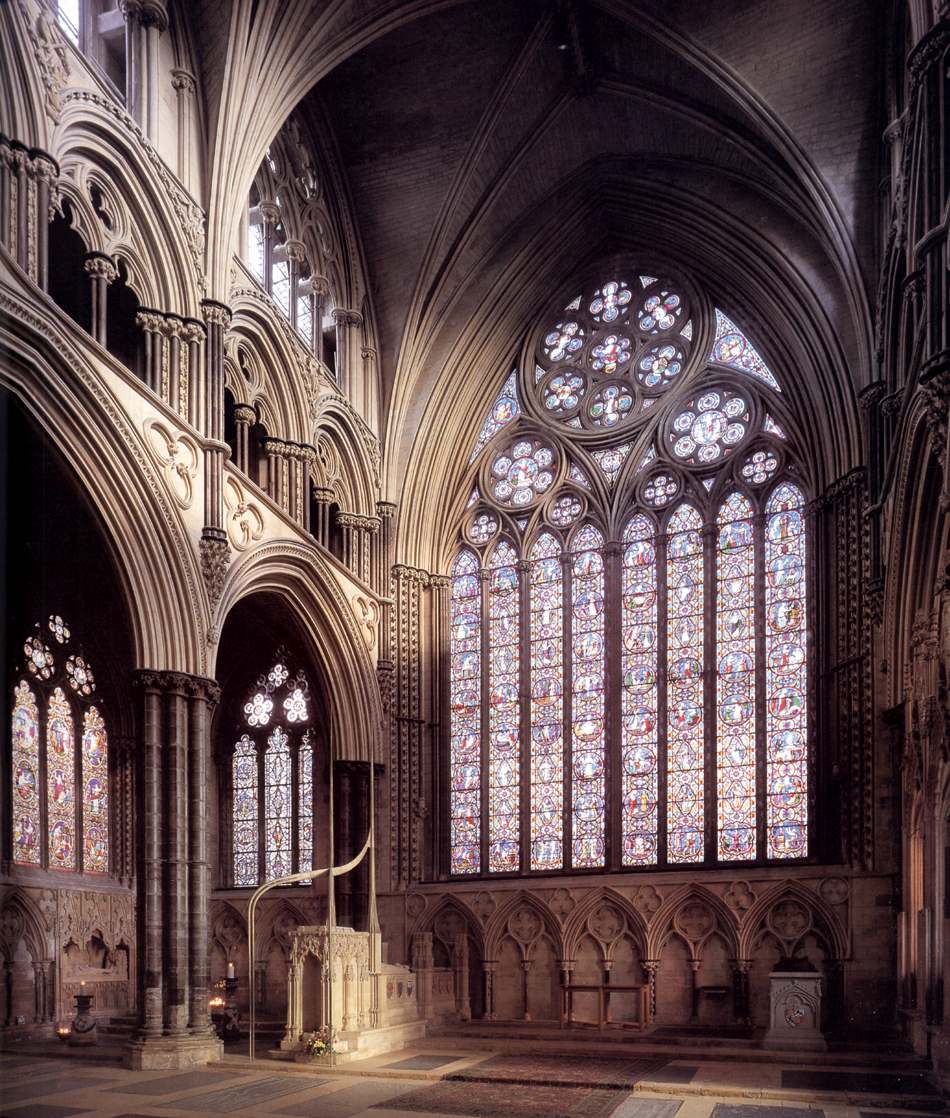
We finished our pilgrimage in the magnificent cathedral at Tours. Here I lit a candle in front of the great thirteenth century stained glass window of the covenant above the high altar. Lit a two-euro candle and walked out and on.

Air heavy with prayer

This was out last day cycling the chemin St Jacques and it was appropriate that our last stop was at Ligugé, the oldest monastery in the West. Southwest of Poitiers, founded by St Martin in the fourth century, and with, apart from two periods of anticlericalism, a continuous history of 1,600 years.

I cycled through the woods from the old Catenian monastery of Fontaine le Compe, past the old monastic fish ponds and there in the valley below me in the midst of the small farm were the sheep and cows of the monastery. We were just too late for vespers but when I got into the monastery church, there were still some monks and people praying quietly. Perhaps I have thought in the past that an atmosphere of prayer was caused by beautiful music or liturgy but here now there was just silence.

But it was as if the air was heavy with prayer, one could hardly move through it. I sat down, thought quietly, and went to sleep.

Later in Châtellerault, I was surprised that one of the churches, Eglise St Jacques, was still open at near eleven at night. I went in. At the back is a beautiful wooden statue of a Compostela pilgrim complete with shells on his hat.

It was nearly dark inside, the great stone vaults reaching up into the murk and my thoughts and prayers seemed to rise with them into something inconsequential above my head, something vague, undefined, but almost heavenly.

Chenay

Our short pilgrimage is almost over. I woke up in the night and thought whatever the women of the day, the saints we have encountered – St Jean, St Hilaire, St Leger, St Pierre, St Michel – will walk beside us. I almost saw them in my mind’s eye.

At Chenay after lunch I fell asleep in the church. When I tried to open the door, I couldn’t. I thought of spending hours there trapped but the door was just jammed. We cycled on into Lusignan, another fine town. On the outskirts is a memorial to thirty-one resistance fighters executed in June 1944 by the SS.

Aulnay

Our route took us to Aulnay. I waited at Paille and had a beer but first I went into the small church. Going up to the altar and touching it, I felt a profound sense of communion and the questions of the priests who had stood there through the centuries. Not that I could ever become a priest. How could I when I am still not convinced of the existence of God let alone the truth of religion, but the pilgrimage continues.

Here at Aulnay is the Eglise Saint Pierre d’Aulnay. For the medieval pilgrims, this was an important stop three days southwest of Poitiers, an hour or two in a car and three days for us on our slow cycle (shared). The central portal was brilliantly lit by modern lights and inside a men’s voice choir was rehearsing Basque and local dialect songs for the evening concert.

We now took a road northeast to Ensigne. Lost in the woods, the church locked but a neighbour pointed us to the key hidden above a lintel of the church. Cool after outside but hopelessly corroded by damp and then into the Romanesque wonder of Melle. Three huge churches: St Hilaire, St Pierre, and St Savinien.

Le Douhet, Fenioux

We started our bike ride again at Chez Larte. Unfortunately most French country churches are kept locked but at Le Douhet, next to a sign marking the route, the Church of St Martial is kept open. Here far from the crowds is a forgotten corner of Cognac country. I knelt at the altar and felt a profound happiness. It came suddenly and it seemed from God.

At Fenioux there is a Lanterne des Morts. Here in times past if ever a villager died a light would be lit at the top of the tower. For a village, the church is enormous, Romanesque. We camped at St Jean d’Angely, the camp site full of caravans and camper vans jarring with the yellow stones of the Romanesque church. The town was founded in 817 when Pippin, grandson of Charlemagne, he brought the skull of St. John the Baptist. The skull is gone, lost, rediscovered, and thrown away in the Revolution but in the church I was soothed by a tune playing Mozart’s Requiem Mass.

En route

We arrived in Pons, the start of our pilgrimage following the Route St Jacques de Compostela. Here we found the Hôpital des pèlerins. 1,400 kilometres to Compostela, 475 kilometers to Paris. We were en route.

We arrived at Saintes, following small roads with a picnic at Gallo-Roman ruins at Therac.

At Santes, pilgrims for hundreds of years had stopped to visit the tomb of the first bishop of Saintes, St. Eutrope. His ancient simple tomb is in the crypt, now a few bored tourists wander past – perhaps unaware or disinterested in this plain slab of stone, but centuries ago as monks sang the office in the nave above, here hordes of hungry, bedraggled, dirt poor pilgrims would have filed around the tomb.

Pause, Gabriel, then, for a moment in history, cease the journey forward. Having said that, I got hot and exasperated climbing the hills south of Saintes in searching Fancouvertes, and arrived at the camp site exhausted with putting up the tent.

Mornac-sur-Seudre

We were in a small village, Mornac-sur-Seudre overwhelmed by tourists now but atmospheric, set in the middle of a marsh. The old villagers had made their living from collecting salt and hunting for oysters. The font in the church was in the shape of a large oyster shell. Was this in tribute to the trade of the village or acknowledgement of the Route St-Jacques thirty kilometres to the east? The churches here are very simple – no adornment — and many villages have Protestant ‘temples’, no doubt an echo of the days when Cardinal Richelieu laid siege to the Huguenots in La Rochelle.

On the coast

We spent the day on the very busy French coast. It was incredibly hot and dry, the crowds enormous. Then we headed inland to the Church of St Sulpice near Royan. I caught the Curé as he was locking up and he gave me the history of the dark eyes that had inspired the saint’s life. I had heard he had planted a medieval garden and he showed it to me. In medieval times, every plant, every herb – and there were scores of them – had a purpose rich in folklore and knowledge, every ailment of the mind or body could be cared for. In this quiet place beside the twelfth-century church I knew a peace of mind I had not known even on the edge of the Atlantic Sea, its waves lapping gently against the rocks on the beach.

Later as I lay awake in my tent I realised that there can be no peace of mind in thinking about oneself, one’s problems. No Gabriel, it is not just the unselfish thing to meditate on others, it is the only way to get any peace of mind. The change came quite suddenly to me. One moment I was tossing and turning thinking of some setback or problem, the next I thought of are of my children and their problems and then came an extraordinary peace of mind.

Feast of St Ignatius

This day is always special for me because of the Feast of St Ignatius, a saint whose life has meant so much to me. I still remember going by chance to a dusty church on a hot morning and hearing in the homily the story of his life, the start of a book I wrote.

But this was not what struck me about the Mass today. I could not read up the Gospel readings before I was in France so I concentrated particularly hard. It was a simple one to understand from St Matthew about the feeding of the five thousand with five loaves and two fish.

I had been tossing and turning all night worrying about money. I knew immediately that this reading was the perfect antidote.

So, dear Gabriel, take one day at a time. Tomorrow will look after itself and if you worry about money, think of the loaves and fishes! That sometimes, something can come of nothing, and often something can come of very little.

Cycling On

I cycled the thirty miles from Lourdes to Pau and in the rhythmic movement, after a swim in the Lac de Lourdes.

The End of the Pilgrimage

We had a service of the anointing of the sick. This is the most beautiful service in Lourdes where, to accompaniment of Taize-style chant, the sick are blessed and then anointed with holy oil. I was only making the pilgrimage for the OMV which my daughter helped run. It is a pilgrimage for young people and older visitors should not impose themselves.

But a pilgrimage to Lourdes is all the same unless you have a job to do, are in an equipe, and have to go to the hospital at dawn to help get the patients up. It is trite yet true, Gabriel, that things are so much better if one is helping others.

Friday was the day of departure. A profoundly depressing experience but I overcame it by sitting in part of the Grotto sketching, attempting to capture the rocks. The Gospel reading was about Martha and Mary. Actually a contemplation! I had just the day before for two and a half hours waiting in the queues for the baths. This is seemingly an enormous waste of time but did it matter? No, what else was I going to do? And there is that wonderful, refreshing moment as with a prayer one is plunged into the holy water. It is worth it, Gabriel, just to sit for two hours doing nothing.

Rain

I walked down to the Grotto. It was after 1:00 am and raining continuously. There was hardly anyone there. I stood inside and the light outside shone through a wall of rain pouring down outside. It was almost as if I was standing beside a waterfall. There was water everywhere: outside, dripping down the rocks, in the running spring at the side of the Grotto. But not cold uncomfortable water but warm, soft, summer water. Here was I alone in a spot where, if the Virgin Mary had appeared anywhere on Earth in the past two-thousand years (apart from Palestine, two-thousand years ago) it was here. If. If.

It was a moment of profound peace and joy. I knelt in the grotto and looked up at the statue in the niche. In the misty darkened rain encircled in light from the streaming single spotlight, the statue seemed almost alive. I could have stood there forever but eventually instead I lit a candle and walked slowly up the hill. Go to the quiet places, Gabriel.

Night Worries

During the night I realised that there are worrying thoughts and depressing thoughts. The latter are much more dangerous. We ‘worry’ about money, or our health, or our children; we get ‘depressed’ about the shape of our life.

But in a place like Lourdes, Gabriel, your prayer life can become so much more intense that with prayer and through prayer the ‘worries’ and depressing thoughts fall into place. In the great scheme of things, they are nothing compared to a sense of wonder and delight in creation.

At Lourdes

How could we have doubted that we should go to Lourdes? After a long drive, eleven hours from Paris, we arrived as the pilgrimage went off to night prayers.

Looking across the Prairie to the Grotto, it is a beautiful experience. The person in charge explained the deeper meaning of the Hail Mary to us. First of all it is the words of an angel, then of Elizabeth, then of our own prayer.

Try, Gabriel, to go on pilgrimage. Some theme will always come to you. For instance, as I got out of the car I suddenly felt depressed at some of the futility of my working life, that I wasn’t achieving anything.

At night prayers as we explored the Hail Mary, I realised that this is a prayer not just of praise or for the end of life but for its difficulties or if ever we feel depressed.

To Lourdes

We set off on our pilgrimage: the start of a long drive to Lourdes. But everything delays us: money, work, chores, letters to write. At 5 in the evening we have still not left.

In an instant, the decision is made. We raced for Dover and then at Calais drove really slowly because we had underestimated our petrol but we were on our way.

A Pearl Found in a Field

In the readings today, the question asked is what is the Kingdom of Heaven like? “Like a pearl found in a field.” But what is the Kingdom of Heaven really like? Obviously something worth giving up everything else for, but what is it really like? Tomorrow we start a pilgrimage to help find out.

Norway

There’s been a horrible outrage in Norway. The truth is that some kind of latent racism lurks in all of us. I look at it this way: would I really enjoy a world composed entirely of people like me? Wouldn’t it be rather boring? And what happens in Heaven? Is there a heavenly England with cricket fields and mock tudor houses and in another part a heavenly Saudi Arabia of sand and mosques? Heaven is a single unity or it is nothing.

Look where you’re going!

My mind was elsewhere crossing the road through roadworks at the Brompton Oratory. I looked the wrong way and suddenly a great blaring of horns, a motorcycle swerved past me. If it had been a buss I might have been flattened in that incident. Then the dream I had had before of stepping out of the back of the church into a beautiful open country would have been fulfilled.

So think of the present and don’t worry about the future, Gabriel, but look where you’re going!

The ‘God Particle’

Physicists at CERN in Switzerland believe that they have found the ‘God Particle’ that turns matter into mass – Higgs Boson. No doubt this will be used to defeat the prime mover argument – that God is necessary to create something out of nothing. But matter, mass, energy all must come from somewhere. So, dear Gabriel, persevere, have hope.

Requiem

I was in a Mass for the dead. The priest was clothed in black. The service was so dignified that one could not conceive that the hopes expressed were in vain.

Man or mere machine?

The thought came to me in conversation with an atheist friend that really all we are is a few electrical currents in the soft tissue of the brain connected to an inanimate body composed largely of water maintained by a muscular pump. But do we have to base our belief on such a depressing dead end? Cannot fact be turned by belief?

A field of wheat sown with darnel

Dear Gabriel,

Yesterday I had this view of the huge fields of barley swinging in the wind. By coincidence, today’s reading is about the Kingdom of the Lord being a field of wheat sown with darnel. My advice is always try and visualise.

A Field of Barley

I was now in a field of barley on a windy day. It was bending in the breeze and was as profound a statement and as beautiful as any choir.

A Dream

I had a dream that I was in a well-known church in the middle of London. There was some outdoor event going on and I went out of the back. To my amazement, I was in open country. There were great crowds and I had difficulty in getting a place to see anything. I climbed into a stand which didn’t have a very good view. I was about to climb out of the back but couldn’t find my shoe.

Then, to my delight, the stand moved off. First, it was a kind of open-air bus. Then it became a boat and plunged into a huge lake with a wonderful view of what was happening on the lake. I was not quite sure what but some sort of interesting religious event. The boat now careered off up a mountain path and in a trice we were far above the lake and the crowds. I could still see the London church but it was in a beautiful landscape, more like one of the Italian lakes than anything else. Then, unfortunately, I woke.

“Shoulder my yoke”

Apparently in former times, when we relied so heavily on healthy oxen to do our work for us, each yoke had to be tailor made for the animal lest it develop blisters. Thus when Jesus in today’s reading says “Shoulder my yoke” (Matthew 11:28-30), the burden he knows really will not so much be “easy” as in the modern English translation but be well fitted, as in the Greek, to our needs.