At the end of this week St Paul writes that “I shall be happy to make my weakness my special boast.”
I suppose that’s all we can do and we should be content with that.
At the end of this week St Paul writes that “I shall be happy to make my weakness my special boast.”
I suppose that’s all we can do and we should be content with that.
“So many others have been boasting of their worldly achievements,” writes St Paul today. I suspect that a God that exists cannot see or is not interested in the outward body. To him the most outwardly disabled person, the oldest and sickest, has as shining an inner soul as the fittest, youngest and most beautiful.
Dear Gabriel,
Like St Paul today I “only wish you were able to tolerate a little foolishness from me”.
Maybe in your eyes this advice is foolish, but I can only give what I know.

Dear Gabriel,
This is the most difficult advice that St Paul gives this week.
“Thin sowing means thin reaping; the more you sow the more you reap.”
But it’s so tempting just to sit in a quiet place and read a novel, and is one then not sowing in one’s own mind; and that’s one of the most important places to be.
Dear Gabriel,
The obverse of yesterday’s reading is today’s.
St Paul refers to the “constant cheerfulness of the brothers” despite great trials. I suppose that’s what CS Lewis meant by being surprised by joy.
Dear Gabriel,
St Paul puts his finger on it in today’s reading from his Second Letter to the Corinthians:
“We prove we are servants of God by great fortitude in times of suffering; in times of hardship and distress.”
Easy to say more difficult to do!
Dear Gabriel,
The priest who was taking Mass today came out with a good phrase today. Normally it’s the young who dream and the old who have wisdom. After today, it’s the old who should dream and the young have wisdom. But the most important thing is that the old should go on dreaming!
I always wonder about today’s reading:
“There were many other things that Jesus did; if all were written down, the world itself I suppose would not hold all the books that would have to be written.”
(John 21:20-25)
But why didn’t they write them down?
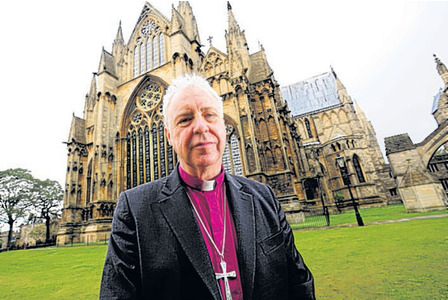
I walked into Lincoln Cathedral and the duty chaplain invited me to say the Litany with her. I was the only one in the side chapel.
The litany in its repetitions is a powerful spiritual tool and the Book of Common Prayer version has enormous power.


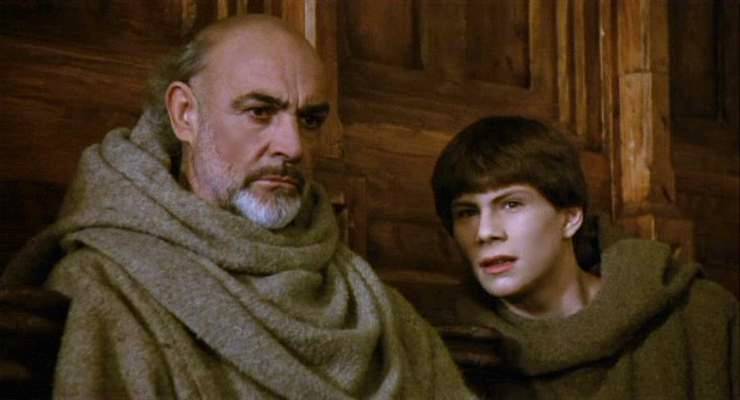
Another film. This time “The Way”, a story about the Santiago de Compestela walk.
For all its Hollywood glamour, famous actors, and moving story line it does not have the spiritual power of “Into Great Silence”. But a powerful story for all that.

What is the secret of the happiness of the Carthusian monks? They have nothing. They eat virtually no meat and drink virtually no alcohol. Obviously they own nothing. They never publish anything in their own name. They are happy. I think it is because they are in a continuous encounter with God.
There are numerous tapes of Gregorian chant. Here in the film (“Into Great Silence”) one can read the text as well as listen. Again, you will be profoundly moved by the simplicity of the slow cadence. Again I went to bed happy.


Often it is helpful to fix on some other object or look at something different. I started to watch “Into Great Silence”, a film about the Carthusian monks at their mother house La Grande Chartreuse. In the film there is virtually no dialogue and no background music apart from the plainchant of the Office. It is as if, instead of watching the movie, one prays with it.
What the film captures is the profound stillness of the Monastery. There are long shots of just a candle or the towel swinging in the air as the monks have dried their hands on it before going into the refectory, or the water moving in the bowl that they wash their hands in.
But what was strange was that after watching the film for an hour it was as if I was in the monastery. As is often the case when I stay in a real monastery, I went to sleep profoundly happy. They say they make saints, they don’t talk about them.

Atheists love to mock the Ascension. They say how absurd it is that someone who it is claimed is a God is taken up to Heaven like a rocket. Obviously a myth, they say.
As he said this he was lifted up while they looked on, and a cloud hid him from their sight.
(Acts of the Apostles 1:1-11A)
How He leaves physically for the last time doesn’t seem important to me. What matters is if He is still here in spirit. I think He is here in spirit. Indeed, because millions follow Him every day, that can’t be denied. But I still can’t put hand on heart and say without any shadow of doubt that somewhere He is alive now in the same way as we are alive.
I suppose the answer too is given today:
“Until now you have not asked for anything in my name.”
John 16:23-28
The Gospel reading brought me up. From John 16:20-23:
“But your sorrow will turn to joy.”
Why was I less joyous or could not repeat in ordinary life the joy one finds in a monastery?
The answer, I think, is in the intensity of prayer.

We went to Mass at St Patrick’s Soho Square to celebrate its wonderful restoration under the loving care of Fr Alexander Sherbrooke. The Mass said and sung beautifully in Latin by Cardinal Pell, the Archbishop of Sydney, was truly impressive. The gold and brilliant white of the stunning architecture rang out.
But I kept asking myself the question.
Who are we?
I was reading Jesus The Teacher Within by Lawrence Freeman OSB and one passage struck me most forcibly. Jesus asks the question: Who do you say I am?
But the question we should ask ourselves is: Who am I?
If we ask it again and again the ego starts to fall away like a stick stirring a fire, it does its job and burns away just as our ego must burn away.
To make progress we must plumb the depths of our minds, drilling ever deeper to what lies within.
But I have always had this elusive thought that deep within it is not so much as there is nothing but a unity with everything.
In other words the ego or the individual is not predominant. Unity is.

I sat alone in the small country church looking through the East window to the tree beyond. It was mid-morning and the light was turning to come in from the South. But some light still found its way through the East window. The glazing is thick and old, and the light dappled as it came through, inconsequential, not hard and bright, but soft and questioning, posing a question gently yet insistently.
I am here. Rest calm and just watch the changing light.
I did. A narrow beam fell on the snowy white of the altar cloth, as if to say: I am here.

For hours it seemed I was attempting to cut down with my axe a huge branch in my garden. In this quiet place, the axe’s sound, a great thud, would reverberate around the silent valley. It was raining steadily and the drops were falling drip drip from my hat. After an hour of very slow progress I was tired and happy but the task seem endless.
Suddenly I stopped.
At the foot of the bank a robin was pecking and skipping for the pure joy of being alive. I stood entranced hoping he would not go away.
But he did.
A few minutes later the great branch fell with a crash.
As I write this I am listening to Thomas Tallis’ ‘O Salutaris Hostia’ but, as sublime as the music is, the spiritual experience cannot compare with watching the robin living for the present moment.
It is sad that we are coming to the end of the Easter season, because we have been ploughing slowly through the readings from the Acts of the Apostles. What extraordinary faith these men had; but what an extraordinary opportunity they were given too. If you could be transported back in time to any time or place, where would you choose to go? I know that I would want to be taken to that Upper Room on the first Easter Sunday, because I would THEN know the truth without any doubt. The answer to the greatest question ever posed. Did he really rise from the dead?
Strangely, without any proof at all, I think I know the answer. Yes, he would have walked though those doors.
But then I would have demanded to see with my own eyes that he had actually died.
Never satisfied!

A complete contrast. Gabriel was now in a Catholic church for veneration of the Blessed Sacrament.
No words.
Just the Host displayed.
And he confronted his ambitions and his failures and was comforted.
And now it was morning. And Gabriel did the same with Morning Prayer from the Anglican prayer book.
O LORD, our heavenly Father, Almighty and everlasting God, who hast safely brought us to the beginning of this day: Defend us in the same with thy mighty power; and grant that this day we fall into no sin, neither run into any kind of danger; but that all our doings may be ordered by thy governance, to do always that is righteous in thy sight; through Jesus Christ our Lord.

Gabriel was walking along a path in the English countryside. The words “and then?” repeating inside his head.
The church was alone, cool, and open.
So far away, in the depths of the countryside, there was no chance now of Mass. But he picked up the Book of Common Prayer and read slowly through the words of evening prayer, saying silently the words of the priest and aloud the words of the congregation.
Here then was a sublime and mighty poetical English. No outward fury or entrenched belief in some mystical presence, only the word.
The Magnificat, the Nunc Dimittis came and went and finally the Collects, an ocean lapping quietly in his presence and he sat still and felt a great peace.
Gabriel was walking the streets of sixteenth-century Rome. He was hot. Nowhere were there magnificent buildings, only decay. But there was activity, building, movement, heat arising from the rubble of the long-fallen empire.
He longed for greatness, the echoes of which he could see all around him.
He came across a great procession. A cardinal was walking to St John Lateran, all glory and pomp. Horses, carriages, servants, red and other strong colours predominated. Awed, yes but also of course he was depressed by the sight. He could never attain such heights though he believed he had the restless ability.
Now as the dust literally settled he came across a shabby priest.
But a priest with an eager eye and smiling countenance.
Gabriel recounted his ambitions.
A job.
“E poi? – And then?” said the priest.
A house.
“E poi?”
A wife.
“E poi?”
A greater job.
“E poi?”
Titles, wealth, fame.
“E poi?”
Always Gabriel came to the end and the priest asked “And then?”
And then of course was the end. All that mattered was the encounter then and a deeper understanding and relationship with God.
The priest was Philip.
This story of the encounter between St Philip Neri is not my own.
I went to a Mass at my son’s school and the Provost of the Birmingham Oratory recounted this true story of how St Philip used to convert young people. It struck me most forcibly. The question endlessly repeated – “And then?” All this life, all this egocentricity we take so seriously and are so upset by its setbacks is a series of little dots between two full stops.
The only really worthwhile question is “and what then?” The question occurred to me when I sat in Westminster Hall and listened to the President of the United States later that day.
For all the pomp and glory and adulation, colleagues craning their necks struggling to shake the hand of supposed greatness, but… “and then?”