Once again I awoke in the night and this time I had more success in engaging in conversation with God. I gradually went through the entire life of Christ using the Rosary as a guide. I included the mysteries of light, but didn’t tie myself to any number of Hail Marys, perhaps only one for each Mystery. I used the method of St. Ignatius, imagining myself there, hearing and seeing with my own eyes. It seems to have worked because although again my mind wandered and my doubts came and went, I became happier and composed myself for sleep.
Category Archives: General
Feast of St. Charles Borromeo
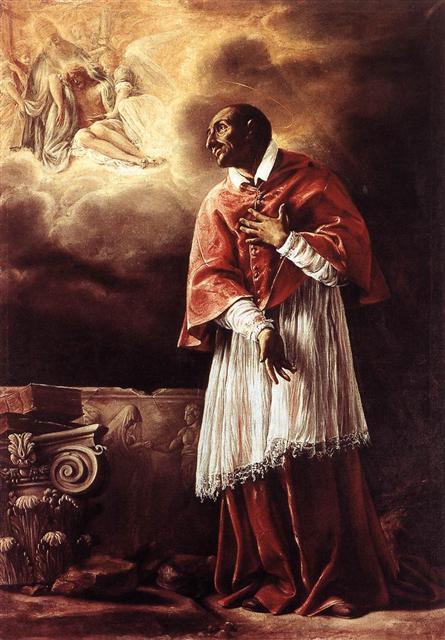 St. Charles Borromeo had the most unprepossessing of beginnings. He was made a Cardinal at the age of 22 by his uncle, the Pope! However, to everyone’s amazement he refused to stay in Rome, and instead became an outstandingly holy and committed Archbishop of Milan.
St. Charles had one central message which was that of the vital importance of daily mental prayer, not reciting the Hail Mary by rote, but engaging in a conversation with God. This I have always found the most difficult thing to do. What does one say? And most of the time its rather one sided. But I shall try and persevere!
The week had been full of bad news. So on waking in the middle of the night I tried St Charles’ advice. However, every time I tried to pray my mind wandered into the difficulties. I tried again and again but kept wandering off. I finally gave up, but one important thing occurred to me. It is not necessary to be sure that God exists to pray to him. You just have to make the leap of faith!
Mass at Osgodby
We went to Mass in the tiny upstairs chapel at Osgodby in Lincolnshire. It is one of the earliest Roman Catholic chapel Houses built as a result of an Act of Parliament in 1791 which allowed Roman Catholic churches to be built “without bell or steeple”.
The reading was from the Beatitudes, or the Blessed Attitudes as our priest called them. I have always wandered what the first line means.
How happy the poor in spirit,
Theirs is the Kingdom of Heaven
Who are the poor in spirit? And if their’s is the Kingdom of Heaven it begs the question, should we not be full in spirit?
Corringham Church
This weekend I went to Corringham Church near Gainsborough for the unveiling of a plaque to honour a group of airmen who were killed in a wartime crash near the village.
Corringham is a beautiful church with a fine ceiling and Victorian rood screen built up from the medieval original. There are few rood screens left in our medieval churches but when one comes across them they are a joy to behold.
The accident in question happened in December 1943 on a training flight in thick fog after the plane had taken off from Blyton Airfield. The interesting thing about the ceremony was that it was commemorating just one of seventeen aircraft crashes in Lincolnshire that night.
The whole church was full sixty-six years after the event to remember this one little-known tragedy of a previous generation, which would have occurred together with all the other great tragedies around Europe that day. This was a fitting tribute and absolutely right.
Two Exhibitions
I went to two contrasting exhibitions today. The first was a collection of sculptures and experiences at the Royal Academy by Anish Kapoor. I went in ready not to like it but everybody there, mainly hoards of children, seemed to love it. I took my fifteen year-old son who acted as my tour guide by explaining things to me. Indeed, his explanations were better than the pretentious catalogue.
I particularly liked the Shooting into the Corner installation of a gun firing huge wax pellets at the immaculate white walls of the academy. The Hive installation, where one stares into an enormous black whole was vaguely spiritual and the large piece of wax moving at an agonisingly slow pace through three enormous rooms had its moments. But was I moved deeply? No.
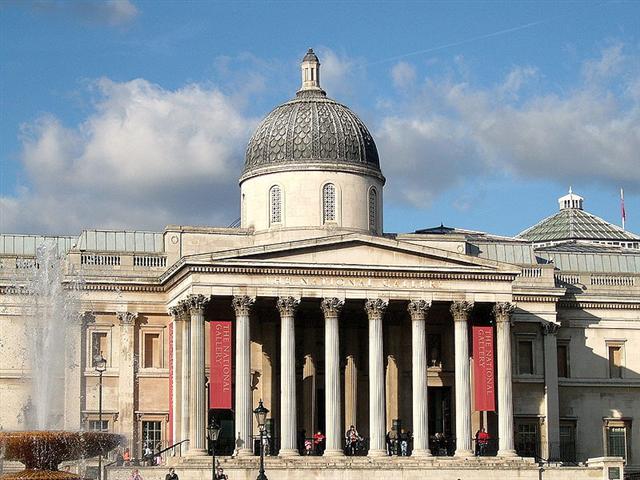
We then walked along the road to “The Sacred Made Real” exhibition at the National Gallery. This was a collection of extraordinarily powerful paintings and sculptures from the Spanish Golden Age and included works by Velazquez and de Mena.
Recently I seem to have spent a lot of my time reading St Ignatius of Loyola and here he was in front of me, every detail perfect. Next was a Mater Dolorosa, a picture of grief. The wounds on the back of Christ were carved in terrible detail.
As I wandered I listened to the music of Stephan Hough, which had been inspired by the Spanish Renaissance composer Tomas Luis de Victoria’s Requiem and was written for the exhibition.
The overall experience was overwhelming and I could see that the other people (much fewer in number than at the Royal Academy) were similarly affected.
Feast of the English Martyrs
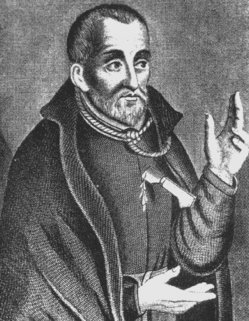 When one thinks of the bravery of these men one is literally awed.
One of the followers of Edmund Campion witnessed his friend go to the gallows. Faced with the same terrible death – to be half hanged then disembowelled and quartered – he could have turned back at any time. A simple recantation would have done. A denial of Christianity would not have been necessary as the dispute was about Papal supremacy.
His reaction was to utter a plea in Latin, “Jesus, be my Jesus” and he went calmly to his fate.
I could never imagine doing the same. I would have recanted a dozen times rather than face such an ordeal. But our faith nowadays, our convictions, are so weak.