Category Archives: General

Thursday, Fourth Week of Eastertide

Paul and his friends went by sea from Paphos to Perga in Pamphylia.
A train of thought, the running sea.
So spiritual and calm yet sailing to questioning Judaea.
Implacable light, reflecting, blinding us so that land’s troubles we cannot see.
Yet in my own small boat, never far travelling.
Gentle Solent traversing.
Welcome anchorages unveiling.
Water rippling down the boat’s side, sails singing.
Alone no distraction,
No excuse to not sing forever of your love.
The wind shifts, going about, concentration.
And for you Lord from this surging sea a tranquil love.
The ropes laid out to berth side’s quay, a cup of tea.
But my vision of him in this bustling harbour place, I no longer see.

Wednesday, Fourth Week of Easter

Deus Misereatur.
God be merciful unto us and bless us.
A prayer for Parliament, our intentions to pour
A psalm before the nations affairs to discuss.
Interest and commitment may come from many things.
But joy comes more often from religion.
We may be absorbed in the affairs of kings.
But how do we find true happiness, this is our decision.
We cannot meet God in rational argument.
We just have to accept and feel.
He comes unexpected not as a theory proved but as a presence lent.
We do not need to argue, but press to Him our heart’s seal.
Then the prayer is over in four minutes.
And we move on to discuss secular affairs for six hundred minutes.

Tuesday, Fourth Week of Easter

How much longer are you going to keep us in suspense?
If you are the Christ tell us plainly.
We ask this question ourselves, but this message can impart no lasting sense.
Yet hasn’t He told us this so many times and so clearly?
The problem is not being told, it is believing.
Does His life and work not bear adequate witness?
If He walked into the room now would we believe or stand there uncomprehending?
What is it in our minds that leads to this spiritual sickness?
He asks us to think of Him as a shepherd.
But we are too proud to follow as humble sheep.
We need to reason to question and never leave our doubts unheard.
But the prize is so great if only into this instant of faith we can leap.
Imagine that, eternal life.
That was His promise, pray cut our doubts loose with your merciful knife.

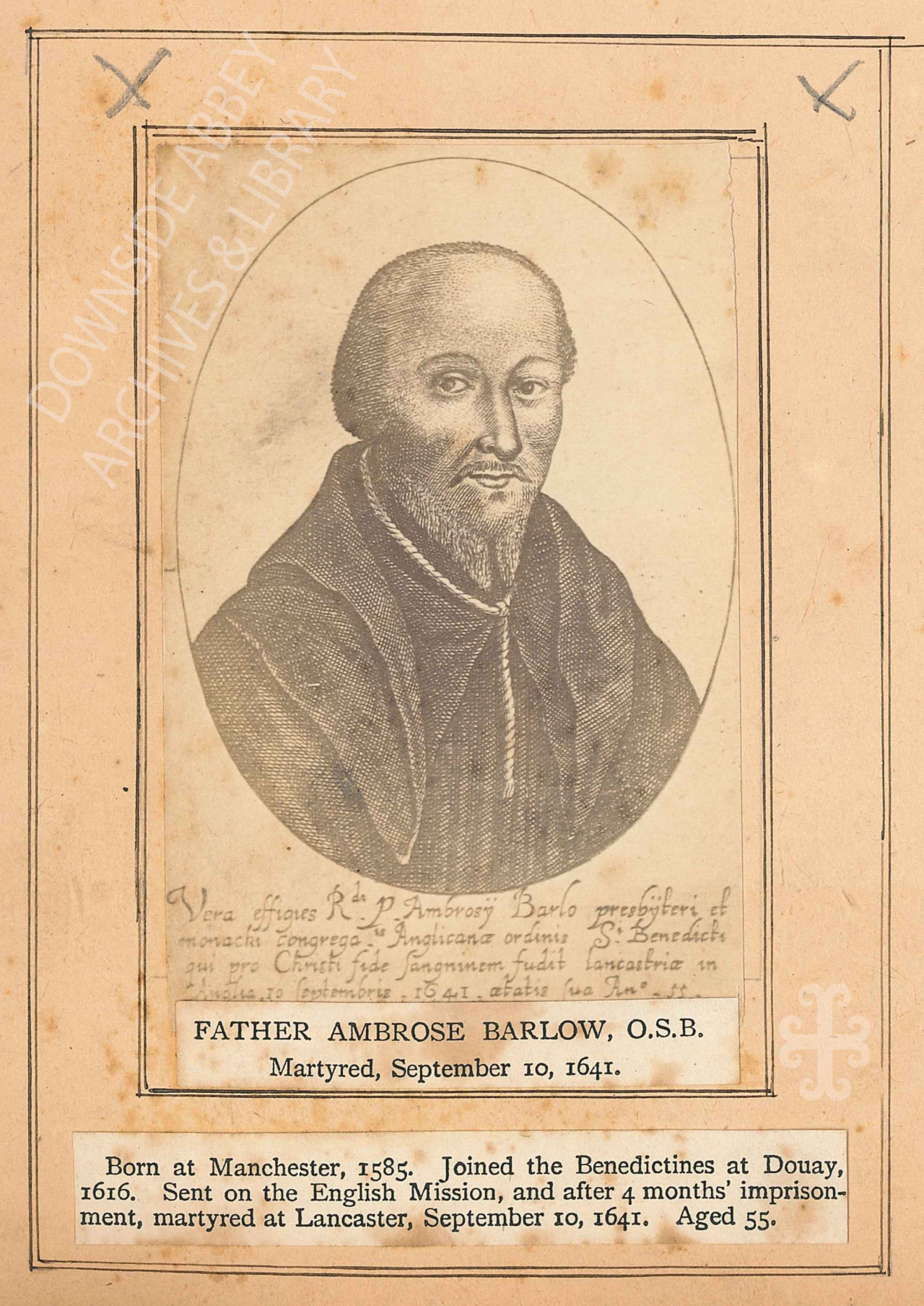
The English Martyrs

Who to pray to pray to for a petty problem, thinking about me me.
I had forgotten today is the feast of the English martyrs slain.
I had long neglected to pray to one, the blessed Richard Leigh.
An estate’s eldest son, he could have stayed in Cheshire and to his family no stain.
He could have said just one scaffold word of loyalty to the nation.
An agonising death by halter they chose rather than compromise their belief.
To them a higher loyalty called than to country or family or Queen, it was to God’s reaction.
And praise too to those Protestant martyrs true to their faith despite fiery pain’s grief.
Richard had a younger brother Peter.
My ancestor he stayed at home, married , prosperous and peaceful.
And I too would conform, swear any oath to forgo death and touch of the Tower’s beefeater.
For our faith is so weak, our will to conform so deep and so dull.
But we can at least do this before our fall.
To salute all men of faith who give their life, their all.

The Good Shepherd

Years ago down the lane there was a sheepfold.
What a bustle there was some early some late.
Chaos flock milling, their way not clearly told.
Where was the narrow gate.
The gatekeeper opens it, they swarm in.
But they will only follow their shepherd.
It is his voice that leads them to follow their kin.
Any other they think as dangerous as any leopard.
The sheepfold is gone now.
Only a few rotting pieces of wood remain.
But this thought is resisting time’s steady plough.
There was a good shepherd, he led them down the open lane.
There is in every mind this mental gate.
There is one who can lead us through, with him for salvation we never will be late.

St Athanasius

In the midst of the church he opened his mouth.
And clothed himself in a robe of glory.
Was St Athanasius just another dry saint of long ago loyal to his truth?
A fierce opponent of the Arian heresy, long forgotten, a long lost story.
But this is no dry Nicean debate.
Is he just created by his father and no equal?
Did God then not descend to man’s low state?
To God’s power and glory not as one but history’s sequel?
But then man is left to low earthbound estate.
But this I believe God once was we.
Not just One who was and is in unchanging state.
But subsumed in love He gave all for us, his truth to see.
To this champion of your son’s divinity.
We owe our serenity.

The Ironstone Mine

Along the Viking Way walkers now wander.
A verdant wold valley soothing all tension.
Nurtured by time’s quiet embrace the path meanders to Caistor.
A dream trickles, ashes wave, views beckon.
But the walker now stumbles across the mine’s remains.
Nettleton Top and Bottom closed tunnel’s opening.
Once two hundred men toiled here under these quiet country lanes.
The iron ore prized out with brute shovel and drill powering.
Fifteen one-ton trucks a day, farm work after the eight hour early shifts.
By 1968 and closure, for grinding labour six pounds a week.
An accident in 1872, deaths at Claxby nearby, the Rev Sumner of Nettleton writes.
That gloomy cavern of disaster, safety improvements I seek.
Now once where the mine railway stood there stirs only a faint memory.
The walker carries on, his mind and his life in another country.

Mary’s Tears

Waking the lane I came across a blue purple five-leafed flower in a cleft so lonely and stony.
Slowly from March through to May subtly changing from deep red.
The delicate flower favouring a home, lane banked fresh and shady.
Common Lungwort Pulmonaria Officinalis, the book said.
But why Pulmonaria, Latin for lung, if you’re oh so clever.
Why lung, this tiny plant used since the Middle Ages to cure coughs and chest diseases.
Well I thought, it’s strange how things so natural can come in so useful, never say never.
After all we hear a lot today of horrible coughs and sneezes.
But why it’s other names, Mary’s tears, Our Lady’s Milk Drops.
Named by Carl Linnaeus after the doctrine of signatures.
The Christian doctor’s belief that a plant looking like a body part could be used as cure mops.
Their belief that God put in plants to guide mankind, medical signatures.
I pass on my way, not tasting a drop of her tears, back to a house lardered with modern pills.
Is Mary crying for us, I ask? Who knows if this medieval thought is any use for life’s ills.

The Barrow

It was a midwinter walk.
I sought the path from Kirmond Le Mire.
I was with my son and we were engrossed in talk.
Suddenly an impenetrable mist came down, my legs began to tire.
Our aim was to head towards Tealby but we had lost all sense of direction.
We crashed through a hedge and found ourselves on an ancient barrow, as if turning a page.
I knew now where I was, by the Neolithic way, all time surrendered by time’s partition.
Here it was if we were standing many thousand years ago in the Bronze Age.
Hard by unseen a lorry thundered along the Caistor High Road.
But long before Rome this was already, above the forest, a path along the ridge of the Wold.
What lies buried beneath time’s feet, pottery, pagan ritual, a chief’s family covered in woad.
Did once from this place did they look far to the West the Pennines, we are not told.
The fog lifted, we set off to the pub, now in mind’s eye a welcome pint we could see.
But there was a chill about my heart, we avoided the lonely path and kept to the B1203.

Worthy is the Lamb

Worthy is the lamb who was slain,
To receive power and dignity and wisdom.
I am looking across a narrow valley at a flock of sheep, so innocent with no mark of Cain.
They barely move, like white statues, to speech contentedly dumb.
A dog barks, a duck lake bound sings, a distant tractor growls, the wind sighs.
A bumblebee busy about its tasks hovers to the stone’s house cosy crack.
There is a stillness and expectancy all about and no fear-filled cries.
To these creatures there is no past or present, no power or wisdom they need or lack.
Suddenly just before he reached the city there came a light from heaven all around him.
I pray that this light would make us like the lamb content to be still.
We only ask for some small shard of future divinity, some pull from hell’s dark brim.
We do not seek to preach with majestic prose, only our restless pride to kill.
The sheep have not spoken, nor ever will, nor care, nor ever will.
And my mind freed for one instant, now returns to its usual debating, grinding restless mill.

Sing to the Lord

Let us sing to the Lord for he has gloriously triumphed.
Jubilate Deo, God, O how wonderful art thy works.
The twilight lake, utterly still, the sound of a stream, all disquiet silenced.
And in that clear sky, bright Venus, west rising lurks.
And this is my pang unbidden of doubt, I cannot reverse.
I see Virgo Hydra and Ursa Major, so vast, so distant.
Did a preacher, two thousand years ago create this universe?
The Milky Way lays her haze and she is the closest, millions are less insistent.
But can such order, such beauty by chance be created?
Certainly these works are gloriously wonderful.
No answer in logic or reason will I find, all conclusion is confounded.
But this I know in this mere breath of wind , a presence there is mysterious joyful.
Do all universes like needles have a point?
Was he that point.

The Beach

You can navigate bustling Heathrow and have your packed beach at St Tropez.
For me nothing can compare with, past the mobile home park, yes: Mablethorpe North End.
I love the blasting sun and arid bright blue sky, you say.
Give me the vast vista of an empty beach, for the mind a soothing silence to tend.
You can have your great crashing ocean Cornwall waves.
Let me wallow, up to my waist a hundred yards out in the gentle lapping North Sea.
You can have the azure ocean, give me the grey green wavelets, the cold fit for the brave.
You can brave the crowds, it’s the lone grey seal and wildfowl terns I want to see.
And after that what bliss, warm Coca Cola, a sandy sandwich and no signal for e-mail.
The jumper on, the wind break out to shelter from that bracing east wind.
You can have your fancy beach bar cocktail.
It’s ice cream for me at the end of the day, to the kids I want to be kind.
Here I can run three miles past rolling marram grassed sand dunes and barely meet a soul.
You only have the traffic homeward bound to toil.

Wednesday, Third Week of Eastertide

My granddaughter was pushing a plastic train around.
A memory surfaced my old electric train set, green suburban Southern Region to enthral.
A light on the front, what excitement, in the dark emerging from the tunnel home bound.
I read this today, God is light, there is no darkness in Him at all.
I remember playing half-penny shovel on the dining room table.
Conkers in Autumn, a champion on a string running, boyhood energy.
Mummy always home to open the door after school, tea at the kitchen table, a school label.
The priest visiting, walking to Mass at the ugly modern church, old Latin liturgy.
I bless you Father for hiding these things from the learned, revealing them to children.
Why can we not exist like we were in the present, a land of never never.
Why do we not see the past as a few memories not disappointments, why are we so driven.
Can we not the pain of past and future sever.
Come to me all ye who are weary and burdened.
Let past and future by your easy yoke be interred.

Tuesday, Third Week of Eastertide

My daughter is breaking bread.
Warm, crusty, the whole cottage fills with its scent.
Sunlight is streaming in from morning East. About happiness no more can be said.
My granddaughter is playing, breakfast cooking, no fasting now for Lent.
Leaving, I climb high up upon the Wolds’ gentle camber.
I look north twenty miles towards the grey smudge of North Sea.
A glint of sunlight on some sea distant wind farm, a ship sailing as if on land on the Humber.
Strips of receding farmland, yellow rape emerging and a sharp horizon as far as I can see.
And here before me on the lane’s verge are bright blue forget-me-nots sown wild.
Then I remember these words: I am the Bread of Life.
There is no service today, no incantation, but a joy fills me like a child.
All about me is bursting green swelling new spring life.
But it was not the countryside or baking bread that gives this joy as sublime as poetry.
It was the thought of the Bread you eat after which, with His promise, you are never hungry.

Matisse

Certain people came forward to debate with Stephen.
They found they could not get the better of his profound sense.
A life of Matisse was on the television. He was called a three times failure, his art alien.
He failed his parents in their business, his in laws in a court case, and his art was nonsense.
Matisse was impoverished, but, supported by his wife, he persisted.
His picture of her was laughed at even in the avant-garde Parisian salon.
Brilliant, he could have done as fashion insisted.
Yet he would rather be rejected than compromise his vision’s questioning talon.
Who now remembers the stale art of those who rejected him?
The stones thrown at Stephen have indeed become a cornerstone.
You can conform or you can be true to your truth, for the martyr, a synonym.
In that children’s game paper can defeat any stone, wrapping the toughness in gentle love.
The cut outs of Matisse were thought lacking any traditional message.
Now they are without price, such delicate immortal pieces of his courage.

The Medieval Village

From cottage-lavendered garden one looks across the narrow valley to a medieval village.
Not there, of course, just a few furrows and grassy half-discerned clumps.
Long ridges and strips buried signs of oxen pulled coulter tillage.
These slightest curves of moss, a memory of long lost dwelling in shadowed bracken bump.
But now this vale is deathly quiet, few souls inhabit.
But once seven hundred years ago this valley was plague resisting, villein people teeming.
Now just heard, a barking dog, once there were children’s voices no parent could inhibit.
What lives, stories, hunger lies below these mounds, what reeve’s cows stood creaming.
But what is this straight-lined purposefully striding eastwards ridge.
Followed, just marked by setting sun, it leads to east facing dawn, framing village church.
Like those ancient lives, ignored by modern road and passing traffic passing over the bridge.
But still in the Saxon porch I can see its track lit by the suns westward downward lurch.
Once every day they would be walking Mass bound that lane under the old oak’s lea.
Now they are only nameless ghosts whose fierce faith, in my mind’s eye, confronts me.

Third Sunday of Easter

Sitting in the church porch, today’s Gospel slowly reading.
On a bench nearby a cyclist rests awhile.
A couple water a grave commemorating.
The tired cyclist mops his brow, eats some bread, after a ride across wold and long mile.
Their eyes were opened and they recognised Him but He had vanished from their sight.
Looking up from app, the cyclist who had been there is vanished as if he never had been.
But we had said hello. He was real, we had talked, but he has gone now, risen like a lost kite.
Something prevented them from recognising Him. Had he really been.
Would I know, would I recognise, that passing breathing cyclist again.
Would I recognise Jesus passing by. Is he gone now as if he never had been seen.
But the cyclist was here, real, now over distant hills he rides, or down some shady lane.
Can I not trust that what was real is still real? Had my sight been so little keen?
Then they told their story of what had happened on the road.
Will we also have the courage to proclaim, though we cannot see, the signs that we are told.

Mud

My granddaughter in oblivious present is making a wonderful mud bath in the garden.
Memories surface, a black wind-up gramophone in my grandfather’s study.
Sixty years ago in shady respectable Horsham, an old Victorian house, lunch is done.
Lying on the floor listening to Flanders & Swann song about something muddy.
The girl chatters, her spade busy, something comes back unbidden from this garden mud.
“Mud, mud glorious mud, nothing quite like it for cooling the blood, so follow me follow,
Down to the hollow and there shall we wallow in glorious mud.”
Suddenly, for the first time in years this buried past , my mind allow me to follow.
Always in jacket and tie, black hat, the old man, Big Da, no older than I am now.
His fishing tackle, Great War MC in the case, golf clubs and handicap of just four.
His sherry before Sunday lunch, outside the wisteria gives his wit a bow.
A film show memory of me on the toy tractor in the garden, and falling off happy and sore.
Walking home from Sunday church, ancient Robinson Crusoe prints on the kitchen wall.
One day will she of this recall, but for me brief echoes of faintly sepia happy memories call.

Go out to the whole world

Go out to the whole world, proclaim the good news to all creation.
Will we do so.
Is it not so much the belief but the courage to take one step beyond meditation.
Will his spirit then on us blow?
But what are the signs that will be associated with our belief?
We will not be able to pick up snakes with our hands.
We will not have the gift of tongues to root out grief.
We will not be able to lay hands on the sick to reverse time’s sands.
My faith is too weak.
My belief so questioning.
But perhaps my tongue may soften, wandering up some time’s creek.
I may be able to cure the sickness in my soul diminishing.
I fear no action of mine will lead to others being recovered.
But in some minute way my own sickness may be smothered.

Bread for Doubt

Where can we buy some bread for these people to eat?
He only said this to test them.
We lie awake worrying where we will find metaphorical bread, our life’s meat.
But should we not have more confidence in Him.
It’s strange how so much can come from the most delicate films of lace.
Just as five barley loaves and two fish could feed so many.
What great worry or disappointment cannot break against the smallest of rocks with grace?
And were the cakes not brought by a small insignificant boy, one out of so many?
Do we follow him by the signs He gave?
When thirst and hunger come do we doubt?
Do we wail, where can we feed our thousand doubting thoughts to which we slave?
But He knows exactly what he is going to do to send our doubts to bloody rout.
If only we can believe, indeed hamper full of scraps will be left over.
We just need in that great dark forest of doubt to find his one small fragment of loving clover.

Note: These sonnets are inspired by the readings of the day. For me it is a sort of lectio divina: To read the Gospel and think what it means. Putting these thoughts into poetry, however inadequate, forces one to slow down, rest, and consider the sense, rather than quickly reading and getting on with the day. Using the Sonnet formulation is a kind of discipline and slows down the writing even more! I hope they may help a few others on their journey. — EL

Russian Family Easter

I opened the egg but really I thought, it needed some salt and vodka.
That taste, immediately memories of Russian Easters past flooded in.
Zakuski, herrings, black bread, coloured eggs, pickles, perhaps not as far as a balalaika.
The party after Midnight Mass, after that long fast now permitted with rich food to sin.
And that long service. The oh-too-long standing.
The total invasion of the senses, incense, chanting, vision.
Astounded, it leads the soul to a mystical flame, Christ risen, remembering.
Khristos voskres. He is risen indeed to proclaim is our mission.
And then at midnight the solemn procession,
Three times the church circling.
Every action unchanging in one thousand years. This is the lesson.
He is risen, rising.
But it is gone one thirty.
The party awaits and I am thirsty.

A Lonely History

St George’s Day — Thursday, Second Week of Easter

Have you ever understood why they attack you?
Remember if they persecuted me, they will persecute you too.
Remember if one stands against or even outside the world’s interests, they will come for you.
St George, a life clouded in mystery, only this we know. They martyred him too.
Does he watch over England in her lonely history offshore?
Sometimes you are hated but it hated him before.
If you walk through another country your vision may soar.
This is your fate if from the world’s ambitions you withdraw.
We know a servant is not greater than his master.
If they persecuted him, they will do the same to us.
But like St George we know it will be on his account. Like him we pray our enemies will scatter.
They do not know who sent him but they can only see us.
So we are the witnesses, no one else.
We must keep this in our minds. Our constant life’s pulse.

Oh Unforgiving Light

And indeed everybody who does wrong hates the light,
And avoids it for fear his actions should be exposed.
This Easter April sun out of deep velvet sky is terrifyingly, searchingly bright.
I can barely read or write outside. It searches me, only on shade is my soul reposed.
Does desired retreat from light expose, is inner sight denied, a soul in distress.
But we seek it with all our hearts.
Usually it lives behind a grey unforgiving English sky, our island’s mistress.
Its fitful rays forgotten in busy day, through clouds of care it barely darts.
But can I not remember, what did he say. I forget it to my cost.
God so loved the world that He gave his only son.
So that everyone who believes may not be lost.
I suppose all I can do is say in fitful hope. Thy will be done.
So easy to utter in brief quiet meditation.
So difficult to do in life’s busy commandeering commotion.

Tuesday, Second Week of Easter

The wind blows wherever it pleases.
You hear the sound, but you cannot tell where it comes from or where it is going.
This is how it it is with all who are born of the Holy Spirit. Into their hearts It eases.
But into our soul, is this message like our spring grass seed, gently sowing.
In shady gladed area I have lain this seed. It lies buried waiting for gentle rain.
The rain will come. The grass green, luxuriant will grow multiplying one hundred times over.
Yes my feeble faith lies buried, hopeful, waiting to wipe away future death’s stain.
And this wind, never ceasing, brushing my cheek, caressing like a spiritual lover.
I cannot tell from whence it comes, but into my heart steals a presence.
It did not come from storm tossed Atlantic or North Sea. It came from within, a breath of life.
An atheist within tells me poppycock. All self-delusion. Have some sense.
But it can’t be resisted. Not physically real it cannot be cut by any reasoning knife.
But if a nagging doubt remains in some undefined deep mind’s cove.
Where does this presence come, if not from Holy Spirit above.

Orford Priory of St Mary

The sky bright. East wind strong. I rested under the boughs, the old maple barely growing.
How long had it been here? One hundred years.
Yet long before its seeding, the priory had dissolved into green grass under cattle lowing.
It was swept away in 1539 — a long, slow, forgetting 485 years.
Now the only trace, gentle green mounds in marshy boot clogging sward.
Yet in that nearby abandoned stone barn is that not a round topped doorway long bricked in?
A remnant perhaps of that long vanished priory, with the past a slender connecting cord.
Did religious once walk through it? Only ghosts now pass in.
Once all was busy. Premonstatensian bells summoning.
Now by me a flock of sheep in contented ignorance stand idly by.
There is no echo here of ancient chanting.
No rebuke they make to prayers dissolved with no hope to belie.
And I will wander on, thoughts astray.
Will others passing by give thought to quiet prayer long taken away?