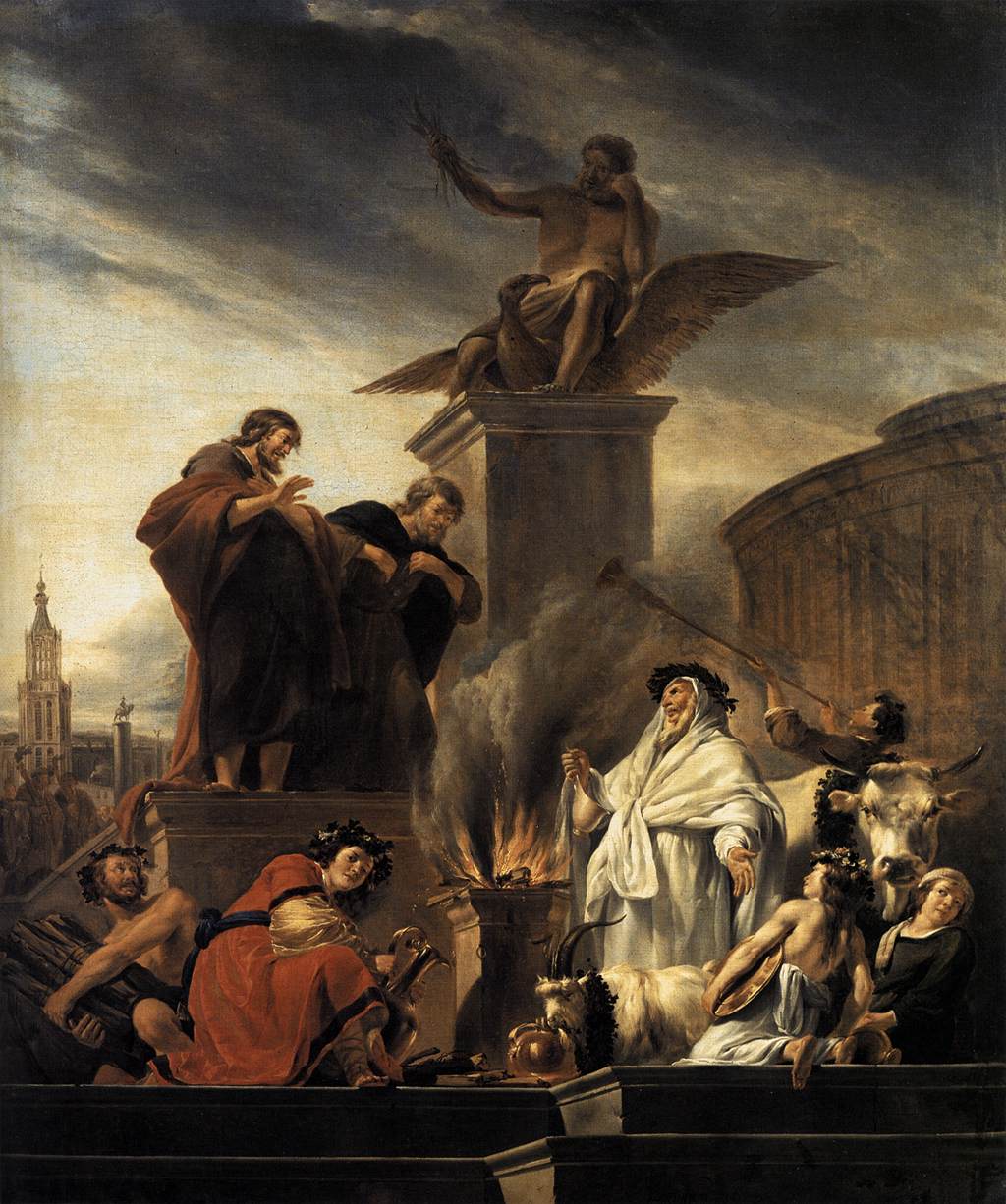
“So they shook the dust from their feet in defiance and went off to Iconium.” (Acts 13:44-52)
The apostles were shaking the dust from their feet. Perhaps I should shake the dust from the feet of my unbelief and perhaps you should too.
“So they shook the dust from their feet in defiance and went off to Iconium.” (Acts 13:44-52)
The apostles were shaking the dust from their feet. Perhaps I should shake the dust from the feet of my unbelief and perhaps you should too.
The words of today’s Gospel from John which we heard at Mrs Thatcher’s funeral are some of the best-known and greatest in literature.
“I am the way, the truth, and the life.”
These sort of words are like great seas crashing on the rocks in my mind of scepticism and unbelief. The rock enduring, grey, grim points despite the magnificence of these words and their power and allure. They rise up, white, spray flying. Glorious, but the rock remains.
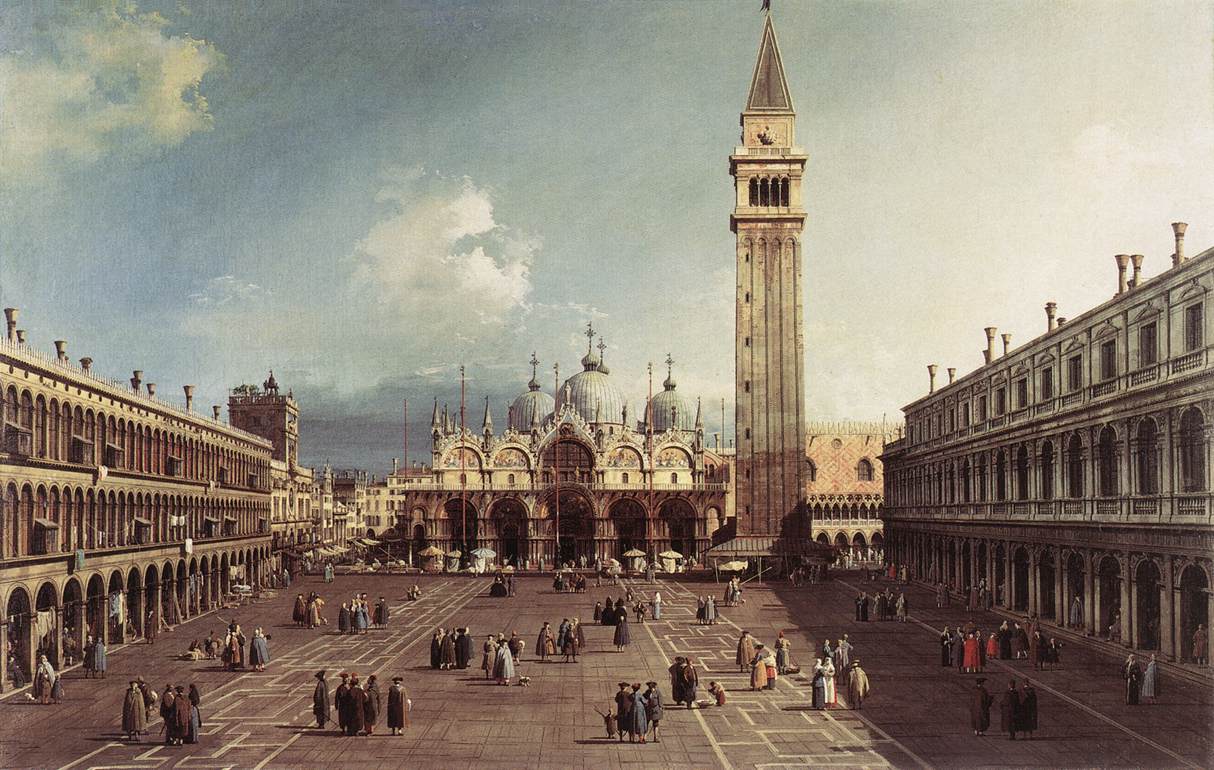
A twelve-hour drive on my own back from Strasbourg. Before that, a last mass in the Cathedral was a bit of a relief.
The reading from Mark is a ringing final exhortation.
“Go out to the whole world, proclaim the good news to all creation.” (Mark 16:15-20)
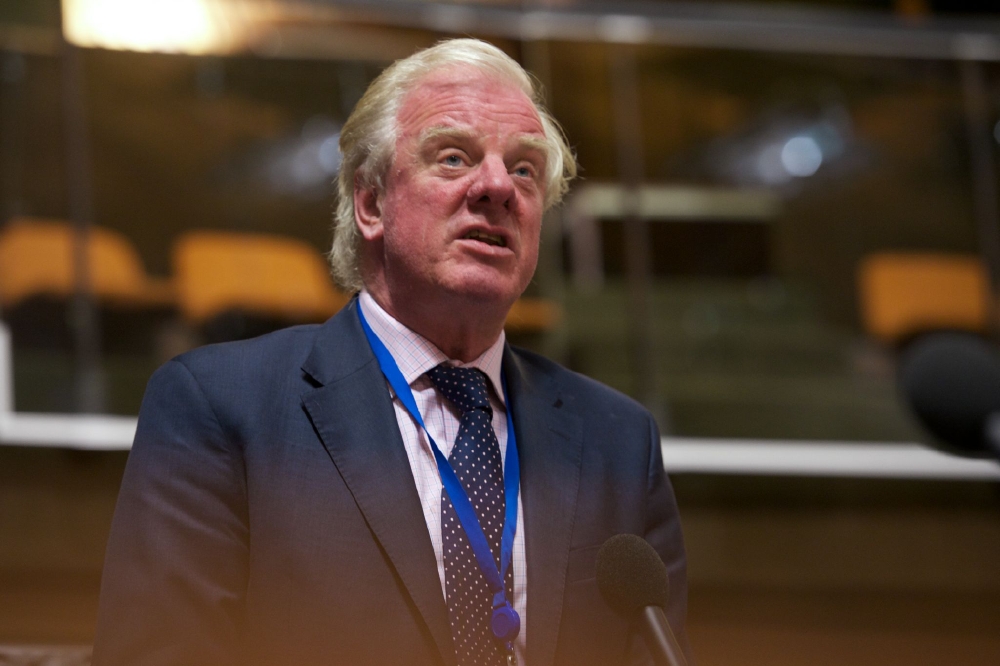
We were to have driven back for a funeral but the car is en panne so I spoke on the persecution of Christians in the Middle East.
What can one say in three minutes? The week before I saw for myself the suffering of the Palestinian people. Christians are now down to 10% of the population of Palestine.
And here this week we are hearing the Acts of the Apostles.
“The Word of God continued to spread and to gain followers. Barnabas and Sault completed their task and came back from Jerusalem bringing John and Mark with them.” (Acts 12:24-13:5)
In Strasbourg I go to the 7:30 Mass in a small chapel at the back of the Cathedral. Although it is only a ‘low’ daily mass, the priests there sing it with great reverence. It is a fine mass and worth getting up for.
I was asking a question of the Prime Minister of Georgia. We have just witnessed the peaceful handover of power in an ex-Soviet bloc country. But things, particularly with the judiciary, are already slipping.
“When he has brought out his flock, he goes ahead of them, and the sheep follow because they know his voice.” (John 10:1-10)
But how much time do we spend in even trying to hear that voice?
Knowing I had to spend all of Sunday driving to Strasbourg, I went to Mass on Saturday in the quiet Wolds village of Hainton.
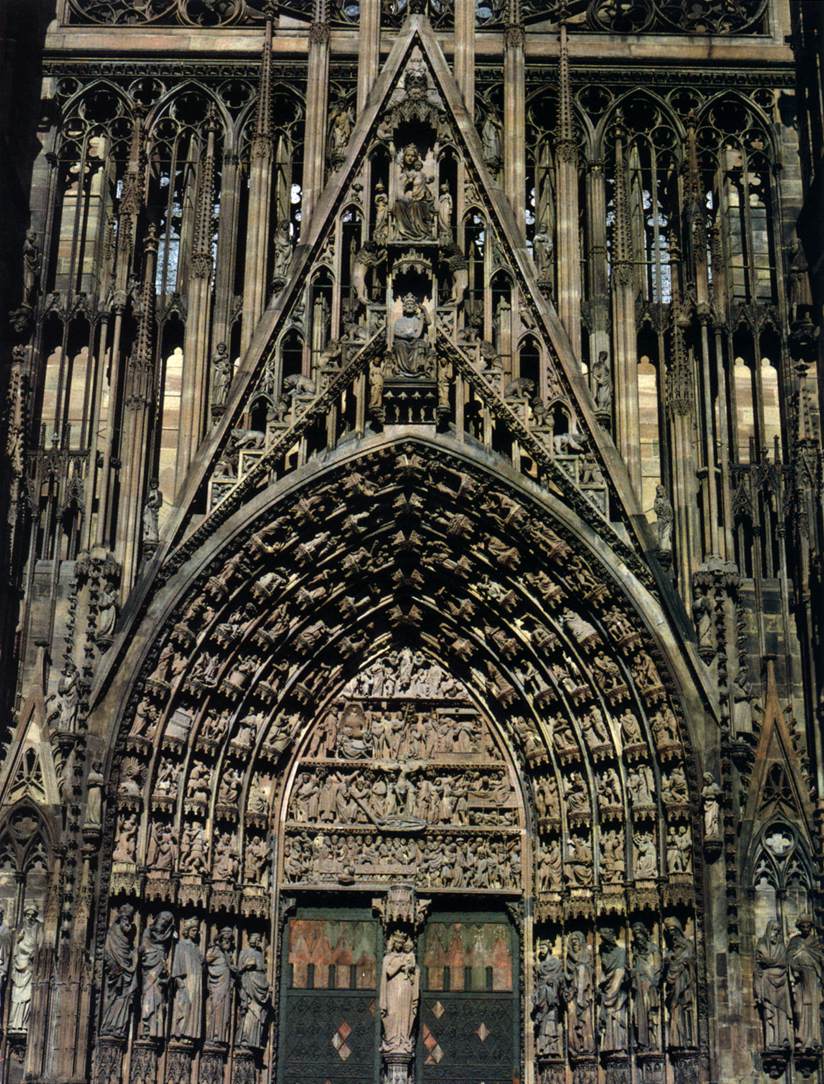
After the ten-hour drive, I arrived at the evening Mass in the mighty cathedral of Strasbourg, the nave soaring up a hundred feet but the message was the same.
In biblical times, the shepherd led from the front. I thought of the boy shepherds I had seen the week before in the high rocky pastures of Jordan, leading a few scraggly sheep.
“I tell you most solemnly, I am the gate of the sheepfold.” (John 10:1-10)
I woke up in the middle of the night. I know now that, instead of fretting about decisions and difficulties, the thing is to start saying the Rosary.
But I now focussed each part of the Sorrowful Mysteries on someone I had met today in my surgery and their difficulties. However irritating, I soon fell asleep!
Today, Jesus’ followers fall away.
“After hearing this doctrine, many of the followers of Jesus said ‘This is intolerable language’.” (John 6:60-69)
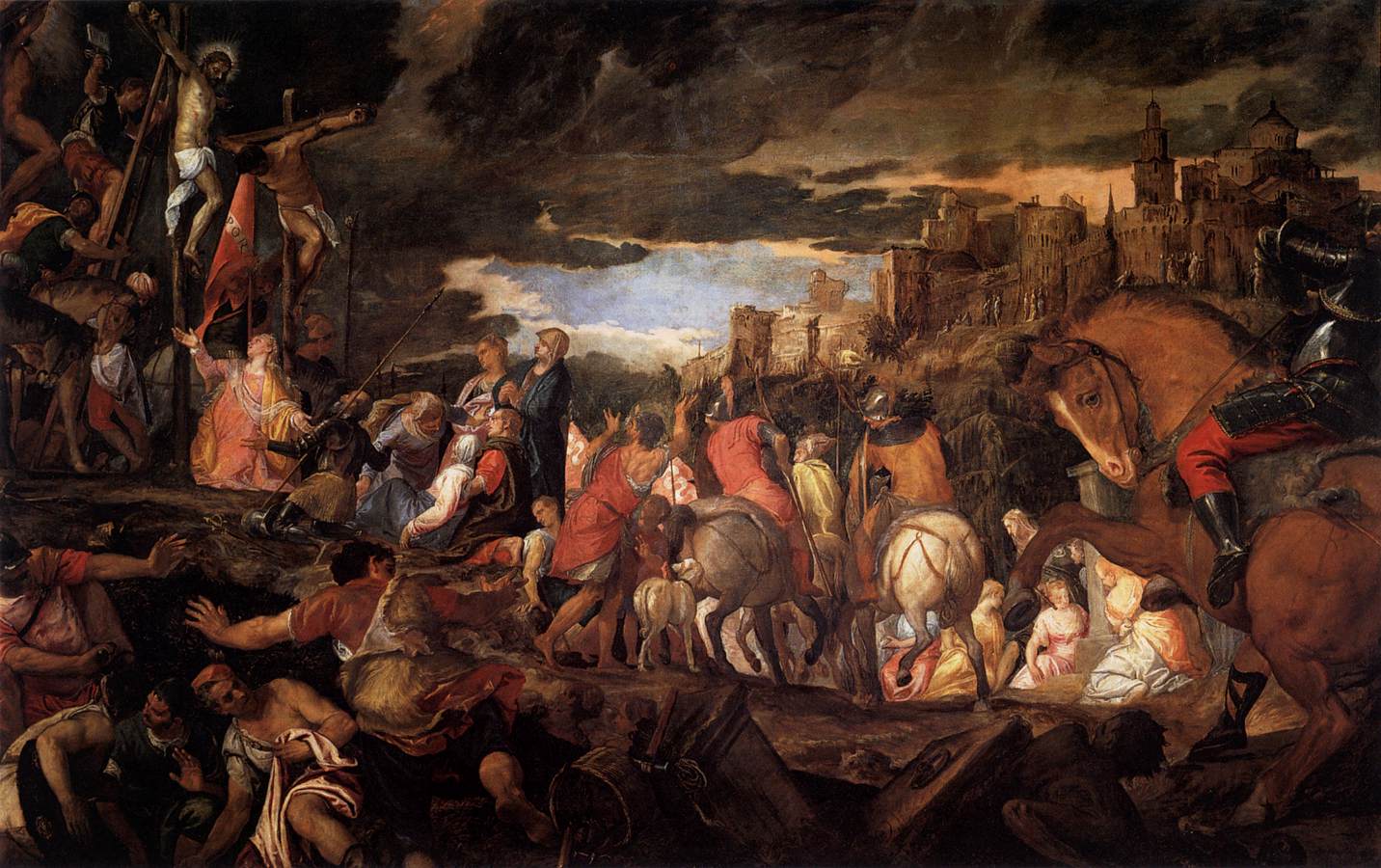
I woke up in the night and started to say the Rosary, focussing on the Sorrowful Mysteries. But now I had been there myself in Jerusalem this week.
At the Trial, I was by the Lion’s Gate next to the site of Pilate’s Antonia. Continuing up the road I was by the Church of the Flagellation, where I was robbed of my 100 euros by the Austrian Hostel. At the start of the Via Dolorosa I was by the Crowning of Thorns. Up the Via I was dragging my suitcase, and at the Church of the Holy Sepulchre I was witnessing the Crucifixion.
Jesus preaches today the Eucharist: “Anyone who does eat my flesh and drink my blood has eternal life.” (John 6:52-59)
The readings today are watery. Philip baptises the Ethiopian, travelling from Jerusalem on his chariot.
I was sitting there at Mass waiting for the Eucharistic prayer to end.
I suddenly had this moment of acceptance. It is not wrong to want to achieve things, run things. It is a worthy ambition, just get on with it. Some things may happen, others not. Some few successes, other times not. Others will have far greater successes, accept it.
“No one can come to me unless he is drawn by the Father who sent me.” (John 6:44-51)
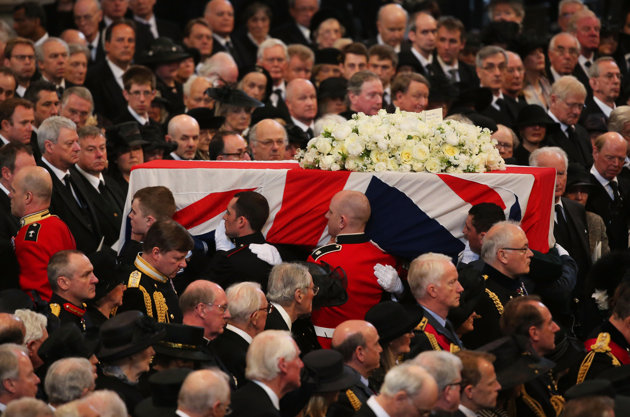
Today was the funeral of Mrs Thatcher. I went.
I was very struck by the address by the Bishop of London. Stripping away all the mythology, being an “-ism”. She is now atomised, she is now one of us.
It’s all so obvious, so true, yet we forget it all the time. We all have to go where she is and power, position, wealth mean nothing there.
“Now the will of him who sent me is that I should lose nothing of all he has given me And that I should raise it up on the last day.” (John 6:35-40)
I was taking an EasyJet flight back to London from the Middle East.
Very late and very cramped, but think of those who for hundreds of years had walked and sailed all the way to Jerusalem.
How can one wake up feeling depressed in the Holy Family Hostel when one is a short walk from the Church of the Nativity? Twice I have found it locked, now an Orthodox priest denies me access to the Crypt but to be here is good enough.
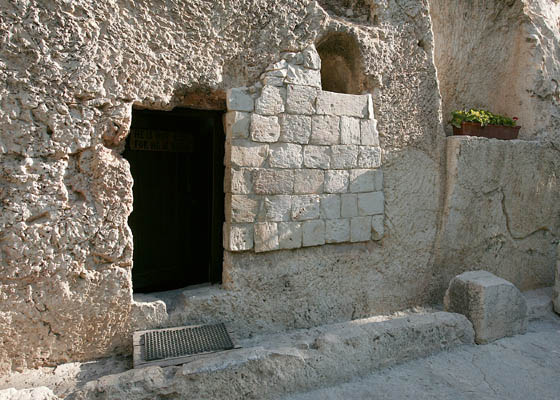
I go then to the Garden Tomb. Here we can really appreciate the atmosphere. The women running up to the open tomb, Peter seeing the linen cloths on the floor, John running in and believing.
“He is not here. He is risen.”
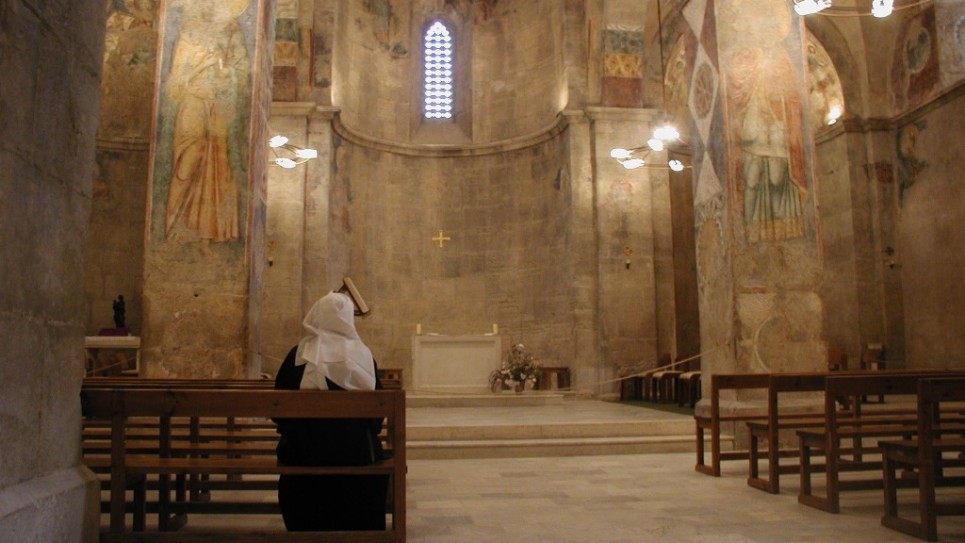
I went with the Director of the Hospital to the Crusader Church in what the Order of Malta in the twelfth century thought was the village of Emmaus. No one knows where it is. The mass, all in French, was beautiful and afterwards we had a silent lunch in the monks’ refectory. To see the French Benedictines makes this, surrounded by palm trees and heat, was to be reminded of the miracle of the French monks in Algeria, are of the most moving I have seen.
The reading was of the catching of the fish in the lake after the Resurrection, sung entirely in French, the accents so hard that I only understood what I was hearing half way through. Embarquement – boarding – was the clue, but the disciples too at first didn’t understand what they were seeing.
Walking round the Old City I was denied access to the Temple Mount by Muslim guards and the Wailing Wall by Israeli guards. I had to content myself with the Garden of Gethsemane. Is it really there, did the ancient trees really witness the Agony? When I reach down in the Church of the Holy Sepulchre and found the rock on which Jesus died, I do not know, just as there is much I do not know and doubt but it all happened undoubted by either here or with a hundreds of yards.
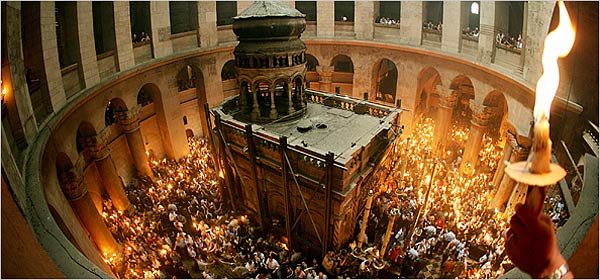
I arrived in Jerusalem after an eleven-hour journey. Because it is Shabat, the Israelis have closed the Allenby Bridge. I did a huge roundabout detour to the Northern Crossing where the Israeli guards are surly. Why do they want to know my grandfather’s name? Then a hugely expensive rip-off taxi to Jerusalem: no buses. I looked around and made my way into the crowded streets, found by chance the Via Dolorosa and walked up it.
But how moving to arrive at the Church of the Holy Sepulchre. One ducks down into the very chapel in which the Resurrection is said to have taken place and remains as long as one can, or dares. There are long queues waiting.
I am visiting the Order of Malta Hospital of the Holy Family in Bethlehem. How humiliating it is for the Palestinians to cross this large internal frontier. It reminds me most of the Berlin Wall which I crossed thirty years ago. It is thought that most Palestinians are not allowed to cross – this is so troubling. They are prisoners in their own country. I am pro-Israel and its right to exist but not this contentious theft of land. And when you oppress, you in turn become oppressed.
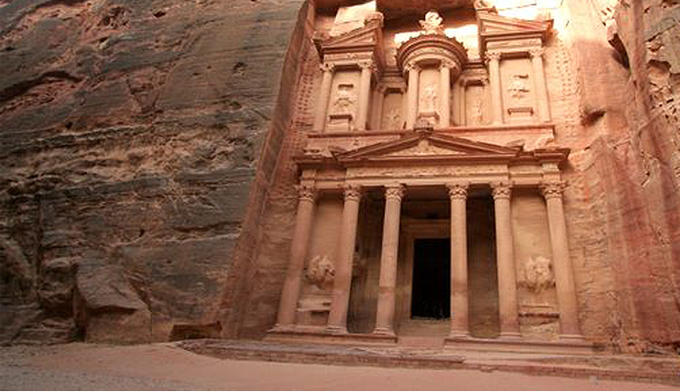
We were in Petra. We climbed long and hard to the Monastery – not a monastery in fact but perhaps used by the Byzantines as a church.
But for me, the most moving moment was to escape from the crowds and sit on the very “edge of the world” with screes and wadis tumbling down to the distant flat Dead Sea plain, all in brilliant sunshine. Birds wheeling below above the great heights.
One feels in the very edge of vast tumbling precipice and feel the cooling wind on one’s face.
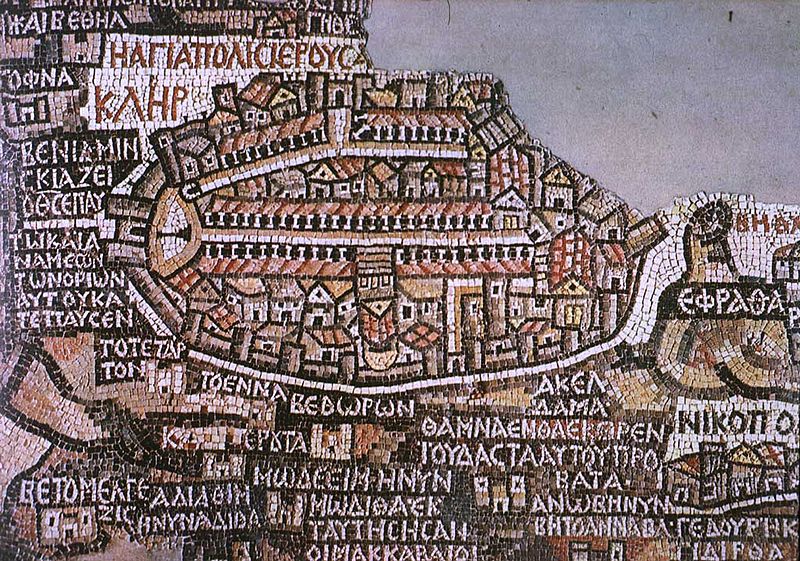
I walked around Madaba near Amman with my son. Here in the ancient Christian church you can find superb surviving Christian mosaics.
The greatest dates from the sixth century and is a map of Jerusalem, the holy city. You can see its streets expertly rendered in their proper position.
How moving to stand next to this reminder of Byzantine Holy Land.
I went to the tributes to Mrs Thatcher before flying off to Amman. The important point to make about Mrs T’s life is that she had to compromise of course but she kept a guiding light on the horizon to aim for and that guiding light is freedom, not such a bad guiding light. She was also, and I remember well, personally kind to her staff, wonderful to work for, demanding to work with.
The papers of course are full of Mrs Thatcher’s death.
It is inevitable that people focus on the life, a life well spent in my view. But how puny one’s own efforts and effect seem compared to such a life. I suppose the only way is not to lose heart. To accept our own contributions however minor and get on with them.
Of course in all this there is no comment on what is most important: passage of the soul. Compared to this what are worldly accomplishments or failings.
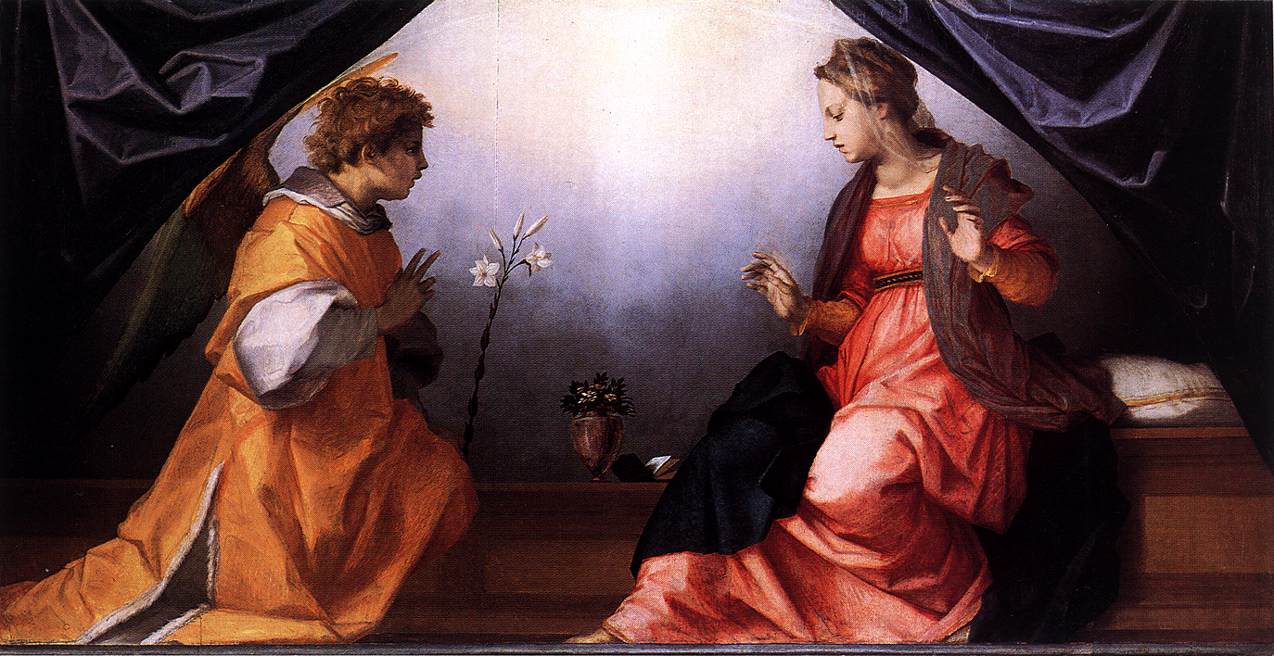
It’s good to have the Annunciation suddenly appearing in the middle of the Easter period. It’s a boost when one feels depressed that Easter is over and the readings revert to “Ordinary Time”.
The Orthodox Church is right not ever to change the date of the Annunciation even if it falls in Holy Week. What does it matter? The life of Jesus is a important in any event.
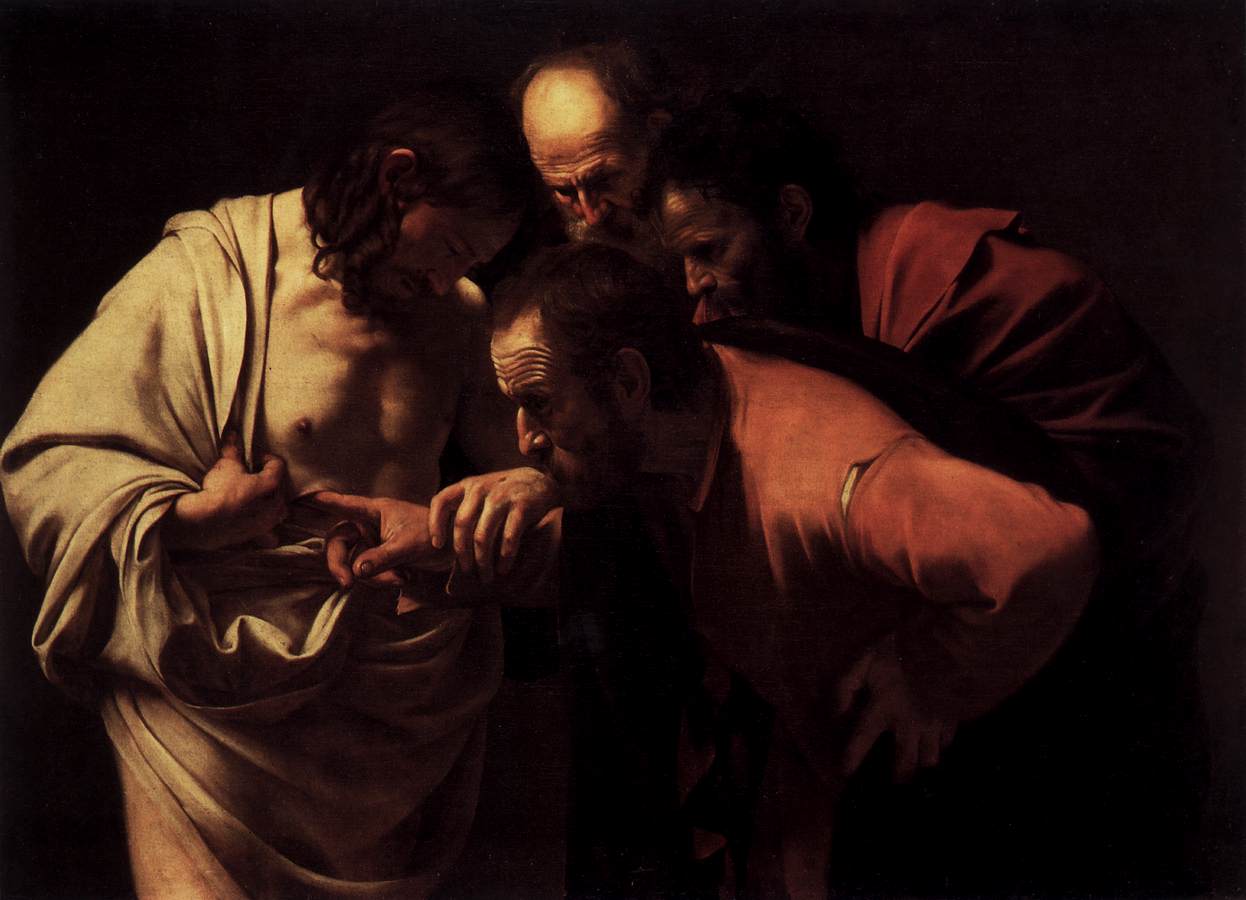
Today is the favourite reading of many people. Thomas is not in the room. When Jesus comes, His words so well known, the implication for us so dear that one doesn’t even need to repeat them, except perhaps to oneself.
Happy indeed is the man who believes without seeing. It is a gift. I wish I had it all the time but my advice to you is to take it even fleetingly.
The reading today is a kind of summary of the week. A full stop. A time to reflect. I sat in my garden in Lincolnshire for some time, the first nice day, trying to be quiet.
We travel and walk at too great a pace. It is good to listen to the quietness of the countryside.
“He leadeth me beside the still waters.” (Psalm 25)
Peale mentions a doctor who gave this advice to a patient suffering from stress. Take a two-hour walk every day and spend a half-day a week in the cemetery.
“Because, answered the doctor, I want you to wander around and look at the gravestones of men who are there permanently. I want you to meditate on the fact that many of them are there because they thought even as you do, that the whole world rested on their shoulders. I suggest you sit on one of their tombstones and repeat this statement: A thousand years in thy sight are but as yesterday when it is past and as a watch in the night. (Psalm 90:4)”
What is the nature of discipleship? When today the Apostles go fishing they take advice from a stranger to throw their net to starboard.
One hundred and fifty three are caught, the number of fish species then thought to exist. So if we take Jesus’ advice even as a stranger we shall catch all Creation, or that is the message. But rather it is the hourly scene on the beach that catches our attention, the gulled fish and bread are more attractive than the whole of creation.
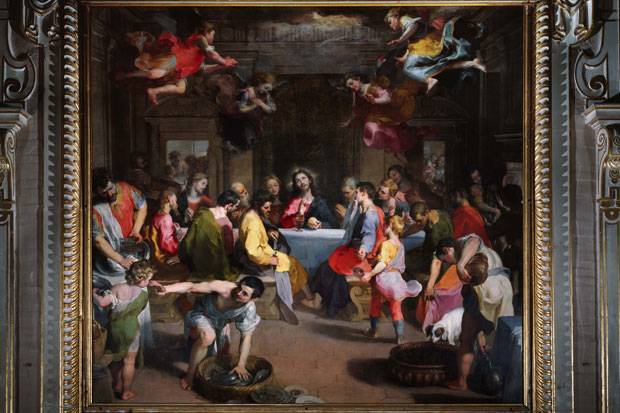
I went to the Barocci exhibition at the National Gallery. He is an exquisite sixteenth-century painter in portraiture and religious scenes. The exhibition was almost empty, the crowds go for the big names. Earlier in the week I went to Pompeii at the British Museum and Manet at the Royal Academy and we couldn’t move.
Barochi worked notoriously slowly taking years on a picture. Doing various studies of form and bodily movement and faces to make the final result.
He hardly ever left Urbino, living quietly and long. Every figure is a dramatic masterpiece.
But sadly there were no pictures of these Easter scenes or they were not here.
“They were still talking about all this when Jesus himself stood among them.” (Luke 24:35-48)
I woke up in the night and imagined myself in these Easter week scenes. It’s not so much lectio divina, reading slowly, understanding the text, asking what does it mean to me as what I call imagino divina: trying to remember the text, scene by scene.
Tonight I was trying to remember everyone’s favourite story: the disciples meet Jesus on the road from Emmaus.
I was walking with them. I am walking with theirs. And my eyes closed.
First I am dejected, then I listen, but I am listening so hard.
“Then starting with Moses and going through the Prophets, he explained to them the passages throughout the scriptures that we about Himself.”
And still they do not recognise Him. And still I do not recognise Him.
So I plod on in my dream.
And then we go into the house together.
“Now while He was with them at table, He took the bread and handed it to them. And their eyes were opened, but He vanished from their sight.” (Luke 24:13-35)
This happens to me: I believe for a moment, then He vanishes.