The Brain in a Vat Conundrum

I was reading an article about a philosophical conundrum – ‘The Brain in a Vat.’

It assumes that if one’s brain were actually detached from one’s body, fitted with electrodes and made to think that it were having real life experiences, the detached brain would not realise that it was not part of the real world. Taking this a step further, a single computer could simulate entire lives of millions of people, all of them oblivious that they are in a computer program.

But, if a single computer can manage this, is that not an answer to Isaiah’s statement that God comprehend the lives of everyone who had ever been or ever should be? What had seemed an impossible technological feat even thirty years ago is now doable to some extent by ourselves – not to mention God.

Midsummer Day – St. John the Baptist

I always find today’s teaching from Isaiah difficult.

The Lord called me before I was born. From my mother’s womb he pronounced my name. (Isaiah 49:1-6)

How could a God, if there is one, know us before we are born or even conceived?

But the Psalm 138 seems right:

O lord, you search me and you know me.
You discern my purpose from afar.
You go before me when I walk or lie down.
All my ways are open to you.

St. Aloysius Gonzaga

St. Aloysus was born in 1568. He died in 1591 from the Plague while working in a Hospital after renouncing his inheritance. The opening prayer of the mass has a lovely resonance.

In St. Aloysius you combined remarkable innocence with the spirit of penance. By the keep of his prayers may we who have not followed his innocence follow his example of penance.

Feast of St. Thomas More & St. John Fisher

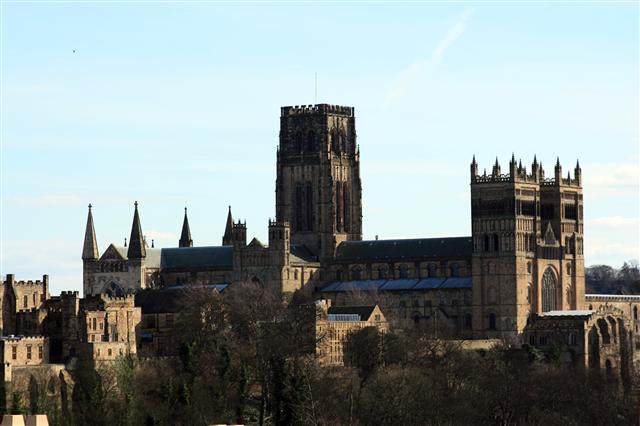
We had Mass in St. George’s Chapel at the Cathedral. Mass at these small side chapels is always more spiritually redolent. There can be no greater contrast between the lives of St. Thomas and St. John and that of Cardinal Newman [see below]. I could put up with Newman’s martyrdom of small disappointments, but I just know that in 1535 I would have gone with the flow and obeyed the king like everyone else. But are not the heroes of history crashing bores, impossible individuals, or just heroic?

Perhaps that’s why today’s gospel is particularly difficult for me.

Anyone who prefers Father or Mother to me is not worthy of me.
(Matt. 10:34-39)

There was also a meeting of the Catholic Union today, which I attended. The discussion of matters of public interest was good, but what really caught my attention was a paper circulating about the Pope’s visit and the life of Cardinal Newman. Newman’s life was one of lost friendships because of his conversion and constant disappointments. Most of his projects, such as a Catholic university, fell through. He once he of all people, asked himself if he had really ever achieved anything as a Catholic. So his life is valuable not just for the writings and his works which lend us a kindly light, but for his disappointments.

Waterloo

I went to the re-enactment of the Battle of Waterloo. It was a magnificent sight: three thousand soldiers magnificently dressed with each battalion in the correct place, dressed in immaculate uniforms. Black for the Prussians. Blue for the Napoleonic Imperial Guard, with the British guardsmen brandishing their Green rifles.

Afterwards, we walked around the camp, which was cooling off and sleeping as if they were in the first part of the nineteenth century. The atmosphere, colours and movement were perfect. The display was wonderful, yet no one – not one soul – is ever killed at the event, despite popping at each other with mighty bangs all day.

In fact, the real Battle of Waterloo was a ghastly affair with a fearful death toll. Wellington could scarcely bear to look at the scene of his great victory. The reality of war is not one of pretty uniforms and brave marching bands, but of dust and death in Afghanistan.

But enough pomposity! as the Imperial walked up the hill for their last charge, I could barely refrain from shouting ‘VIVE L’EMPEREUR!’

Quit Worrying

Can any of you, for all his worrying, add one single cubit to the span of his life? And why worry about clothing? Think of the flowers growing in the fields: they never toil nor spin; yet I assure you that not even Solomon in all his regalia was not arrayed like one of these. (Matt. 6:24-34)

Of course it is maddening to be told not to worry. Worrying is innate to our nature. Yet as the priest told us at mass – you can try to live for the moment and stop awhile to look at nature and concentrate on it.

Remember, O Most Blessed Virgin Mary

For some reason after Mass I stood in front of the statue of the Virgin Mary in the Cathedral.

The text of the Memore in front of it always strikes love to my heart – that there is no one whose prayers to Mary are not answered in some way.

For an instant, my heart too was filled affection for Mary and then the moment passed as they always do.

A Lord-pervaded World

Stonyhurst College came to visit this week and one of the masters gave me John Twist’s new book Netting Fishes. This is a book of short homilies from the chaplain to his congregants. It is excellent. I was struck by one thought. It was a quote from Gandhi:

All this world must be pervaded by a Lord. Accept and enjoy it.

It is an interesting thought that if God is in everything, in a sense we can love everything if we don’t want to own it.

Palm Donkeys

In the V&A in the new Medieval Gallery is a lovely Palmesel made around 1840. Palmesal means ‘Palm Donkey.’ These were drawn through the streets on Palm Sunday.

There is a video of one such procession taking place today in the Austrian village of Thaur. We see the entire village following the priest and deacons up an Alpine Valley, pulling the wooden depiction of Christ on his Donkey.

In so much of Europe, particularly here, the lovely processions and traditions are forgotten. They brand communities the past and themselves and each other the future.

Let him have your cloak as well

The gospel reading tells us to turn the other cheek if assailed by anyone.

You have heard that it was said ‘an eye for an eye and a tooth for a tooth,’ but I tell you, do not resist an evil person. If someone strikes you on the right cheek, turn to him the other also. And if someone wants to sue you and take your tunic, let him have your cloak as well.

The Parable of the Creditor

I thought today’s gospel particularly appropriate. And then, by chance after Mass, I looked up the reading for Monday in 11th Week of Ordinary time. Somebody I knew was being very difficult. It seemed to present an apt meditation for me.

There was once a creditor who had two men in his debt; one owed him five hundred denarii and the other fifty. They were unable to pay, so he pardoned them both. Which of them loved him more? ‘The one who was pardoned more’ answered Simon. Jesus said ‘you are right.’ (Luke 7:36 – 8:3)

Raphael’s Madonna of the Pinks

I was reading in the Times that Raphael’s “Madonna of the Pinks” in the National Gallery is now proven to be genuine. This is a most delightful picture and I was meditating on it for some time.

Mary’s cheeks are healthy but soft and delicate too. Her gaze on the child Jesus is intent but not really as intent as his stare on the flower held in his hand. In her other hand she holds the rest of the bunch of flowers as if she has just passed him one stem.

Rowan Williams at St Margaret’s

There was a service for Parliament at St. Margarets, Westminster.

The Archbishop of Canterbury, Rowan Williams, gave us the most marvelous homily. He delivers a powerful punch. He went out of his way to defend religious people, not as an inward looking sect, but as people who should have a central place in society and public life.

Poor in spirit

I went to Mass and little remained apart from today’s gospel reading – the Beatitudes.

How happy are the poor, in spirit. Theirs is the kingdom of heaven.
(Matthew 5:1-12)

But what does ‘poor in spirit’ mean?

“We are all spiritual Semites”

I was reading Martin Gilbert’s Kristallnacht over the weekend. The cruelty of it all made me weep. But I was struck by a comment of the then Pope Pius XI. He said that spiritually we are all Jews – “that we are all Semites.”

I feel that too: that we are everything to the Jewish race and that we should support them in their desire to create and protect their homeland. Spiritually, I am a Jew.

Stainton Le Vale Churchyard

The Church at Stainton Le Vale was closed, so I had a look at the grave stones. By chance, the reading on one of them is the same as today’s reading – Saturday for the ninth week in ordinary time.

I have fought the good fight to the end. I have run the race to the finish. I have kept the faith. (Second letter of St. Paul to Timothy)

The people who put this on their gravestone were called Spalding. The writing was so much erased I could not make out their Christian names. They died in their sixties in 1876 and 1881.

Who were they? What race had they won and how? No one will ever know, but I’m sure they were good agricultural folk.

The lush abundance of the countryside

The countryside in the last weeks of May and first week in June is glorious.

Everything is glowing in lush abundance. The Lavender and Lilac are out yellow and purple and the grass grows even brighter green. This far North in Lincolnshire the evenings are wonderfully long. At a quarter to ten, everything was still daylight and the sky had become a glorious mottled pink. Within the brightest pink I saw a plane Soaring above me, carving a golden furrow through the sky.

Today’s psalm is 118:

The lovers of your law have great peace.

Evening Mass at the Oratory

I went for the first time in a long time to the evening mass at the Brompton Oratory.

This mass is in Novus Ordo and is beautiful. Afterwards, there is a veneration of the Blessed Sacrament. A quiet hour can be passed in first meditating the gospel acclamation:

Your words are spirit, Lord
And they are life.
You have the message of eternal life.

The Afterlife

I always find this gospel reading difficult to follow fully.

The Sadducees, who denied that there was a resurrection, put the question to Jesus as to what may happen to the widow of seven brothers after the resurrection. Whose wife would she then be? (Mark 12:18 – 27)

Jesus’ answer is plain enough.

For when they arise from the dead, men and women do not marry. No, they are like the angels in heaven.

But what, if there is an afterlife, is it like? It is impossible to conceive and to reconcile all these conundrums. Will we know who we were in heaven?

Will we meet who we knew? Will we know them?

Probably all these questions just beget doubts and it is best to just live life for the present. The next life can take care of itself.

The Final Mystery of the Rosary

The reading today from the Second Letter of St. Peter struck me as particularly beautiful and apposite:

May you have more and more grace and peace as you come to know our Lord more and more. By his divine power, he has given us all the things that we need for life and for true devotion, bringing us to know God himself, who has called us by his own glory and goodness. In making these gifts, he has given us the guarantee of something very great and wonderful to come: through them you will be able to share the divine nature and to escape corruption in a world that is sunk in vice. But to attain this, you will have to do your utmost yourselves, adding goodness to the faith that you have, to your goodness understanding, to your understanding self-control, to your self-control patience, to your patience true devotion, to your devotion kindness towards your fellow men and women, and to this kindness, love. 2 Peter 1:2-7

It is true that if we make the effort to honour God, more peace can come to us – but that is the difficult part for me, if not impossible.

But to attain this, you will have to do your utmost yourselves, adding goodness to the faith that you have, to your goodness understanding, to your understanding self-control, to your self-control patience, to your patience true devotion, to your devotion kindness towards your fellow men and women, and to this kindness, love.

This is where we all fall down.

I was trying to sleep without much success and I concentrated on the final tragic mystery of the Rosary – the death and crucifixion of Jesus.

It is only when we visualise this and put ourselves in the scene that the mystery strikes us. It is an extraordinarily comforting thought that our religion is based on the concept of a God prepared to die for us. But was he God?

Vasari’s Life of Man

Tucked away in an upper gallery of the V&A is a tapestry. You can see it peeping above a stairway from the entrance hall, but from a distance it looks dull. It is the story of the Life of Man by Giorgio Vasari 1511–74. The tapestry shows man midway in the pilgrimage of life, climbing the mountain of salvation accompanied by two female figures – Faith and Innocence – and a winged child representing divine love.

It is from the Palazzo Vecchio in Florence. It is only up close that it comes alive and only when given the explanation can one make sense of it. With a glance from afar, it is just another faded tapestry, but in reality it is a moving all allegory of life formed by many thousands of delicate threads. Not one in a hundred passing through the busy entrance hall give it a second look, but if you sit and ponder it for some time it comes alive. Such is life.

A line from the Mass readings stuck in my mind.

If you are a speaker, speak in words which seem to come from God. (1st Letter of St. Peter 4:7-13)

Alas! How very seldom have I ever done that!

St. Philip’s Day

By chance, I went to mass today at the Brompton Oratory and found it was the feast day of St. Philip Neri (b. 1515). A man of exceptional charm and a child of the Renaissance, he spent hours in the streets of Rome talking to young people. He is the founder of the Oratory.

As I sat and prayed there, I looked at a large picture of him in the sanctuary preaching in Rome. I had never noticed it before. In this time of uncertainty it struck me that the root of happiness was in doing what ever the Holy Spirit requires. We do not know where it will lead us and can only accept what happens to us. Others are often a better judge than oneself.

Ordinary Time

After the excitement of Easter, we are back to ordinary time and green vestments. This can be viewed as ‘boring time’ or as a time of growing. The gospel of today always strikes me as pointing to our greatest problem. The young man in the story has done everything right, but one thing he cannot do.

Jesus looking upon him loved him, and said to him, “You lack one thing; go, sell what you have, and give to the poor, and you will have treasure in heaven; and come, follow me.” At that saying his countenance fell, and he went away sorrowful; for he had great possessions. (Mark 10 17–27)

So we too go away sad and do things in a small, un-heroic way.

The Centurion’s Servant

Much of the Tate Modern is designed to shock or at least impress. Much of it is self obsessed or even vulgar. But in one of the galleries you will find this picture by Stanley Spencer.

It is a modern view of the healing of the Centurion’s servant from St. Luke’s Gospel. In the mute features of the participants the women praying and the man ill on a large bed is a powerful evocation of faith in prayer.