First Week of Advent

SUNDAY – First Sunday of Advent

“…on earth, nations in agony, bewildered by the clamour of the nations and its women.” (Luke 21:25)

And still men live in fear.

MONDAY – Saint Andrew

The chapel of St Andrew in Westminster Cathedral is particularly fine, mosaics of Constantinople opposite that of the burgh of St Andrews in Scotland, fine woodwork, and here I sit at the 10:30 Latin Mass. A beautiful experience.

“The Lord saw two brothers, Peter and Andrew, and he said to them: come after me and I will make you fishers of men.” (Matthew 4:18-19)

TUESDAY

Our debate on bombing Syria is to be tomorrow and I make a stab at a free vote in the Leader of the House Questions. No answer, of course.

Collect: “Look with favour Lord on our petitions.”

Our reading from Isaiah is familiar. I read it out at the Midnight Mass in Westminster Cathedral on Christmas Eve last year.

“A shoot springs from the stock of Jesse… on him the spirit of the Lord rests, a spirit of wisdom and insight.”

WEDNESDAY

Our debate on Syria – nine hours long. I speak, only five minutes but long enough. I am full of doubts and say we should only act in self-defence. A minute before he sits down the Foreign Secretary replies directly to me.

Then we are at Mass – Father Pat asks for two minutes’ silence for those about to vote. A child cries at the back of the crypt chapel and overhead the sound of helicopter rotor blades.

THURSDAY – St Frances Xavier

An eight-hour meeting in the City on top of eight hours in the chamber yesterday. A change of gear and in the evening I read a lesson at St Mary’s Cadogan Street in the carol service for Aid to the Church in Need.

FRIDAY

After so many hours on Wednesday I don’t feel up to any kind of speech on private members bills so just make a couple of interventions.

“The deaf that day will hear the words of a book and after shadow and darkness the eyes of the blind will see.” (Isaiah 29)

Appropriate as today we debate the Pavement Parking Bill, blocked by the Government to allow blind people to walk on pavements without bumping into things.

SATURDAY

A busy morning getting Theo up racing in the Serpentine and the wonderful sung Latin Mass of Saturday morning in the Cathedral. Then off to see ninety-year-old Auntie Betty.

“On every lofty mountain, on every high hill, there will be streams of water courses.”

Christ the King

SUNDAY – Christ the King

A usual quiet day in Lincolnshire. Mass, a ‘run around the block’, that is three miles keep turning left up the narrow country lanes and bridle ways up out of the deep valley and down again, Sunday lunch, invariably now just Mary and me. A sleep in front of the fire and then at 7 the long three and a half hour drive back.

Here we have Daniel, a likeable chap who calms lions and the book of the Apocalypse foretelling the end of the world. When I read the words of the Gospel for today, I think of the Passion being intoned quietly at that amazing Mass at Downside on Good Friday: “So you are a king then?” “Yes I am a king. I was born for this, I came into the world for this, to bear witness to the truth.”

The quiet, weary voice of the monk is very moving.

MONDAY

I ask a question of the Defence Secretary – is it wise to just wound a wild beast, without the ability to kill it?

TUESDAY – St Andrew Dung Lac & Companions

Daniel’s vision of the statue shows how all power breaks in the end – “Its feet part iron, part earthenware.”

WEDNESDAY

At our one-to-one prayer group after Mass at the Oratory, I am reminded that “politics is not fundamental.” We decide whether to build two or three runways at Heathrow yet the fundamentals remain the same. Also the Church cannot change fundamentally. It bases itself on the Gospel of Jesus Christ, which was written two thousand years ago, once and for all, and is never going to change.

Once again in the crypt chapel we sing the Taize chant: “Bless the Lord my soul, and bless his holy name. Bless the Lord my soul, who leads me into life.”

THURSDAY

A two-and-a-half-hour statement from the Prime Minister on Syria. I ask if there are any credible ground troops to finish the job – not a rag bag army.

Later at Mass we read of Daniel being thrown into the lions’ den. I always wonder if on the side the lions were not given a hearty meal by the king but when Daniel’s accuser is thrown in their bones are ground to dust so perhaps they were hungry.

FRIDAY

A long drive up to Lincs but first Mass in the Holy Souls chapel – a beautiful exuberant memorial of death in mosaic, and the reading one of new life: the budding vine, the first sign of spring.

SATURDAY

The shooters are up early. A black Labrador shifting through our garden, sounds of shots penetrating the thick Norman walls of our village church as I read Psalm 72: God grant the King wisdom.

Leo the Great

SUNDAY – REMEMBRANCE SUNDAY

Father Robert does a lovely Requiem Mass sung in Latin facing the altar. The most beautiful and spiritual Mass I have attended in Holy Rood.

A red-letter weekend as four of the children are here in Lincolnshire.

MONDAY – Dedication of the Lateran Basilica

The Scotland Bill comes back for the last time and I once more speak in favour of full fiscal autonomy, to the extent that the Secretary of State describes me as a Scot Nat member.

The Lateran Basilica predates all these modern disputes by a long time. It was built by the Emperor Constantine in 324 on the Lateran Hill in Rome and its feast has been celebrated since the twelfth century.

Entrance antiphon: “I saw the holy city, a new Jerusalem, coming down out of heaven from God, prepared like a bride adorned for her husband.”

I love today’s reading from Ezekiel 47 – it is on a watery theme:

“The angel brought me to the entrance of the Temple, where a stream came out from under the Temple threshold and flowed eastwards since the Temple faced east. This water, flowing into the sea makes its waters wholesome.”

TUESDAY – St Leo the Great

We travel to Rome for the All Party Holy See Group. Always nice to arrive there. I walk through the darkening streets to a Mass in yet another baroque church. I feel inadequate, that I should know these treasures but I don’t.

I am in this splendid ill-lit church with two nuns and three old ladies and two elderly priests.

My Universalis app didn’t work either – they seem to have another day’s reading in Italy. Whence the Universal Church?

WEDNESDAY – St Martin of Tours

A papal audience in the morning – an enjoyable spectacle in warm autumn sunshine and as a bonus I get to shake the Pope’s hand. But the highlight is the Mass in the English College – a delight to see the spirit of the young seminarians. Fairly impenetrable meetings with two cardinals.

The readings at today’s Mass seem tailor-designed for a bunch of visiting politicians.

“Listen… kings… power is a gift to you from the Lord. He himself will probe your acts and scrutinise your intentions. If you have not governed justly, he will fall on you angrily and terribly.”

THURSDAY

A Mass at the Tomb of St Peter – always inspirational to be literally at the centre of things. St Peter crucified out a hundred yards from here and then dumped into a shallow grave. Whou would imagine that this mighty basilica would stand here two thousand years later – his tomb rediscovered with the inscription “Petros eni”, Peter is here.

FRIDAY

I go to a meeting of Lincs county councillors on the way home.

Luke 17: “As it was in Noah’s day, so will it also be in the days of the Son of Man. People were eating and drinking, marrying wives right up to the day…”

SATURDAY

“When peaceful silence lay over all…” (Wisdom)

A day in the country, of autumnal colours, a long walk. I was looking at the Thames first, now in November twilight, and I concentrated on the shifting grey waters, a shift in the mind took place, a shift to memories, plans, receipts of information, to a deeper consciousness of self, a separateness.

All Saints

SUNDAY – All Saints

I go to Mass in the Cathedral before driving to Paris.

“How happy are the poor in spirit: theirs is the Kingdom of God.”

MONDAY

My last Legal Affairs Committee at the Council of Europe. Today’s verse from the Book of Wisdom is lovely:

“In the eyes of the unwise, they did appear to die. Their young looked like a disaster, their leaving our annihilation, but they are at peace.”

TUESDAY

I find by chance a Mass at La Madeleine.

I pretty much understand Luke 14:11-25.

“Come along, everything is ready now. But all alike started to make excuses.”

In the event, a last group meeting of the European Conservatives.

WEDNESDAY – St Charles Borromeo

A lifetime spent fighting calumnies and laxity. He died exhausted at the age of 46.

THURSDAY

I take the answers for the Public Accounts Commission in the House of Commons. Always nice for a change to answer rather than question. Not that I have any more power in answering than in questioning.

FRIDAY

I am back in our church, reading now Psalm 69, “Save Me, O God”.

SATURDAY

And today Psalm 70, Haste thee O God and deliver me.

‘Deus in adjutorium meum intende’ is how we start vigils in the Monastery. Reading these words in a small village church brings back happy memories.

30th Week in Ordinary Time

SUNDAY – 30th Sunday in Ordinary Time

Entrance Antiphon:

“Let the hearts that seek the Lord rejoice. Turn to the Lord and his strength. Constantly seek his face.”

MONDAY

Collect:

“Almighty ever living God, increase our faith, hope, and charity. And make us love what you command.”

TUESDAY

“I think that what we suffer in this life can never be compared to glory, as yet unrevealed, which is waiting for us.”

Hardly a suffering but today I am summoned in by the Chief Whip to be sacked from the Parliamentary Assembly of the Council of Europe.

WEDNESDAY

St Jude, the patron saint of lost and desperate causes. And ultimately we know nothing of him save his question at the Last Supper.

Antiphon: “These are the holy men whom the Lord chose in his own perfect love.”

THURSDAY

Romans 8:31-39

“With God on our side who can be against us?”

We drive up to Lincolnshire for a formal event.

FRIDAY

I go to our village church to read Psalm 68: “Let God Arise”.

Indeed the prose of the Book of Common Prayer arises as no other.

SATURDAY

We go to the thirtieth anniversary Mass of some friends at St Mary’s Shaftesbury. I wish we had done the same – a lovely idea.

Perhaps today’s Gospel from Luke is appropriate:

“When a man invites you to a wedding feast, do not take the place of honour.”

Twenty-ninth week in Ordinary Time

SUNDAY

The psalm today, Psalm 32, is beautiful:

“May your love be upon us, O Lord, as we place all our hope in you.”

MONDAY – St Jean Brebeuf

I am always moved by the deaths of these saints clubbed to death and tortured in North America. Imagine their loneliness and courage in this vast foreboding wilderness.

My day today was more ordinary: a meeting with the Comptroller and Auditor General to plan my next five years as Chairman of the Public Accounts Commission, and then I met with the Leader of the House to discuss English Votes for English Laws. He agrees to a sort of compromise by which the Barnett formula consequentials will be reviewed after a year. Thus small steps are made.

Today’s Gospel always makes a strong impression on me:

“I will say to my soul: my soul you have plenty of good things land by for many years to come; take things easy, eat, drink, have a good time, but God said to him ‘Fool!’ This very night the demand will be made of your soul and this hoard of yours, whose will it be then? So it is when a man stores up treasure for himself in place of making himself rich in the sight of God.” (Luke 12:13-21)

Note that the man talks to his soul. This is his innermost being which is most connected to the good things of life. But at least he speaks to his soul. So far have we fallen from a religious view of society that then even rich men talked to their soul. Now they don’t even bother to do that.

TUESDAY

“Here I am, Lord. I come to do your will. You do not ask for sacrifice and offerings but an open ear.” (Psalm 39)

“An open ear…” How often do we do this?

WEDNESDAY

The reading from Luke 12:39-48 today emphasises the necessity of living in the absolute present.

“You may be quite sure of this, that if the householder had known at what hour the burglar would come, he would not have let anyone break through the wall of his house.”

As a victim of burglary, I know this well enough. Yet still spiritually we are not waiting.

THURSDAY – St John Paul II

We debate EVEL on the floor of the House. I gave my four-minute speech with three minutes to spare before chairing the Trade Union Bill.

Strange to think that I went to the funeral mass of today’s saint. It took some doing but I managed it. The then-ambassador to the Holy See said it was all impossible but the dignitaries in the Piazza Farnese helped me get in. A memorable experience to see Cardinal Ratzinger take the Mass and the simple coffin on the floor. Strange I remember this even over ten years ago very well but forget what I said in the EVEL debate a couple of weeks ago.

“Happy the man who placed his trust in the Lord.” (Psalm 1)

FRIDAY

Saint Ethelfleda was the daughter of Aethelwold of Wessex. I am reading Bernard Cornwall’s Saxon Tales. His hero Uhtred is a noted anti-Christian so would not have approved of this lady. We would probably find her impossibly remote to understand. We are told only that as Abbess of Romney she practiced an austere life.

Perhaps she would have read this passage from today’s Paul to the Romans: “I know of nothing good in me – living, that is, in my unspiritual self.”

SATURDAY

“The unspiritual are interested only in what is unspiritual, but the spiritual are interested in spiritual things. It is death to limit oneself to what is unspiritual. Life and peace can only come with concern for the spiritual.” (Romans 8:1-11)

Twenty-eighth Week in Ordinary Time

SUNDAY

We have a new priest at Market Rasen, Father Robert, and I am delighted to see a bit of Latin back. I never know why we have discarded Latin for the unchanging parts of the Mass.

“The word of God is something alone and active; it cuts like any double-edged sword, but more finely. It can slip through the place where the soul is divided from the spirit, or joints from the marrow. It can judge the secret emotions and thoughts.” (Hebrews 4:12-13)

I feel this is a point from the separateness of our real presence, our soul, from our mind and body. The soul can lie dormant under the weight of mind and body or we can deliberately create it, be part of it, and know that we are thereby separate from mind and body.

Jesus says today “Why do you call me good? No one is good but God alone.” (Mark 10:17-30)

Why does he say this? Is he articulating his separateness from God?

But it gives us all hope that, if he can say that, there is hope for us.

MONDAY

I went to a meeting of all the cathedral deans of England at the House of Lords, all struggling to maintain their buildings. In the time I have been associated with Lincoln, great steps have been taken to restore it as a site of pilgrimage – not least with the new statue of the Virgin Mary (even though she does have a slight squint!).

TUESDAY

I start the chairing of the Trade Union Bill which will keep me occupied for the next three weeks.

“The heavens proclaim the glory of God, and the firmament shows forth the work of His hands.”

WEDNESDAY

“For the submissive who refused to take truth for their guide and took depravity instead, there will be anger and fury.” (Romans 2:1-11)

This is the key: submission. To fate, to one’s soul.

Cardinal Mercier’s prayer comes to mind: Let me be submissive to that you require of me.

But this is surely not just a quiet submissiveness to fate. It is a determination to separate ones true self, one’s soul from an external form.

THURSDAY – St Teresa of Avila

Strange to think she was almost an exact contemporary of Mary Tudor, just a year older, if that. British history would have been very different if they had died in the same year as well as being born in the same year: 1515 and 1582. But St Teresa’s memorial is infinitely more lasting because of its spirit.

FRIDAY

The psalm today is number 31:

“You are my refuge, O Lord; you fill me with the joy of salvation.”

At one level this can be seen as God-centric; nothing wrong in that. But in another sense it is also looking into our soul – looking beyond body and mind into the soul brings joy and salvation now, not just at some future date.

But the Gospel reading is certainly God-centric:

“Can you not buy five sparrows for two pennies? And yet not one is forgotten in God’s sight.” (Luke 12:1-7)

So some sort of New Age mysticism is not enough. We cannot connect to our soul as our own. We are counted.

SATURDAY 17 October – St Ignatius of Antioch

He was only the second bishop of Antioch after Peter. Thrown to the lions – what a man of courage. He described his guards as leopards: the kinder you were to them the nicer they became.

Twenty-seventh Week in Ordinary Time

SUNDAY – Twenty-Seventh Sunday in Ordinary Time

A breakfast of bread and cheese taken from the pub the night before and then a dive into the waters of Chichester Harbour and a sunlit sail in good wind back to Portsmouth Harbour.

MONDAY

The story of Jonah. How amazing that when things go wrong for the sailors in the storm they decide to throw Jonah in the sea. Yet how even more extraordinary that he offers this solution himself.

As you read through Tolle’s Power of Now you realise more and more how it is rooted in Christian meditation.

Be still, close your eyes, concentrate on your inner being deep within your body – just as Cardinal Mercier suggested. Go into your soul, the temple of the Holy Spirit.

TUESDAY – St Bruno

In 1084, after a very busy life, St Bruno with just six companions settled himself in a wild spot at Chartreuse. There they lived in deep poverty and prayer. They lived as ‘hermits’ in community, the foundation of the Carthusian Order.

Of course in the real world it will never be possible to achieve the meditative heights of the Carthusians, but if not for so long in the day why not for some of the day? We cannot all sit alone in a cottage all day praying and tending plants and meeting several times a day and in the middle of the night in choir. But sitting alone in our offices, can’t we also be still for a moment? Can we not construct getaways to free ourselves for a moment from our swirling, demanding minds? Stand apart from the mind, view it with amusement and comment with something deeper and more universal?

WEDNESDAY – Our Lady of the Rosary

The feast was inaugurated to celebrate the defeat of the Turks at the Battle of Lepanto in October 1571.

The entrance antiphon is to-the-point:

“Hail Mary, full of grace, the Lord is with you.”

The collect says: “Pour forth, we beseech you O Lord your grace into our hearts.”

THURSDAY

The entrance antiphon: “Within your will O Lord, all things are established.”

I am starting to read John Main’s Door to Silence – a Christian version of Eckhart Tolle. He starts by quoting St Paul:

“Your world was a world without hope and without God. But now in union with Christ Jesus you who once were far off have been brought near through the shedding of Christ’s blood. For He Himself is our peace.” (Ephesians 2:12-14)

John Main argues that “In this wisdom of the New Testament, peace is one of the essential qualities of human existence.”

We need to understand what peace means. Yet it is beyond understanding and so to enter into this peace we must enter into the experience of meditation itself. This is very profound. Like Tolle, Main meditates to seek an inner being but is explicit that Christ is the vehicle to achieve this. That may or may not be true but Tolle does lead people more gently into the experience not saying that any particular belief system is necessary.

FRIDAY – St Denis Bishop & St John Leonardi

St John Leonardi was born in Lucca. When I was there this summer I should have sought out his memory. It is hard to think that he was heavily persecuted in such a lovely place. Indeed he spent most of his life in exile.

I went to RAF Scampton to present long service awards. It is humbling to give these awards to those who’ve served in the RAF for twenty or thirty years.

Before I went to my last Cathedral Council meeting at Lincoln. I have been on it for over nine years. It is time to give another a chance. I feel the same issues are coming around again and again and I am saying the same things. It has been a delightful Troloppian experience.

SATURDAY

“Rejoice you just in the Lord. The Lord is King, let earth rejoice. Let all the coastlands be glad.” (Psalm 96)

How can coastlands be glad? It is part of a feeling that all is one.

The guardians of our cathedrals like Lincoln are truly heroic people. They receive next to no government funding yet they maintain these thousand-year-old world heritage sites. At Lincoln the footfall is barely sufficient to sustain this enormous building but what a delight to go to pray there in St Hugh’s Chapel.

Twenty-Sixth Week in Ordinary Time

SUNDAY

We drive all the way to St Quentin, mile after mile, hour after hour, traffic ebbing and flowing.

If you drive you should concentrate on the present; it is a way of fuelling the mind. And if in the passenger seat I close my eyes and fall asleep.

MONDAY

I am in Strasbourg and go to Mass in the Seminary. Always a nice experience with beautiful singing. I move my report in the Legal Affairs Committee on religious freedom. A Dutch MP amends the report to delete my criticism of the countries France, Belgium, and the Netherlands which have banned the full-face veil.

TUESDAY – St Michael, Gabriel, and Raphael

The priest in the seminary Mass said some people have difficulty in believing in angels. I’m not sure but the idea of a guardian angel looking after one is a lovely thought.

“In the presence of the angels I will bless you, O Lord.” (Psalm 137)

“You will see heaven, land open, and above the Son of Man, the angels of God ascending and descending.” (John 1:47-51)

WEDNESDAY – St Jerome

For the first time and perhaps the last I am rapporteur of a report on the floor of the hemicycle.

St Jerome is not an easy man to like. Respected, yes, as the translator of the Bible into Latin, but prone to anger. An intellectual perhaps who worried too much about the nature of truth and the future.

THURSDAY – St Therese of the Child Jesus

St Therese is truly centred in the present. Because the present is about small things. And it needn’t be a candle or a flower, something beautiful. It could be the stillness of the absence of thought. Every little step counts.

I spoke in the hemicycle on the right to free speech. Probably, maybe my last time.

FRIDAY – The Holy Guardian Angels

Before leaving Strasbourg, I went to the early morning mass – appropriately my last event there. Do you believe in guardian angels?

Jesus says: “See that you never despise any of these little ones, for I tell you that their angels in Heaven always gaze on the face of my Father in Heaven.”

I like this idea because it expenses the idea of unity – that somehow we are all in this together. In some indefinable way, we are connected to Heaven.

But is there some entity who gazes on the face of our God and ourselves at all times? That is more difficult to believe or even to grasp.

SATURDAY

We sail, perhaps for the last time, in Naomi to Chichester Harbour. Of course wind and tide turn against us – doesn’t that always happen? – and progress becomes a silent crawl.

Yet we arrive in the mysterious dark, through wide marshlands of wildlife, prosaically to get to the pub just in time to watch the rugby.

“I bless you Father, lord of heaven and earth, for hiding these things from the learned and clever.” (Luke 10:17-24)

What I like about this is that we intellectualise things too much. It is not just in pouring over texts that we will gain enlightenment. It is by delving down, thinking on our soul, over real being deep within us. We only live in one body. It is there so it must surely be a key to this mystery and finding our soul which is all that is imperishable in us and all that links us to everything.

25th Week in Ordinary Time

THURSDAY

We were in Cornwall. Bright beautiful weather and we walked to Pentire Point to read the poem to the fallen on the cliffs.

“They shall grow not old as we who are left grow old.”

FRIDAY

It is our thirty-first wedding anniversary and we walk to St Enodoc, the church in the sands. Always a marvelously peaceful place.

One day when Jesus was praying alone. – Luke 9

In a place like this one can live for the present moment.

SATURDAY

I walk all the way to Port Isaac, few people on the path. It is really warm. The sea is quiet and way below me so that one sees it and barely hears it – a gentle warming hum of a blue expanse.

We have to try and still the mind to exit all thoughts of past and future to concentrate on the present moment. To be in a place of great beauty helps of course.

The Maranatha prayer helps, or saying the rosary or just looking and seeing and listening to the sounds of the countryside.

“The law of the Lord is perfect; it revives the soul.” – Psalm 18

Twentieth Week in Ordinary Time

SUNDAY

A twelve-hour drive to Carcassonne through rain and traffic jams. No stopping even for mass with six in the car and a ton of baggage.

MONDAY

The basilica at Carcassonne is seething with people, such is the weight of tourists here. Lincoln Cathedral is ten times bigger and more magnificent but there are only a couple of dozen people wandering around at any one time.

TUESDAY

The cathedral at Mirepoix is extraordinary. It is one of the widest naves in Europe – so wide that the church appears almost square, like a modern church but it is medieval.

WEDNESDAY

We are staying in the Vieux Presbytere at Orsans near Franjeux. The church is tightly locked and only opened for a service about four times a year, but I get the key and sit alone in its nineteenth century splendour for a time. The blue and gold ceiling is magnificent.

There was a priest living at the old presbytery til the 1940s. His bedroom was next to ours behind the wall next to the altar. What sort of quiet life would he have had in this tiny hilltop village? What would he have done all day? Would he have been an heroic type like the Cure d’Ars? Or a lazy man? Possibly a mixture of the two, I suspect. But he and his world are gone. Now there is a swimming pool where holidaymakers from all over Europe come to enjoy themselves.

THURSDAY

We drive one and a half hours to the foothills of the Pyranees to visit a Cathar castle, Perepetuis. First we walk up the steep mountain for an hour and a half. I have never been so hot. I am streaming with sweat. Arriving at the top we are comforted by a man demanding a ticket. We have invaded the Castle by the back way. After words, we drive through the forbidding Gorge de Gambus.

FRIDAY

I cycle for four hours along the side of the Canal du Midi. It is a lovely experience. The wheels running beneath one easily. The great 300-year-old trees shading one for most of the time. The sun dripping off the waters of the canal. Only an occasional boat passing through a lock gate. Progress is gentle and smooth. After dinner in the square at Merepois with the whole family.

SATURDAY

We drive to Montsegur. Here the Cathars held out for months in 1244 against the Albigensian Crusade. It is a tough climb for Mary and once again we arrive at the top but it is already late and the castle is empty. After the others have left I sit in the ruined old chapel, its roof gone and walk to the edge of the ramparts looking out across the great valley. A church bell sounds in the distance. I feel a great sense of peace and remembrance in this silence of the Cathars, of the desire by their ‘Perfecti’ of a pure life, their feeling that the world around them was irredeemably corrupt and rotten. This is a much more peaceful place than Perpetois with all its clambering tourists.

After we go to the Lac de Montebel. A vast full moon, a super moon, rises up over the lake, sparkling from the orange and reds of the sunset. And after we have a barbecue outside.

Nineteenth Week in Ordinary Time

NINETEENTH SUNDAY IN ORDINARY TIME

I always love being by the seaside, even the Italian, with its rather ridiculous beach clubs – only a tiny public beach and the rest covered in rows of blue deck chairs and beds and shade from a glaring sun.

But the sea is warm and I miss it as we drive during the late afternoon to Lucca. I cannot see the attraction of sitting by a noisy swimming pool, so I cycle into Lucca and amazingly find the evening mass at St Paulinus. It is all in Italian but luckily there is a mass sheet so I can follow bits.

After supper in the piazza, a magical ride with Mary through the empty dark streets of Lucca, gliding past these ancient buildings.

MONDAY

I visit the cathedral of Lucca: all wandering tourists but kneel in front of the black cross, the source of pilgrimage in the Middle Ages, the best part of the visit to the cathedral, which is too museum-like, even if the Tintoretto Last Supper is incomparable.

Then an amiable drive through the increasingly hilly Tuscan countryside to Pignano.

WEDNESDAY

We went for a drive to the Santo Antino monastery, then on to the Benedictine monastery at Monte Oliveto, twenty-six kilometres south west of Siena.

St Antino is still a working monastery, with a small group of French monks serving it. Set in a valley of vineyards the abbey church has an austere Cistercian grandeur.

We drove on to Monte Oliveto, a very different place. A vast set of buildings set in a countryside of stone called Le Crete. The abbey church there is a baroque disappointment but the Chiostra Grande is a wonder. It is entirely surrounded by frescoes detailing the life of St Benedict undertaken by Il Sodoma and Luca Signorelli at the end of the sixteenth century. I am reading Benedict’s life at present but it is much more inspiring to view it by fresco as generations of new monks have done.

Here are all the scenes of this beloved story: the rich young nobleman at school in Rome towards the end of the fifth century; he sets off for his hermitage at Subiaco; the Devil tempts him; he performs miracles such as the mending of the sieve; he helps people with their problems (someone who is over-ambitious for office, the poor sinner in debt); and here is described his death.

How much more lovely to read a man’s life in pictures than in text.

“Come Benedetto fa tornare nel manico uno roncare che era caduto nel fondo del cago.”

THURSDAY

I do a long drive to Assisi. It is hot and busy on the Italian race tracks and people are irritated. But I spend a quiet two and a half hours in the Basilica. At first I am just a tourist, listening to the audio guide about the Giotto frescoes but then the atmosphere seeps into the soul. You go down steps through the cloister and into the lower basilica and finally into the crypt chapel and the tomb of St Francis. The crowds are large, a continuous stream of people, yet prayerful and respectful; many people just sitting quietly in the pews.

I sit next to a Franciscan monk who blesses me. Sitting again quietly in the upper basilica, the frescoes have a new force. It is healing and peaceful to see St Francis giving away his very clothes and lending his cloak to the poor knight. It is so much better to pray a fresco than just see it as another art object, a fairly primitive one at that

FRIDAY

We walked for three hours to San Giminignano. It is of course the number one tourist trap in Italy so it is nice to spend three hours walking there through a national park, looking at the sunset. Of course the church was closed but if you walk up the ramp and look through the metal grille you can see a nice fresco of the Annunciation.

SATURDAY

What can one say about the Uffizi, the scale of the collection of Italian art dwarfs anything in the Louvre or the National Gallery. The beauty of the Filippo Lippi Virgin and Child is stunning or in the Annunciation in the first room – Mary reels back in shock and anguish – and of course Leonardo’s Annunciation which once I attempted to paint as a copy. But when it comes to religious art, keeping them in rooms in galleries is rather sad. It is the message that is important.

Eighteenth Week & the Assumption

EIGHTEENTH SUNDAY IN ORDINARY TIME

We drove to Tasch, below Zermatt, to start our walk; a long car journey of fifteen hours. We pick up Nicky and Theo, exhausted after doing the west way through the Black Forest. After a slow start, we walked from Zermatt to St Niclaus. All downhill, but still a six-hour walk and we arrived very tired at 9 pm. Dark, with the lights of the village twinkling below us and an immediate offer of a spaghetti carbonara to the exhausted travellers.

MONDAY

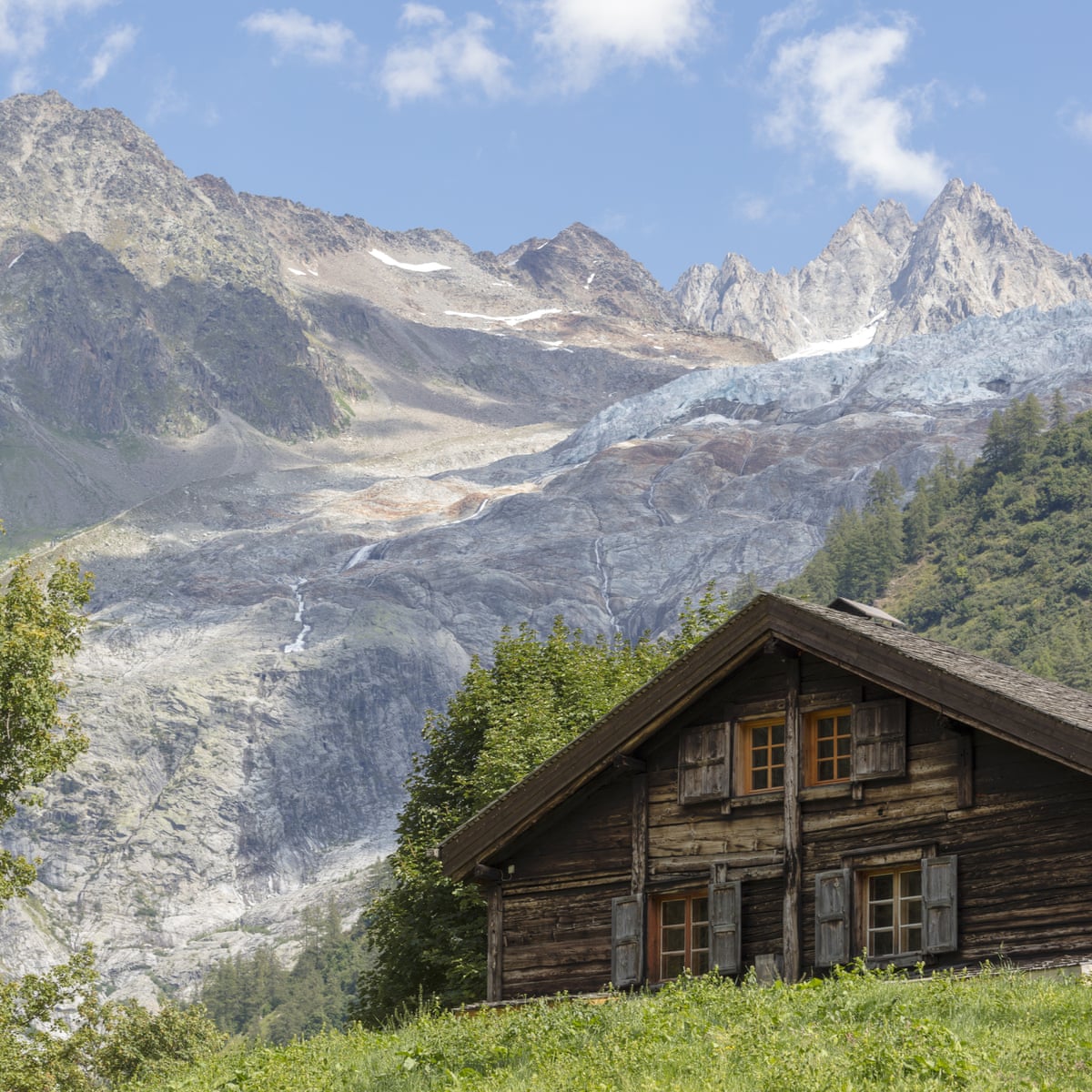
Nicky and Tamara walked the 900 metres up to Jungen. I took the cable lift. There is a small chapel up here and I prayed on my iPhone alone in the small alpine chapel, the door open behind me. Coming out there is an incomparable view like no other of the Mattertal valley below a deep cleft. At our level of sight, the huge mass of the Dom, the highest mountain entirely in Switzerland at 4,545 metres.

The others arrived breathless from the valley as I sat alone in the garden of the small restaurant and we made the long exhausting ascent to Augsbordpass at 28,94 metres through a stony valley with no water but still ploughing through a patch of hardened old snow.

And then a long descent to Guben, through quiet pastures and then steep climbs, drinking thirstily from mountain streams.

We arrive at Gruben (1,822m) again exhausted and wondering how we can do another twelve-hour walk the following day.

TUESDAY

We decided to do a detour to the Hotel Weisshorn. Another fine day as we climb up and over the Meidpass (2,790m). This is a less tiring day. I am slow but so too is Tamara. And arriving at the hotel at 6:30 is a relief. I flop down with a cup of tea. I look for Mont Blanc in the distance but it is in a haze. We can see the Weisshorn mountain. The pass is the linguistic frontier of Switzerland: German to the east, French to the west.

Everyone has been very polite but from now on I feel happier, able to talk to the locals. In this wilderness you can hear nothing of the busy world and sitting on top of the lovely pass I can talk quietly to Tamara.

WEDNESDAY

The Hotel Weisshorn built in 1882 is full of character: bowls for washing outside every room, creaking wooden floors, and small wooden rooms with windows opening out over a precipice. But the Hotel Schwarzhorn also is a world apart: the road leads nowhere. You feel this is a hotel out of the late nineteenth century.

THURSDAY

A lovely walk before a very steep knee-crunching descent. I found a lovely stick coming down through the forest at Zermatt.

At Zermatt after supper I go to look at the church. To my amazement it is open. All dark inside, its doors wide open to the village street. It proclaims a wonderful truth, the openness of God. Why can’t the doors of all churches be left permanently open? I sit peacefully in the gloom for a moment, the interior lit gently by the lights of the village outside.

FRIDAY

We cheat a little by taking the chair lift half way up the Sorebois at 2,847 metres. There were great thunderstorms in the night and as we descend from the pass light clouds and then heavy mist obscure the bright blue Lac de Moiry. An exhausting climb, utterly dreadful evening at the Cabane de Moiry (2,825m), an austere modern place above the glacier.

It has taken us the best part of a week to do what Theodore did in two days, running. My walk is very slow but at age 65 I have an excuse climbing up to my overnight stay over boulders at nearly 8,000 feet altitude.

This is a bleak Mordor type landscape – a vast expanse of void of glacier. Something out of the Ice Age.

As I write this I am in a very different landscape in the shade looking at a Tuscan lake, cypress trees and warm yellow stove, and red houses – a bit like Pitt Cottages, although a little warmer.

SATURDAY – Feast of the Assumption

I sleep badly, worried about waking up early as I always do. I feel ill at 6:30 in the morning and worried about the steep walk down over those slippery rocks. But it is fine.

We set off at 7.20 and get to the car park in good time at the bottom of the glacier for the bus at 9.16. As the bus glides down so easily to Grimnetz I remember it is the Assumption.

Luckily and beautifully we arrive in time for Mass. The priest is drummed and piped in and lovely to have Mary arrive half way through the Mass. At the elevation of the Host, the drums and pipes start again – amazing. The priest is retiring. He has a strong local accent and I only catch bits. He goes on a pilgrimage up a mountain and is taking an eraser with him to wipe away the past and the future. It is cold but we feel pleasantly tired and fulfilled after our six-day walk.

A long drive then up through the mist over the St Bernard Pass or rather through the tunnel and then down into a very different world on the Italian coast at Sestri Levante.

Seventeenth Week & St Ignatius

SEVENTEENTH SUNDAY IN ORDINARY TIME

A quiet Sunday in Lincolnshire. The first reading is very confusing especially as I did not have a text to follow.

“A man from Baal-shalishah bringing Elisha the man of God bread from the first fruits…”

But of course it’s all a foretaste of the feeding of the five thousand.

MONDAY

Every day this week I have run to our local church to read a psalm – just one – and meditate on it. And every day my knowledge of the life of St Benedict has come on.

Psalm 47: Omnes Gentes Plaudite: Clap your hands together, all ye people

TUESDAY

Psalm 48: Magnus Dominus: Great is the Lord and highly to be praised

WEDNESDAY

Psalm 49: Audite hoc omnes: O hear this all ye people

Later on I reflected particularly on the lines “For he shall carry nothing away with him when he dieth, neither shall his power follow him.” Wonderful words. We would never say that of someone nowadays. “and neither shall his pomp follow him” but we are all a bit pompous, full of pomp, at the centre of our little universe, with all the people and planets revolving around us.

THURSDAY

Psalm 50: Deus Deorum: The Mighty God, even the Lord, has spoken

FRIDAY – Feast of St Ignatius

I tried to go to Mass at Market Rasen today because it is the feast of St Ignatius – my favourite – but it was in Caistor so I bought some walking shoes and walked six miles to Tealby and back. At the church there, sitting alone, in these magnificent surroundings, I read.

Psalm 51: Miserere Mei Deus: Have mercy on me, O God, after thy great goodness according to the multitude of thy mercies, do away mine offences.

Again the language is amazing – “according to the multitude of thy mercies…”

SATURDAY

So the holiday continues, a time to forget politics. A difficult feat given what’s happening at Calais. What a mad craze. A Christian should surely give the migrants a house and we would if it was just 5,000 – but let in 5,000 and 10,000 will come tomorrow or 20,000 in the next month.

Psalm 52: Quid gloriosus? Why boastest thou myself, thou tyrant that thou must do mischief?

Sixteenth Week in Ordinary Time

SIXTEENTH SUNDAY IN ORDINARY TIME

I am reading about the American philosopher Charles Peirce (1839-1914) who invented “pragmatism”. I like to think that my contribution probably not original is assumism.

I am reading Leslie Levine, “I think therefore I am.”

I believe that all these proofs or disproofs of the existence of God are really just a play on words and are bunk. True it is hard to imagine how the ordered material world could create itself out of nothing. But it is even harder to imagine a sungle God-like intelligence making the million million life forms of the earth let alone the billions of stars and other planets, so one is left with assumism.

Religion makes me feel joyful, that is a fact. Everything else is assumed. It is a triumph of faith over reason except that I don’t even have certain faith. Other people have it: they believe. I search – perhaps the searching like the travelling is as joyful as the arriving.

And of course in this life we shall never arrive. I sadly will probably still be searching on my death bed.

Today’s psalm:

“Near restful waters he leads me to revive my drooping spirit.” (Ps 22)

MONDAY

Today I am 65, an OAP without as yet a state pension. A strange feeling. In the past virtually everyone at this age would be dead or sitting in a corner of the hut in extreme decrepitude, and in the next few weeks I intend to walk the Haute Route between Zermatt and Chamonix.

Today I ask about the point of bombing Syria. It occurs to me later that instead of the phrase “my enemy’s enemy is my friend” we say in regard to ISIL and Assad “my enemy’s enemy is my enemy”. Little changes.

Today’s reading is from Exodus 11:5 – “When Pharaoh, King of Egypt, was told that the Israelites had made their escape, he and their courtiers changed their minds…”

TUESDAY

The last day of Parliament. I speak on the Finance Bill asking whether the Government has decided that a two-child policy is the norm, and then drinks in the garden of Downing Street. I don’t get to speak to the PM. I am immensely heartened by how well Jeremy Corbyn is doing in the Labour leadership. Perhaps there still is a place for principle in politics.

Exodus 15: “I will sing to the Lord, glorious his triumph.”

Another memory of the Easter Vigil and the glorious singing of this triumphal hymn.

WEDNESDAY – St Mary Magdalene

Mass at 10:00 am is in the restored chapel of St Mary in the Oratory, bright with its new colours. After, I talk to Pete about my parents meeting at Bletchley Park. I spent the weekend reading Martin Sinclair’s history of it. What a story of the devising of random chance numbers, making sense out of chaos.

A memory today of the glorious readings, all too few, of the first weeks of Easter and encounters with the risen Jesus:

“It was very early on the first day of the week and still dark when Mary Magdalene came to the tomb.” (John 20:1-2)

THURSDAY

I go for a sail in the Solent in my little boat and by chance encounter the great hydrofoiling yachts of the Americas Cup. At first I have no idea what is going on – I am only irritated that I have to bypass the course and sail into the wind. Then the sight of these huge creatures of the wind, sailing faster than the wind at 30 or 40 miles per hour, is amazing.

Poor Naomi cannot do more than six knots.

“Look towards him and be radiant, let your faces not be abashed.”

FRIDAY

I came into Mass late as the parable of the Sower was being read:

“When anyone hears the word of the Kingdom without understanding, the Evil One comes and carries off what was sown in his heart: this is the man who received the seed on the edge of the path.” (Matthew 13)

SATURDAY

I walked along the edge of the Wolds with great views stretching away thirty miles and rested in Tealby Church and read Psalm 46:

“Our lord is refuge and our strength, our help in present need.”

With a welcome drink of water from the tap outside the church, I walked home after looking at the vault of George Tennyson d’Eyncourt, MP for thirty-five years. I am still three years behind.

Fifteenth Week in Ordinary Time

FIFTEENTH SUNDAY IN ORDINARY TIME

“… and he instructed them to take nothing for the journey except a staff – no bread, no haversack, no coppers for your purse.” (Mark 6:7-13)

MONDAY – St Henry

“There came to power in Egypt a new king, who knew nothing of Joseph.” (Exodus 1:8)

TUESDAY

We vote five times on the budget and I get the tail end of the French fete nationale.

Collect: O God, who show the light of your truth to those who go astray…

WEDNESDAY – St Bonaventure, Priest

Two races: one at 7.30 am in the Serpentine, then meetings all morning, then the Parliamentary Boat Race. We lose. Yet last year we over-turned. Or our House of Commons boat did. I was unduly absent so we are making progress.

A wonderful feeling of tiredness after such a physical effort. I only make the closing seconds of Mass:

“Those who are wise will shine brightly.” (Antiphon)

THURSDAY

We stay behind in London to meet some French deputies, then drive up and I walk home over the Wolds during the wild summer twilight – a wonderful experience.

“As for me in justice I will behold your face.”

FRIDAY

A sad day. We go to Karly Lovett’s funeral in Gainsborough, very emotional. She was so young, only 24, gunned down by a man whose cause was irrelevant to her, by chance. Horrible.

“As for me, in justice I will behold your face.”

SATURDAY

My Saturday Psalm 135:

“O Give thanks to the Lord for he is good. Great is his love without end.”

Fourteenth Week in Ordinary Time

FOURTEENTH SUNDAY IN ORDINARY TIME

As I listen to the readings, I look out of the window in the small upper room chapel to the line of the Wolds in the distance.

“A prophet is only despised in his own country.” (Mark 6:1-6)

MONDAY

I went to the memorial service in the Abbey for Srebrenica victims.

“Your right hand is filled with saving justice.” (Entrance Antiphon)

TUESDAY

We had our APPG for France and then for Italy annual general meetings. We are now fully established. Again everyone is an officer.

“The harvest is rich but the labourers are few, so ask the Lord to send labourers to his harvest.” (Matthew 9:32-37)

WEDNESDAY

I spent a most pleasant afternoon at the dentist – surely a contradiction in terms. Yet he is an amateur filmmaker and he showed me his latest shortie – a taxi driving around London. Soothing…

It makes a change from being locked in negotiation with the Government on EVEL (English Votes for English Laws) and Barnet consequentials. For me, the preservation of the Union is much more important than English nationalism.

“You shall bring me your youngest brother; this way your words will be proved true.” (Genesis 41:55)

THURSDAY

I was in my small boat when a ferry suddenly turned right. I tacked, was held in stays, and stalled.

At that moment the leader of the house rang me on my mobile with a compromise suggestion for an amendment to his EVEL standing orders. I was easily convinced.

“Joseph said to his brothers come closer to me.” (Genesis 44:18-21)

FRIDAY

I went to Margate to look at the new(ish) Turner Gallery. Having seen the film I was interested in visiting the town, something I had never done before.

In spite of one bit of brutalist architecture in a block of flats – apparently in the 1960s they wanted to flatten the whole town – there is still in the remaining Georgian homes a feeling of the old town.

Psalm 36: “The salvation of the just comes from God.”

SATURDAY – St Benedict, Abbot

I get up early to swim the 2,000-yard Bridge-to-Bridge in the Serpentine. It takes me 45 minutes and I come last. Afterwards, Latin sung mass in the Cathedral before driving to Lincolnshire for the village hog roast. A good day.

Something strikes me as important in the homily on St Benedict but I only stay for the Mass by chance. One is St Benedict lived in a time of disaffection, of old values and old empires with everything changing so that in that respect he is still relevant for us. I remember Gibbon’s “Decline and Fall of the Roman Empire”. The second was Benedict was not just talking to monks in a monastic community, because we all live in a community – so the “Rule” is relevant to us too.

“There was a man of venerable life, Benedict, blessed by grace and by name, who leaving home and patrimony and desiring to please God alone, sought out the habit of holy living.” (Entrance Antiphon)

Peter and Paul

THIRTEENTH SUNDAY IN ORDINARY TIME – Sts Peter & Paul

What two men could be more unlike? Where would Christianity be without either?

I bought a simple guide to Western philosophy. The attempts at a rational proof of God seem pointless to me. I am not even convinced by Aquinas’s first mover argument. It seems a play on words.

As we fly past Pluto on an amazing nine-year journey over many millions of miles, I cannot get my mind around the creator of Peter and Paul sitting down one day to create the million wonders of our solar system, let alone the billions of others. It seems to me an impossible task but then so do these wonders created out of mere chance. I think it easier to assume a creator without even attempting to rationalise the concept.

And to view the life of Peter and the writings of Paul as a ladder of thought, insight, perception into an enabling inner truth. Like Plato, we dwell in a dim cave, aware that we are all unique but composed of a million parts of a unity that comprises all others and things. We are even as mere individuals a billion-piece jigsaw puzzle which can only make us a bit in this jigsaw puzzle.

In the way it is designed the pieces can make somebody and something completely different. Maybe one billion of the pieces are the same but just one thousand are different and that is why we are all the same and we are all different.

My daughter has just spent a week’s silent retreat with Fr Lawrence Freeman. In silence, in silent Christian meditation, repeating the Maranatha prayer: “Lord, come.” We even after years of silent contemplation are no more aware of the composition of the billion different pieces of the jigsaw puzzle, just more aware that it is there. We are in the middle and somewhere out of sight, if not of mind, is a unifying truth.

“I have neither silver nor gold, but I will give you what I have: in the name of Jesus Christ the Nazarene, walk. Peter then took him by hand and helped him to stand up. Instantly, his feet and ankles became firm.” (Acts 3:1-10)

MONDAY

Perhaps today’s collect can be a help, not towards rational truth, but a path:

“O God, who through the grace of adoption chose us to be children of light, grant we pray that we may not be wrapped in the darkness of error but always be seen to stand in the bright light of truth.”

TUESDAY

“The wife of Lot looked back and was turned into a pillar of salt.” (Genesis 19:15-19)

Perhaps we stop and look back too often, or listen to these words today.

“Why are you so frightened, you men of little faith?” (Matthew 8:23-27)

WEDNESDAY – St Oliver Plunkett

My sister’s birthday – we always have supper on the terrace – and the feast of Saint Oliver Plunkett (1625-1681). I have often sat next to his remains in Downside Abbey. He always seems to be a most unlikely martyr. Martyred so late as a result of a manufactured political scandal. The last person to be executed for his faith in England, and he had spent many years working more or less (as arrangements demanded) openly in Ireland as Primate of All Ireland.

Does Hagar’s story help us believe that, out of seeming disaster, salvation can come?

“Then God opened Hagar’s eyes and she saw a well, so she went and filled the skin with water and gave the boy a drink.” (Genesis 21:5,8-20)

We had our APPG for the Holy See. We are duly reconstituted for the new parliament. We only have a dozen members and they are all officers. A very brotherly setup – explained by the complete lack of power, money, authority, or anything else.

THURSDAY

I always think of the Easter Vigil at Downside, the church black and candlelit, when I hear today’s reading:

“God put Abraham to the test. ‘Abraham, Abraham,’ he cried. ‘Here I am,’ he replied. ‘Take your only child Isaac, whom you love, and go to the land of Moriah. There you shall offer him as a burnt offering.’” (Genesis 22:1-19)

I always think of my own children when I hear these words. None of us would offer our own children.

FRIDAY – St Thomas the Apostle

My reading:

“Unless I see the holes that the nails made in his hands and can put my finger into the holes they made and when I can put my hand into his side, I refuse to believe.” (John 20:24-29)

SATURDAY

As usual on a Saturday I went to our small village church to read a Psalm.

Psalm 134: “Praise the Lord, for the Lord is good.”

11th Week of Ordinary Time / St Alban

ELEVENTH SUNDAY IN ORDINARY TIME

The poetry of Ezekiel 17:22-24:

“From the top of the cedar from the highest branch I will take a shoot and plant it myself on a very high mountain. I will plant it on the high mountain of Israel. It will sprout branches and bear fruit and become a noble cedar.”

MONDAY

I had a good day in the Commons proposing an amendment to give full fiscal autonomy to the Scots. They had a go at me for half an hour. To work hard in the chamber is good practice.

The psalm of today struck in my memory:

“The Lord has made known his salvation.” (Ps 97)

TUESDAY – St Richard of Chichester

A rare event: I put down an amendment two days in a row, this time on trying to ensure both sides spent equal amounts on the EU referendum.

“My soul gives praise to the Lord.” (Ps 145)

WEDNESDAY

A busy day, an early meeting, my father-in-law’s eightieth birthday, and I sat outside the committee room where members are voting for select committee chairs for two hours.

“And since without your mortal frailty can do nothing, grant us always the help of your grace.” (Collect)

THURSDAY

I fail in a bid to be the select committee chair. My vote is disappointing: it shows one should not take oneself too seriously – other people do not.

The Mass in the evening is for sick and retired priests. They really have given everything. Do we ever thank them?

“I only wish you were able to tolerate a little foolishness from me.” (2 Corinthians)

FRIDAY

I visit an old peoples’ home. They are only twenty, thirty years older than me but affected with dementia. They seem so old, just sitting there. Our time passes so quickly. I talk to Harold, a 95 year old who remembers Liverpool in the 1930s. A trade unionists all his life, he seems quite forgiving of a Tory.

“O Lord, hear my voice for I have called to you. Be my help.” (Entrance Antiphon)

SATURDAY – St Alban

We are almost at Midsummer Day. Sulky, rainy, cloudy – the wold’s hills I walk bathed in a quiet mist. St Alban’s land – our first martyr.

“…to stop me from getting too proud, I was given a thorn in the flesh.” (2 Corinthians)

And can anyone for all his worrying add one single cubit to his span of life?

Sixth Week of Easter

SIXTH SUNDAY OF EASTER

As I write this the light is streaming into the cottage from the west on a summer’s evening.

We went to Mass, the Sunday before Ascension, before eating outside in the garden.

John 15 is a remarkable poem to love.

“As the Father has loved me, so I have loved you. Remain in my love.”

MONDAY

We are back in London for a packed meeting of the 1922 Committee. I can barely get into the room. Everybody is enthusiastic, a joy to behold. Let’s hope it lasts, but events…

I prefer to be in Lincolnshire but it’s nice to be able to go to the sung evening mass in the Cathedral.

John 15 continues:

“When the Advocate comes, whom I shall send to you from the Father…”

TUESDAY

We meet with all the new colleagues. I talk to only a few but they seem a cheerful bunch.

“Jesus said to his disciples, Now I am going to the one who sent me…” (John 16)

I suppose this is a long meditation designed to prepare one for the Ascension.

There is one line from a homily today on the feast day of Blessed Alvaro del Portillo: “When we die, we can only take away what we have given.” So true.

WEDNESDAY – Our Lady of Fatima

A double visit to doctors, travelling across London, but in between an interlude in Chelsea Physic Garden, an interesting and beautiful place, full of stories about plants, but too many people. I prefer to be amongst my own infinitely less exotic plants in Lincolnshire.

What are we to make of Our Lady of Fatima? What does it matter?

“I still have many things to say to you, but they would be too much for you now…” (John 16)

THURSDAY – St Mattias

I go to Mass, the vestments red, before a long drive past a blockedA1 northwards and to a public meeting in Welton.

“It was not you who chose me says the Lord, but I who chose you and appointed you to go and bear fruit.” (Entrance Antiphon)

And John 15 continues:

“As the Father has loved me so I have loved you. Remain in my love.”

FRIDAY

I ran the short distance to our little village church and read Psalm 45 in the Prayer Book: “My heart is indicting a good matter. I speak of the things which I have made touching the King; my tongue is the pen of a ready writer.”

I think of this, my contribution, which comes only and not very well at that from my pen. I do a happy surgery and shop in Gainsborough and meet a few people.

SATURDAY

Today is the last day that Mary and I will have children of our own under the age of 18. Our youngest is 18 tomorrow, the 17th of May. It’s been 29 years and 5 months less two days of having children under the age of 18, so tomorrow another chapter starts.

“O chosen people, proclaim the mighty works of him who called you out of darkness into his wonderful light. Alleluia.” (Entrance Antiphon)

Fifth Week of Easter

FIFTH SUNDAY OF EASTER

We went to Glasgow Cathedral for a Presbyterian service – perhaps my first. Dignified, welcoming, the sermon brilliant and shall we say substantial.

“My children, our love is not to be just words or mere talk but something real and active, only by this can we be certain that we are children of the truth.”

MONDAY – The English Martyrs

Bank holiday Monday. A battle bus was arriving in Lincoln and I did some calm leafleting. Again I rewarded myself with Evensong in the Cathedral.

In this calm atmosphere, so moderate and English, the disputes of the past seem deeply buried indeed.

“These who are clothed in white robes are they who have survived the time of great distress.”

TUESDAY

I walked about the Market Place in Gainsboroug, a walkabout is perhaps too strong a word – it was very quiet and then a pleasant stroll canvassing around Knaith Park, then a tea. It’s not the dynamic front line, but pleasant.

“Do not let your hearts be troubled or afraid. You heard me say I am going away and I shall return.” (John 14)

Before, we went to the funeral mass of Father Philip Bailey. Many priests were there to celebrate this clever (a doctor of scripture) and humble and willing local parish priest for over thirty years. A kind, good man. Rest in peace.

Another beautiful little mass in Holy Rood with Father Jonathan.

“I am the true vine, and my Father is the vinedresser.” (John 15)

But people like Father Jonathan are also vinedressers.

More canvassing in Lea, then I ended this campaign at the highest point of Lincolnshire at Normanby le Wold, on a calm summer’s evening. The battle is over.

THURSDAY 7 MAY – Polling Day

I usually do some hoovering of the carpet on polling day, a soothing activity. We go out and attempt a little loud hailering, the first of the campaign, but we probably do more harm than good. A long night starts with the startling exit poll.

“Let us sing to the Lord, for he has gloriously triumphed.” (Entrance Antiphon)

FRIDAY

The day starts at midnight and goes on to 7 am, the declaration of the count, and then a drive back home in the light, always a strange feeling. Breakfast, a short sleep, and back to the local election court and a grateful tea and cakes with the children back home. How nice to have been here.

“I will thank you Lord among the peoples.” (Ps 56)

SATURDAY

With the children we do the Tennyson walk, starting at Tetford, then around Sowerby where he lived at the rectory, the church sadly closed for repairs.

“Cry out with joy to the Lord, all the earth.” (Ps 99)

Fourth Week of Easter

MONDAY

A difficult day; tough questions at Queen Elizabeth High School and then attacks at the hustings, but in retrospect it’s all good for the soul, demanding and humbling.

The sheep story continues and drives home the message:

“They never follow a stranger, but run away from him.” (John 10)

TUESDAY

I spend a calming day delivering leaflets in Lincoln and as a reward I take myself off to Lincoln Cathedral for Evensong. Always a soothing and beautiful experience; I am always amazed there are not more people listening to the glorious singing of the Psalms, antiphons, Magnificat, and Nunc Dimittis in this vast gothic amphitheatre.

“Let us rejoice and be glad, and give glory to God.”

WEDNESDAY – St Catherine of Siena

I tried to go to Mass but it was cancelled but useful news. I heard young Fr Jonathan who had gone off to join the Benedictines was returning to our parish to say Mass for the first time. I carried on with my gentle rural rides, talking to people.

I sat alone in the empty church for the non-mass, it was strangely calming and read the texts for Catherine of Siena.

“God is light and there is no darkness in him at all.” (John)

THURSDAY

I was speaking at a school, the second of the day and had a turn. An intimation of mortality, I revived myself with a jacket potato in a railway carriage in Bardney.

Prayer over the offerings: May our prayers rise up to you, O Lord, together with the sacrificial offerings, so that purified by your graciousness, we may be conformed to the mysteries of your mighty love.

FRIDAY

What a joy to go to a small weekday mass in a side chapel said by a new young priest. Jonathan comes from an Anglican family. One day aged 15 he walked into our church and has wanted to become a priest ever since.

“Do not let your hearts be troubled. Trust in God still and trust in me.”

SATURDAY

We went to a wedding in Aberfoyle, the daughter of an old friend and then to a party by a loch. The words of the Episcopalian service short, to the point, and masterful. St Paul’s exegesis on love is all that needs to be said on this sort of occasion and with commendable brevity in the homily; that was all that was said.

“In the midst of the church he opened his mouth and the Lord filled him with the spirit of wisdom and understanding.” (Entrance Antiphon)

Fourth Week of Lent: “God so loved the world”

FOURTH SUNDAY OF LENT

I went to the evening mass in Westminster Cathedral and was struck with renewed force by what is arguably the most famous passage in the Bible, from John 3:14-21:

“Yes, God loved the world so much that He have His only son, so that everyone who believes may have eternal life.”

As I heard and read these words, with incomparable force, I believed then. Later the old doubts returned about one intelligence being able to create the whole universe.

But I can understand why people who read these words have been hit by immovable faith to dedicate their life to Jesus’ teaching.

This is Laetare Sunday – “Rejoice” Sunday – anyway, an opportunity to rejoice in these words.

MONDAY

I was discussing John 3 with a friend today. He reminded me of one of the episodes in the Gospels when the father of a sick child asks Jesus to help my unbelief. I looked it up; it is in Mark 9:24.

“And Jesus said to him, ‘If thou couldst believe all things are possible to him that believes’. And immediately the father of the young child crying out said with tears, ‘I believe. Help mine unbelief.’”

This should be my motto.

TUESDAY – St Patrick’s Day

I like these words from the first reading today:

“Everything will soon come to an end, so to pray better keep a calm and sober mind.” (1 Peter 4:7-11)

Everything will soon come to an end – why worry very much? We do but why when we know everything will soon come to an end. We ponder too little day by day on that end.

WEDNESDAY

The main event today for us was not the budget but having forty colleagues around to hear the Chief Whip – a great deal of preparation needed but giving parties is always fun. I didn’t even have time to go to Mass. A Martha rather than a Mary day.

“The Lord is kind and full of compassion.” (Psalm 144)

THURSDAY – St Joseph

A strange man, for most of the Gospels he is either largely silent up to the Presentation, or absent altogether after. But he makes the single most important decision in history. He does not turn Mary away.

Behold, a faithful and prudent steward whom the Lord set over his household.

FRIDAY

I spoke in the budget debate yet said much the same thing I had said in all the previous ones.

In the evening I went to the Stations of the Cross in the Cathedral. This service never fails to move, especially when the vast crowd is still at the death of Jesus.

SATURDAY

I was most struck by the words of the priest. That Jeremiah and for that matter Jesus had resonance in their message precisely because they were powerless. That evil to flourish always needs power. That is not the power, the effect, the title that matters but the message.

“I for my part was like a trustful lamb being led to the slaughterhouse.” (Jeremiah 11:18)

Third Week of Lent: “You have the message of eternal life, O Lord”

THIRD SUNDAY OF LENT

We were given a lecture at Mass about how young people after a certain age don’t go to church. But it is no point telling that to the half of ten per cent who still do go.

We have to concentrate not on the practical but the spiritual message.

Today’s Psalm 18: “You have the message of eternal life O Lord. The law of the Lord is perfect. It revives the soul.”

MONDAY

I had a question on Marriage Tax Allowance. Apparently over four million people might be entitled. But the pounds and pence don’t matter: it’s the nod towards commitment.

Today is the story of Naaman the Leper. I like it because he cures himself unwillingly by such a simple thing – bathing three times in the Jordan.

“My father, if the prophet has asked you to do something difficult, would you not have done it?”

All the more reason then when he says “Bathe and you will become clean.” (2 Kings 5:1-15)

TUESDAY

I spoke at the Royal College of Defence Studies to budding generals on our future in Europe.

The reading from Matthew 18 is about forgiveness:

You must forgive your brother, “not seven, I tell you, but seventy-seven times.”

European history sadly is riven with the opposite. Forgiveness – an easy exhortation, so difficult to carry it out.

We had a meeting with the Archbishop of Canterbury in the afternoon. As the others rushed off to vote, I urged him to put pressure on Government to leave faith schools alone from the “British values” crusaders.

WEDNESDAY

We had a debate on the Ukraine and Russia’s membership of the Council of Europe. What would expulsion achieve? Just another twist to a war without end. Seek compromoise.

The Pharisees didn’t compromise. Where did it get them? But…

“Do not imagine that I have come to abolish the law or the prophets.” (Matthew 5:17)

THURSDAY

I led a debate which I had procured through the Backbench Business Committee on the future of faith schools and British values. It was a relief to calm down afterwards at Mass. Why impose on schools a set of “values” composed on the back of a plain-packaged fag packet by officials when we have the glories of the Torah, the poetry of the Koran, the mysteries of the Bible to hand?

“Listen to my voice then, I will be your God.” (Jeremiah 7:23-28)

FRIDAY

We went to a marvellous RAF-led service of remembrance for the Afghan War at Lincoln Cathedral. They do these things well. We will pass over what the Afghan campaign has really achieved.

SATURDAY

I went to our local church. Psalm 47 is one I can remember.

Omnes gentes plaudit: “Clap your hands, all you people.”

A joyous psalm, at last.

Second Week of Lent: God is our hope and our strenth

SECOND SUNDAY OF LENT

We went to Mass in the small church at Osgodby. The reading from Genesis 22 reminded me of the Easter Vigil spent every year at Downside Abbey.

“God put Abraham to the test, ‘Abraham, Abraham,’ he called. ‘Here I am’ he replied. ‘Take your son,’ God said, ‘your only child Isaac whom you love, and go to the land of Moriah. There you should offer him as a burnt offering.’”

I often wonder what Abraham thought and at his obedience. Now he would be considered a raving lunatic.

I thought of the reading at Downside followed by peerless singing of the psalm:

“Preserve me God, I take refuge in you.”

MONDAY

The reading today is a familiar one from Luke 6:36-38.

“Do not judge and you will not be judged yourselves, do not condemn and you will not be condemned, grant pardon and you will be pardoned.”

But in my mind, remembering all the personal attacks made on people in the media, I turned around the words.

“Do not fear being judged by others, and you will not judge yourself. Do not fear being condemned by others and you will not condemn yourself. If others do not pardon you, pardon yourself.”

TUESDAY

I went to a memorial meeting for Allan Williamson, Father of the House of Commons, who served for forty-six years. Peter Tapsell, the present father, spoke before me. He has been there for over fifty years. And his successor Gerald Kaufman was there. He has been an MP for forty-five years. 150 years of service between the three.

What a contribution they have made, none of the three ever made it beyond junior ministerial office. Allan Williamson like me as Minister of Consumer Affairs managed to ensure a mark on the beer glass. I tried to get the froth excluded and failed – a missed achievement but words and ideas are more important than power.

“You must therefore do what they tell you and listen to what they say, but do not be guided by what they do.” (Matthew 25:1-12)

WEDNESDAY

As I was listening to the readings of today’s Mass, I was thinking or I heard the priest tell us: Don’t worry about what you do or achieve. Do God’s will or it is God’s will.

This of course has been always the anaesthesia of religion but it is comforting for all that it’s God’s will that matters for you, not your own.

“Should evil be returned for good, for they are digging a pit for me. Remember how I stood in your presence and plead on their behalf.” (Jeremiah 18)

THURSDAY

Today is the reading from Luke 16 about the rich man and Lazarus and the sobering message that the rich man actually never did anything nasty to the poor man. Just ignored him as we ignore the poor at the door of our churches. However often we are told this story, we forget it. But as I walked home for two hours in the spring darkening, the welcoming lights of the cottage appearing through the mellowing Lincolnshire wold, my mind was on the present, empty of all save soothing tiredness and orangeing twilight.

FRIDAY

After the Cathedral Council we all went off to Eucharist in the Cathedral. At the West End the new statue of Mary is there. Brooding, not a saccharine statue but more like a grim-faced or quizzical Russian icon. The words of the Anglican communion sometimes undistinguishable from the Catholic in unity.

“Here comes a man of dreams…” (Genesis 37)

Earlier, I had visited our little village church and reached Psalm 45: “My heart is indicting a good matter.”

SATURDAY

I ran again to our church and reached Psalm 46 in the Prayer Book: “God is our hope and our strength.”

If only we could remember that for more than a few minutes after reading it.

As I read the story of the Prodigal Son today I am filled with profound emotion and tears well in my eyes. Here indeed is the truth, and the word of a true God.

“He was lost and now is found.”