Author Archives: admin

Practice Makes Perfect

I have said this before, but a way forward to the quandary of belief lies in the ancient practice that behaviour and practice were more important than belief. That we should start with religious practice and obedience then belief may follow. After all, few people nowadays are fortunate enough to receive some unflinching belief as a bolt from Heaven.

Part of today’s Gospel reading is instructive:

Anyone who does the will of God, that person is my brother and sister and mother. (Mark 3. 31-35)

Hugeness of Desire and Smallness of Reality

I reflected on this crisis of belief. One of the reasons for thinking people is the increasing realisation of the sheer size and diversity of the Universe. As JBS Haldane once said, “the universe is not only queerer than we suppose, but queerer than we can suppose.”

I was reading the latest article in National Geographic magazine on the extraordinary discovery of some 700 planets in other solar systems over the last decade. The article compared finding these tiny distant objects to like looking for a firefly in a fireworks display. Astronomers now reckon that there may be a billion planets like ours out there. The article ended with a quote from the Spanish philosopher Miguel De Unamuno. The mysteries of the religious visionaries of old arose from an “intolerable disparity between the hugeness of their desire and the smallness of reality.”

Now the reality of the Universe is infinitely greater than our own imagination. Where does that leave the incarnation? How can the God that created the Universe of a billion planets like ours be the God that arrived in a manger in Palestine two-thousand years ago? This was the problem of the mismatch of belief that I was referring to at Market Rasen the day before.

An Ecumenical Matter

I was a bit nervous at the thought of giving the address at Market Rasen’s ecumenical service. But I think it went all right. I made the obvious point that the things that divide us are minimal compared to those that unite us. But what interests me is the richness in diversity. The exuberance of a Latin Palestrina Mass, the poetry of Thomas Cranmer, the energy of the evangelical New Life Movements, the work, literally, on the street of the Salvation Army, and I said all this.

However, I feel the problem lies with the young. Churches assume faith too much, but faith for the young is a massive and growing problem. As someone who struggles with belief myself, we have to convince the young that you can’t believe in something only if it can be proved. Faith is a leap into the dark but if you make it, great joy can follow.

The Apostles

I went to mass in the evening. The reading was about the appointment, if that is the right word, of the Apostles. Nowadays we would make such a meal of it. “Open interviews” and “gender balance” spring to mind.

But here, for the twelve most important jobs in world history, people just came and approached Jesus. They either felt that they liked the look of him or just went on the word of John the Baptist, “Behold the Lamb of God”, and, without hesitation, devoted their whole life, and literally their life, to this man.

Simon Peter the fisherman, came to Jesus in this way. He had heard the word’s of John the Baptist and upon his very first meeting with Jesus he was ready to sign up to become a “fisher of men.”

This demonstration of the leap of faith by the Apostles is what we encounter daily in the search for faith. In the same way that we have no way of proving God exists, so the Apostles had no way of proving that Jesus was the Son of God. They simply had to rely on their faith to believe.

The Faith of the Leper

There were some words in the Gospel that stayed with me today.

The leper says: “Sir, if you want to you can cure me.”

It is worth remembering that these words, they can apply to us. For all our troubles great or small, God, you can cure me.

It is the faith of the leper which is striking.

The Wolds

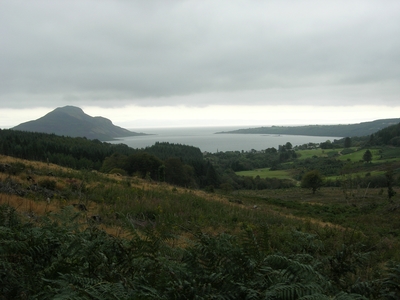
I walk over the Lincolnshire Wolds on a misty, rainy day. A tree is black with water flowing down it, the glistening trunks snagging in every direction. It is actually quite beautiful, like a quivering animal about to leap.

Just taking a moment to stop and look at the intricate carving of nature is finer than any artefact of man. It is an almost spiritual moment.

Baptism of the Lord

The instruction in the letter of St Paul to Titus is a hard one.

“One must avoid” says St Paul, “Anything that does not lead to God.”

How can we do this, especially in modern-day living? Must one give up all the pleasures of life?

“All worldly ambition.”

One can’t become a monk in ordinary life. But surely all good things can lead to God and can still be fulfilling and pleasurable.

Doing a job, any job, can lead to God. Watching television or going for a walk can be a lead to God. Well, perhaps not most television, but I think the point is about seeing God in everything.

Today I went to Vespers in Westminster Cathedral, something I have not done before. Vespers is the precursor of Anglican Evensong. Much as I like Evensong, it is less formal. Somehow I am more spiritual during Vespers’ Benediction and Veneration of the Blessed Sacrament.

Would We Know Him?

And his teaching made a deep impression on them because he spoke with authority. (Mark 1,21-28)

I have always wondered what this means exactly. What was his obvious authority? Was it his intellect, his delivery or his charisma? Did they immediately guess who was teaching them?

Would we know him?

Second Monday in Ordinary Time

I love this reading because it is such a strong visual image. Who ever heard of someone being so keen on hearing a preacher nowdays that they make a hole in the roof to do so.

… As the crowd made it impossible to get the man to him, they stripped the roof over the place where Jesus was; and when they had made an opening they lowered the stretcher on which the paralytic lay… (Mark 2: 1 – 12)

Five Temples of the Lord and Faith

First Week in Advent — Retrospective

Advent is the season of the readings of Isaiah, that masterful poet whose words reach a crescendo as the month passes.

During a week in Advent I went to five very different churches. On Monday I arrived at Westminster Cathedral to find that Mass was to be held in a side chapel. Why there I wondered. It seemed a somewhat dark, even dreary side chapel. Then the priest arrived and explained. Of course, it was St Andrew’s day. This was his chapel. The priest described it as, in the opinion of some, the finest chapel in the cathedral. He discussed the mosaics depicting where St Andrew had lived out his life of the Gospel. I realised how the subtle understated nature of the chapel captured its beauty. It occurred to me that this was a sort of parable of our faith – what seems to be ordinary, even banal at first comes to life with faith.

On Tuesday I was invited to St Paul’s for Evensong to mark English Heritage giving £250,000 to Lincoln Cathedral for much needed repair and maintenance work. There is no slowly awakening hidden beauty to be found here. As I walked up from the crypt and sat in the choir, the Renaissance glory of the richly gilded and exuberant ceiling hit me like a blow. The Magnificat was in Latin and echoed across the giant space. Here was a parable for me – that faith can hit one like a thunderbolt, not always something slowly awakening, as on Monday.

On Wednesday I went to the Brompton Oratory where I meet a friend for a little prayer meeting every month. I happened to read the account of John Sullivan, an American Deacon who was lecturing recently on his amazing cure from an excruciating back illness through prayer to Cardinal Newman. I had been under whelmed by his story before, but his prose was so moving, so transparently honest and so accurate in its description of an inexplicable pain that I was moved to tears. Here we find a parable that faith can come from prayer and not always like on Tuesday with an invasion of the senses

On Thursday I travelled up to Lincolnshire to go to a carol service at the tiny church of Upton. As we walked towards the church the bells were peeling, the village was dark, the church lit, the readings much loved, the carols familiar. Here it seemed to me that faith can be something deep within us. Traditional, sometimes comfortable seeming and no less good for that than any sudden revelation or insight.

On Friday I went down to Downside for an oblates retreat. The moment I walked into the Abbey I felt as I always do; that this is a second home. That evening as I sat alone in this vast space, with the lights turned off and only a hint of moon light coming in to the sanctuary I felt close to God. Yet even this great building is but a dot of architecture in stone, our galaxy lost in hundreds of millions of other galaxies? Once more the old doubts returned. How could the God of Abraham have created all this? Faith is therefore not a fixture in our minds. It ebbs and flows.

On Saturday I got up early for Vigils. Again the church was utterly black but one of the young Novitiates came in to light a single candle. Its lonely light seemed to hover and flutter for a moment and the rose up, confident – as in the light of Christ. “Lumen Christe”. It reminded me of the single light being lit at the start of the Easter Vigil.

Later on we were asked to read Hebrews 11.

Now faith is the assurance of things hoped for, the conviction of things not seem… By faith we understand that the world was created by the word of god, so that what is seen was made out of things which do not appear.

It seemed to sum up the week.

When it was dark again after Vespers I sat alone in the church. For the first time I felt that God was close. I didn’t try and pray or talk to God. One doesn’t always need to talk to someone you know and love well, a spouse or an old friend. You can sit in companionable silence. And it felt like that then. No words came or were necessary. I have often found that in a monastery, even staying for a short time, one’s spiritual awareness is brought to a new plane.

Later that night I lay awake thinking about this experience. I wondered if it was chance that in difficult times God brought me to this quiet place.

Over the Wolds

I walked with the dog from our home, over the Lincolnshire Wolds and to Market Rasen. The snow was deep, even the roads were covered, and the sky was bright and blue.

At Walesby our dog William had one of his little fits. Luckily the church was open so I took him in and sat down exhausted in the porch. Thank you Walesby for leaving your church open during the day for tired travellers such as William and myself.

Because today’s reading was from the Song of Songs I was inspired to read it all. I don’t think however, that poor old William quite matched the description.

I hear my beloved
See how he comes
Leaping over the mountains
Bounding over the hills
My beloved is like a gazelle
Like a young stag
(Song of Songs 2; 8-14)

When William and I finally got to Market Rasen I think we both felt far removed from the description in the scripture, at least physically.

Christianity in Modern Britain

Over the past week or so it has been encouraging to see comments being made by a number of high-profile individuals on the subject of Christianity in modern day Britain.

Last week we had the Prime Minister encouraging individuals in the public domain to be open about their faith and the former Archbishop of Canterbury Lord Carey advocating a “tougher church” which should not be afraid to stand up and speak out. This week BBC Radio presenter Simon Mayo has spoken out against the Corporation’s marginalising of religion.

This is an encouraging step forward. Of course one would expect the former Archbishop of Canterbury to speak out for Christianity, but comments by the Prime Minister and a well known radio presenter of a popular show are less expected. One hopes that this is a sign of things to come and that the stigma which currently surrounds speaking about religion, especially Christianity, will become a thing of the past.

A Time to Keep Silence

I am reading Patrick Leigh Fermor’s A Time to Keep Silence, a book about his visits to monasteries in France and given to me as a Christmas present. I was struck by what Karen Armstrong says in her introduction.

In the West, we have developed a culture that is rational, scientific and pragmatic. We feel obliged to satisfy ourselves that a proposition is true before we base our lives on it and to establish a principle to our satisfaction before we apply it. In the pre-modern period, in all the major faiths, the main emphasis was not on belief but on behaviour. First you changed your lifestyle and only then could you experience God or Nirvana as a living reality.

This exactly sums up my belief that the decline in belief is fuelled by an obsession with it in the modern world. To be viable something has to be believed and proved. Because faith cannot be proved it is not viable. In fact religious thought or observance has value in itself without or before any conscious belief in the object of its worship. Indeed faith can often only follow from long hard work; it does not come as a flashing light from the sky.

Russian Christmas

Today as my wife is Russian Orthodox we all troop off as a family to the Russian Orthodox Cathedral in Chiswick. There is a magnificent new Iconostasis there newly installed by Russian craftsmen and I enclose a (rather grainy Blackberry)picture below.

Yesterday evening the priest read the Gospel in English aswell as in Russian.
At last after years of not understanding a word of the ancient Slavonic Liturgy, the text came alive. But it does not matter too much as the whole service is a riot of colour, smell and sound that invades all the senses.

Walking to Evensong in the Cold

It was cold. I was cold and was tempted to stay in the warmth, but instead walked across the freezing road to Evensong in the Abbey. Though the choir stalls were full I still found it extraordinary that in the middle of London there were not more people in the congregation. The music was literally magnificent. The Magnificat, the beautiful canticle magnifying the Lord by extolling his might and virtues, and the Nunc Dimittis, the Song of Simeon when he saw the baby Jesus, were sung in Latin.

The reading was from Corinthians and about the triumph of the spirit. Captured by the words, splendour and history of my surroundings during the reading I found myself falling into a kind of trance.

Perhaps inspired by the trance-like state I found myself in during the reading, that night, as I lay awake, I tried to imagine myself away from my body. We spend so much time concerning ourselves with ourselves that I found this an interesting exercise. I tried to suspend thought and concern for myself. Imagining myself to be someone else, I found it a challenging but worthwhile exercise.

Having experiencing the unselfish words of the Magnificat earlier in the day the exercise seemed entirely appropriate.

Solemnity of Mary, Mother of God

The New Year is supposed to be a time of looking forward and back, as well as a time of parties and company. Gabriel sat for a time in the small local church, just to be content with the present, pondering neither the past nor the future.

He had a surfeit of family and friends.

There was a picture of Mary in the corner. He gazed at it as he had often done before.

When depressed, he had found a peculiar and unexplained comfort in turning to her.

Now he remembered that today’s psalm he had often heared before, but the words had passed him by.

O God, be gracious and bless us
and let your face shed its light upon us.
So will your ways be known upon earth
and all nations learn your saving help.

Let the nations be glad and exult
for you rule the world with justice.
With fairness you rule the peoples,
you guide the nations on earth.

Let the peoples praise you, O God;
let all the peoples praise you.
May God still give us his blessing
till the ends of the earth revere him.

A Russian Funeral

My wife and I went to the Russian Orthodox funeral of a friend of ours. There is nothing simpler and more beautiful than the Orthodox funeral liturgy. The Orthodox services invade all ones senses with sight sound vision and smell of incense. They are wonderful.

As one of nature’s doubters I wish that I could be easily and permanently convinced that ones soul lives on. There is no doubt that our body does not; “For dust thou art, and unto dust shalt thou return”. (Gen. 3:19) But I suppose that the impossibility of knowing will always engender at least the smallest of doubts, even for those of immaculate faith.

However in this beautiful Orthodox setting, coupled with scripture; “Then shall the dust return to the earth as it was: and the spirit shall return unto God who gave it”, (Eccl. 12:7) it seemed impossible that our soul cannot. Perhaps by sheer belief we can steer our souls into Heaven.

Though, if this is the case where does this leave the agnostic or atheist? Will they get an almighty shock when their time comes, or simply first encounter annihilation?

The Curious Comfort of the Faithful Departed

This week there have been a couple of blows, though it seems one should scarcely expect anything else from a week in Parliament nowadays.

That aside, the most reassuring thing I heard all week was from the priest in a Mass for the Remembrance of the Departed. He asked the congregation to remember all our dead friends and relatives in our prayers, and specifically list them by name.

This process was curiously comforting. After doing it I had the distant feeling that I was not only praying for them, but that they were praying for me.

The North American Martyrs

St John de Brébeuf and his fellow missionary Father Gabriel Lalemont, both Jesuit priests, were martyred in North America in the seventeenth century. Their mission was to convert the indigenous American Indians and they underwent terrible hardship and eventual death for their beliefs. Perhaps if we were to meet them now we would think them unbelievably stubborn but they were men of undeniable spirituality and no little courage.

There is a reading from the Second letter of St Paul to the Corinthians Chapter 4, which relates well to these two men.

Brothers and sisters:
We hold this treasure in earthen vessels,
that the surpassing power may be of God and not from us.
We are afflicted in every way, but not constrained;
perplexed, but not driven to despair;
persecuted, but not abandoned;
struck down, but not destroyed.

When I think of our little problems compared to the steely courage of these two martyrs I really do feel that the things that trouble us in today’s society are often much ado about nothing.

The Transience of Earthly Kingdoms

After meeting King Nebuchadnezzar Daniel is asked to interpret his vision.

You, O king, were watching; and behold, a great statue, whose splendour was excellent, stood before you; and its form was awesome. This image’s head was of fine gold, its chest and arms of silver, its belly and thighs of bronze, its legs of iron, its feet partly of iron and partly of clay. (Daniel 2 31)

For evermore this vision of the weakened structure summed up the transience of earthly kingdoms because like statues earthly kingdoms can come crashing down. This image is not dissimilar to the “two vast and trunkless legs of stone” found in the desert proclaiming “My name is Ozymandias, king of kings: Look on my works, ye Mighty, and despair”. This great poem by Shelley like the Book of Daniel reminds us that man alone can only fall and become decrepit. Only God is infinite and omnipotent.

Plucky Daniel

Last week we followed the book of Daniel. It is one of my favourites. He’s a plucky sort who always fights and wins against the odds. Everyday I went to mass and followed his activities. On Monday, as a mere lad he refuses at risk of death to follow the pagan dietary laws. “At the end of the ten days they looked healthier and better nourished than any of the young men who ate the royal food.” Later the King was to take Daniel with the utmost respect into his confidence and Daniel became a most trusted advisor. The Old Testament can be very positive in demonstrating the way in which God looks after those who suffer and make sacrifices for him.

A Question of Simplicity

The lake at Stainton le Vale Oil by Edward Leigh

At Mass today there was a very simple hymn. Try as I might I cannot remember the exact words, but I think it went something like; “O Sacrament Divine, O Sacrament Sublime.”

The simplicity of the hymn, caused by the repetition of the words, acted on me like a tonic. All my thoughts and doubts about life and faith; what is true? what is pure? receded into the background, as I let the words wash over me.

Images of water pervade Chinese art and philosophy. They symbolise. Simplicity, memory and human virtues. A Woodblock by Chen Qi which I saw this week at the Victoria and Albert museum invites one to contemplate the abstract qualities of water.

The above image, an oil on canvass, is one my attempts to paint water.
I also found this quote in the museum.

The three refuges
I take refuge in the Buddha, the perfectly enlightened one, the shower of the way.
I take refuge in the Dharma, the teaching of the Buddha, which leads from darkness to light.
I take refuge in the Sanha, the fellowship of the Buddha,s disciples, that inspires and guides.

The Bright Promise of Immortality

I was still thinking about the faith of Jesus and the book of Maccabees. Their most profound conviction in the afterlife and how it is shown in all their actions.

The beautiful passage in Latin and English which is sung at the Mass for the deceased clergy in the Cathedral sums up our hopes for redemption.

In quo nobis spes beatae resurrectionis effulssit, ut, quos contristat certa moriendi condicio, eosdem consoletur futurae immortalitatis promissio.

In him who rose from the dead our hope of resurrection dawned. The sadness of death gives way to the bright promise of immortality.

Maccabees

The readings this week, the third week of ordinary time are from The Book of Maccabees. They are particularly gruesome but also uplifting because Jesus despite being persecuted refused to give up the faith. I love the passage where the mother of seven children sees six of her sons die for their faith and then says to the seventh,

My son, have pity on me. I carried you nine months in my womb, and nursed you for three years, and have reared you and brought you up to this point in your life, and have taken care of you. I beseech you, my child, to look at the heaven and the earth and see everything that is in them, and recognize that God did not make them out of things that existed. Thus also mankind comes into being. Do not fear this executioner, but prove worthy of your brothers. Accept death, so that in God’s mercy I may get you back again with your brothers.

My own faith is but a weak reflection of the mountainous faith of these people. Can we imagine a mother giving up her sons lives and her own for the sake of religious principle?

The mother’s point is that through their actions they will gain something more wonderful than any earthly offering, the gift of eternal life.

The readings left me a little cold at the time but when at the end of mass in the cathedral I paused for a moment in the tomb of St. John Southworth something unaccountable happened. I felt inexplicably moved.