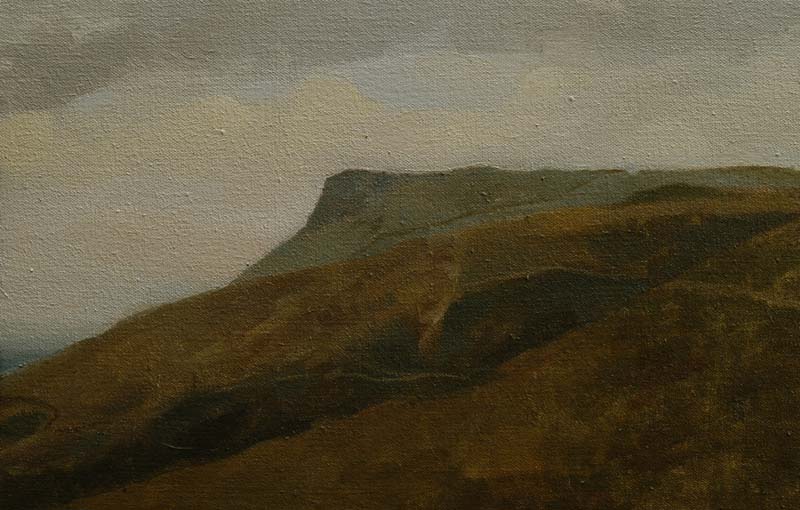
We climbed Pentire Point into a cloud. Up on the top one could see no horison. Even the sea below was part obscured. A warm, swirling mist was about us.
The atmosphere was similar to that at the crest of a high Scottish glen or an Alpine foothill.
We climbed Pentire Point into a cloud. Up on the top one could see no horison. Even the sea below was part obscured. A warm, swirling mist was about us.
The atmosphere was similar to that at the crest of a high Scottish glen or an Alpine foothill.
I was thinking of the gospel reading of the 19th Sunday in the year. When I awoke with worry again and again during the week, the words came back – not to haunt, but to console me.
Jesus said to his disciples: “there is no need to be afraid, little flock; for it is your Father’s good pleasure to give you the kingdom. Sell that ye have, and give alms; provide yourselves bags which wax not old, a treasure in the heavens that faileth not, where no thief approacheth, neither moth corrupteth. For where your treasure is, there will your heart be also.
Luke 12:32 – 48
“There is no need to be afraid, little flock” are the words which come back to me over and over again.
We cycled 28 miles from Padstow to Bodmin and back. The route is flat. We glided over the ground, eating the miles with such ease and speed past the wide, sunny estuary with its boats, to the narrow woodland path under dripping trees.
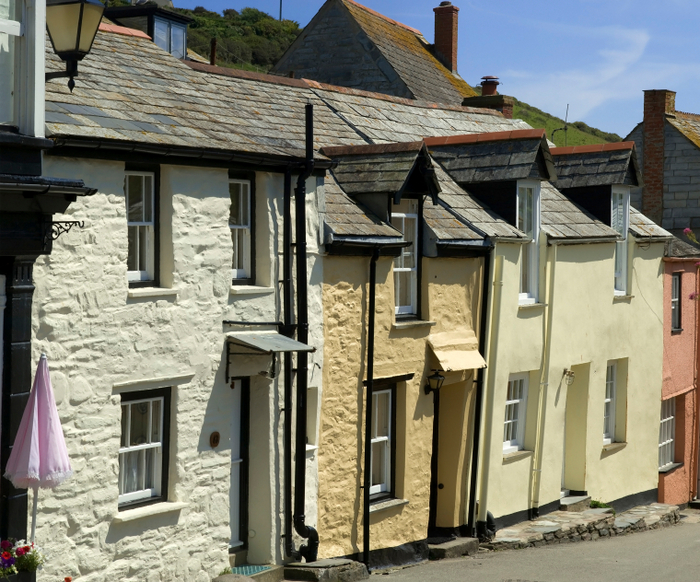
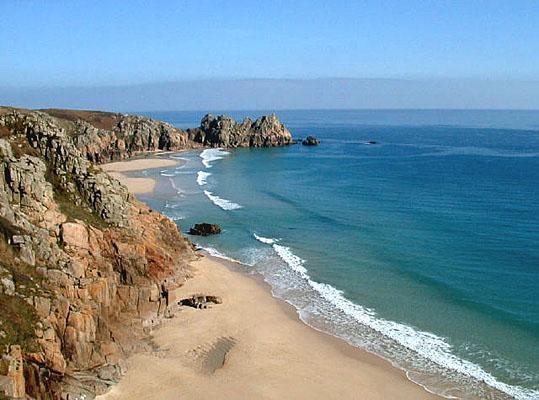
We walked from Port Quin to Port Isaac, inland, then back again along the incredibly steep coast path. Before the afternoon, the low clouds cleared and there were breathtaking views over a clear sea, as blue as the Mediterranean but far more noble in its swirling tides and waves washing on the rocks.
As I wondered what to do about my fears and doubts, I thought of today’s reading.
If your faith were the size of a Mustard Seed, you could say to this mountain: “Move from here to there.”
As I lay up the grass
high above the cliffs
Gulls weaving above
For a moment time stopped
And there before the great majesty
Of black cliffs, towering green slopes
Crashing waves and vast heaving sea
I saw before my eyes a tiny beetle
In sharp focus, and far below the waves
The glory of the view, all obscured
The beetle indifferent to his surroundings
As happy here as in an urban dung heap
Place need not be the only harbringer of happiness.
And then I stared at the blade of grass
clinging to the towering cliff
And now all time stopped
In blissful silence all thoughts dispersed
‘Till the harsh voices of walkers appeared
The spell now broken
And I went upon my way.
And it came to pass about an eight days after these sayings, he took Peter and John and James, and went up into a mountain to pray.
And as he prayed, the fashion of his countenance was altered, and his raiment was white and glistering.
And, behold, there talked with him two men, which were Moses and Elias:
Who appeared in glory, and spake of his decease which he should accomplish at Jerusalem.
But Peter and they that were with him were heavy with sleep: and when they were awake, they saw his glory, and the two men that stood with him.
And it came to pass, as they departed from him, Peter said unto Jesus, Master, it is good for us to be here: and let us make three tabernacles; one for thee, and one for Moses, and one for Elias: not knowing what he said.
While he thus spake, there came a cloud, and overshadowed them: and they feared as they entered into the cloud.
And there came a voice out of the cloud, saying, This is my beloved Son: hear him.
And when the voice was past, Jesus was found alone. And they kept it close, and told no man in those days any of those things which they had seen.
(Luke 9:28 – 36)
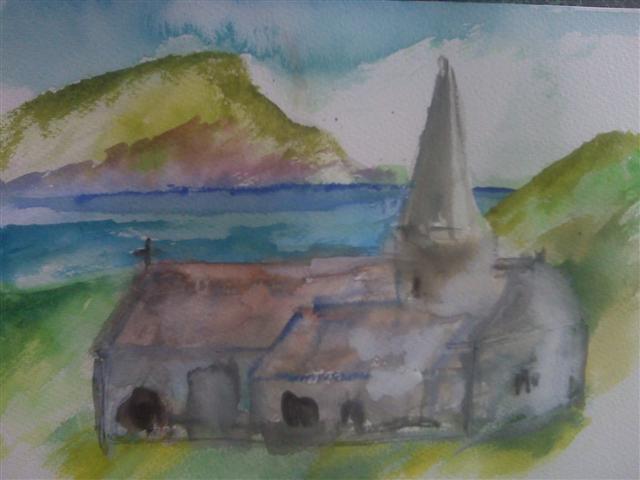
We walked to St. Enodoc Church in Daymar Bay.
Here, after the noise and surfing bustle of Polzeath, it is warm and calm. John Betjamin is buried here. I sketched a water colour on the sloping churchyard at the back of the church (below). This tiny church was, for many years until the restoration in 1863, actually buried in the sand.
It is quite a contrast to the mighty Basilica of St. Mary Major. Strange how the same religion can produce such contrasts in style and atmosphere. I think I prefer St. Enodoc. There could be no more beautiful spot in the entire world.
Reading for today (Book of the Apocolypse):
And I saw a new heaven and a new earth: for the first heaven and the first earth were passed away; and there was no more sea.
And I, John, saw the holy city, new Jerusalem, coming down from God out of heaven, prepared as a bride adorned for her husband.
And I heard a great voice out of heaven saying, Behold, the tabernacle of God is with men, and he will dwell with them, and they shall be his people, and God himself shall be with them, and be their God.
And God shall wipe away all tears from their eyes; and there shall be no more death, neither sorrow, nor crying, neither shall there be any more pain: for the former things are passed away.
And he that sat upon the throne said, Behold, I make all things new. And he said unto me, Write: for these words are true and faithful.
(Revelation 21:1-5)
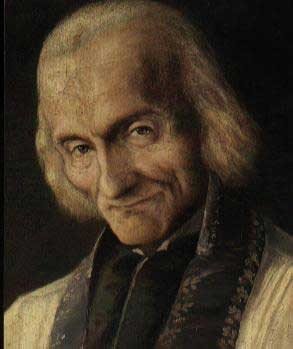
We walked along the cliffs to Padstow. Once in Daymar Bay, the wind died down and it became calmer. On the way back, the sunset was glorious, the sea inky blue, the sky shades of orange, yellow and the lightest blue. This 4th of August is the feast day of one of my favourite characters – St. John Vianney (1786–1859). Favourite because he did nothing in his whole life. He was just the parish priest from an obsucure parish.
He was remarkable for his sheer holiness; by the time of his death he was attracting thousands to confession. In a sense, he just was. He did not write anything or do anything of great importance.
In a sense, I see a sunset on the ocean as inspiring a life like this. They don’t do anything; they are utterly simple. They just are and in contemplating them, one can just be and pause in the moment.
Reading from today’s gospel:
And Jesus went about all the cities and villages, teaching in their synagogues, and preaching the gospel of the kingdom, and healing every sickness and every disease among the people.
But when he saw the multitudes, he was moved with compassion on them, because they fainted, and were scattered abroad, as sheep having no shepherd.
Then saith he unto his disciples, The harvest truly is plenteous, but the labourers are few; Pray ye therefore the Lord of the harvest, that he will send forth labourers into his harvest.”
Matthew 9:35-10:1
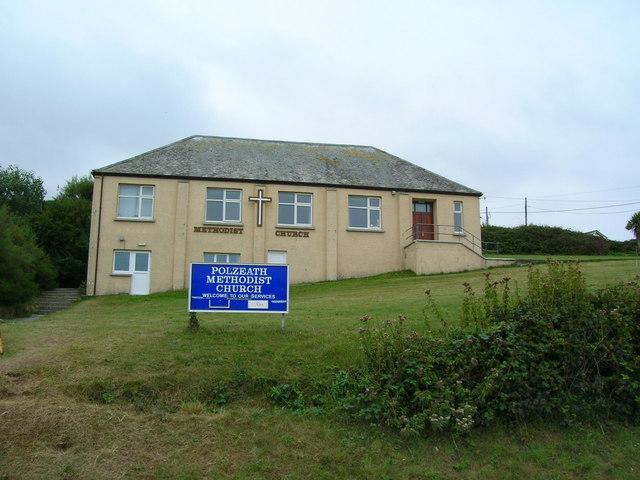
I went to the small chapel at Polzeath. Transformed from an old Methodist chapel into the ‘tube station’ for surfers (but still used for worship on Sundays), I am used to churches being three quarters empty, or at the most three quarters full. This place was seething. There must have been over a hundred people crammed into this tiny chapel.
Everything was done by song. The story of Zaccharias was read from Luke, accompanied by a play and a crossword game. The spirit and energy of the congregation were marvellous to behold.
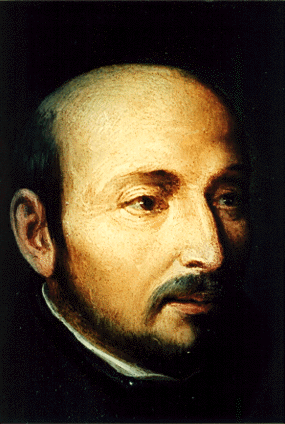
I had forgotten, as I went to Mass, that it was the feast of St. Ignatius Loyola. As the priest read out the familiar story of his life, I thought of my own book of his life that has lain unpublished and unread for ten years. Maybe one day it will see the light of day.
Whatever you do at all, do it for the glory of God.
(1 Corinthians)
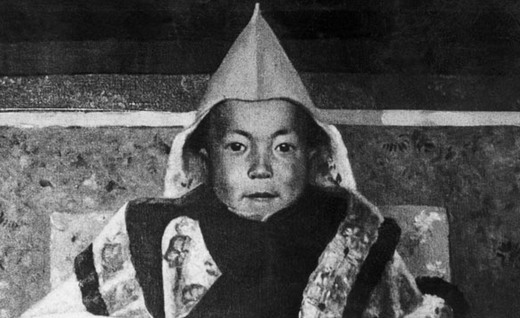
I completed reading the Dalai Lama’s autobiography. The compassion of the man is extraordinary. He has been exiled from his country for half a century; his people have been intimidated, tortured, killed, and are now a minority in their own country thanks to Chinese mass immigration.
Imagine how we would feel if this had been done to us by our neighbours. Yet he refuses to attack the Chinese character.
A prophet is only despised in his own country and in his own house.
Matt 13:54-58
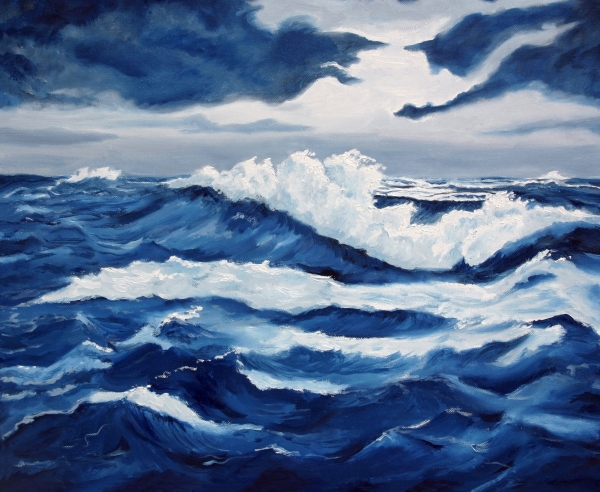
I went sailing. Out in the open sea, the tiller bar snapped in half. It was blowing quite hard. I was blowing about, alone, the sails flapping everywhere. Situations such as these require acute concentration and clarity of thought, so that one’s usual worries and ambitions become meaningless.
Of course, I should have lashed the broken end of the bar to the stump, but I didn’t think of that, so I just grabbed the stump and limped home.
The Kingdom of Heaven is like a net cast into the sea that brings in a haul of all kinds.
Matt. 13:47 – 53)
I went to an evening Mass. Perhaps because it was evening, or because I had been reading the Dalai Lama’s words that a Buddhist must not just think about his death every day but prepare for it (and that it is in the approach to death that often greater spiritual awareness comes), I thought on death.
We think these ‘big’ decisions in our lives are all important, which they may be to a certain extent, but we forget that they are only temporary. I am always reminded of the reading of the man who fills his heart with the realisstion that this very night “an account will be made of his soul.”
The Kingdom of Heaven is like a merchant looking for pure pearls. When he finds one of great value, he goes and sells everything he owns to buy it.
Matt 13:44.66
Suddenly I have to take a big decision. I find that when these moments come, going to Mass can help the process. The trick is to concentrate on the mass and on the readings and not to think of the decision. Then a solution or what may be a solution comes. The reading was about the Darnel in the field. The trouble is that our minds are so cluttered with Darnel that true reality is difficult to perceive.
The sower of the good seed is the Son of Man, the field is the world; the good seed is the subjects of the kingdom, the darnel the subjects of the evil one; the enemy who also sowed them, the devil; the harvest is the end of the world, the reapers are the angels.
(Matt 13:36 – 43)
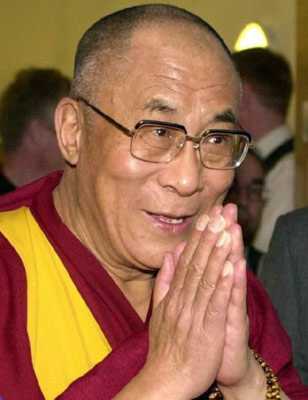 I am currently reading the autobiography of the Dalai Lama. He writes:
Thus I am believed also to be a manifestation of Chenrezig. In fact, the seventy-fourth in a lineage which can be traced back to a Braman boy who lived at the time of Buddha Shakyamuni. I am often asked whether I truly believe this. The answer is not simple to give, but as a 56-year-old, when I consider my experiences during this present life and given my Buddhist beliefs, I have no difficulty in accepting that I am spiritually connected both to the thirteen previous Dalai Lamas, to Chenrezig and to the Buddha himself.
I think this is very subtle and appealing. Note the emphasis I put on the words: “spiritually connected.” We are not asked to believe a physical rebirth, but clearly our thoughts, our emotions do connect us with the past and the future. Through his upbringing and rigorous and careful education, obviously the present Dalai Lama is spiritually connected to his predecessors.
This passage is peaceful. Yet we cannot live up to it. We carry on making the same mistakes again and again. Until one day, when perhaps our consciousness goes into a next life and goes on repeating the same faults in an eternal cycle of pain.
We can only break this cycle with a rigid discipline – which seems possible to some, but not to me.
Amend your behaviour and your actions, and I will stay with you in this place.
(Jeremiah 7: 1-11)
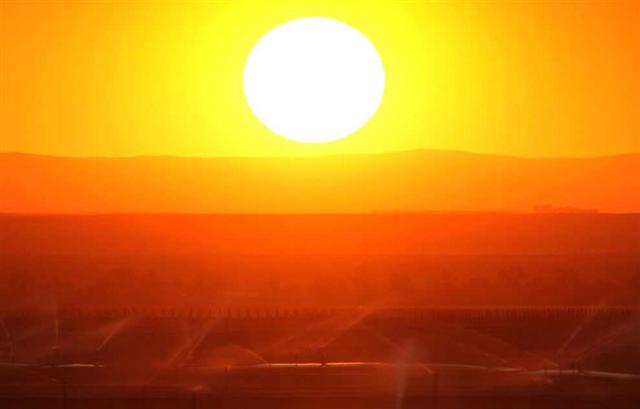
I was at a busy dinner where a speech was to be made. Needing a break of fresh air, I stood outside for a moment. In that clear Northern Summers’ twilight, in the distance over the fields, a great plume of water was rising into the air, irrigating a crop.
The moment had a sublimely calm and spiritual presence. The tranquility of the atmosphere seemed to run deeper than conscious thought.
This gospel reading always perplexes me. It is said that although there are six billion people living on the planet, if you met a close friend by complete chance, you would instantly recognise him.
How could she (Mary Magdalen), not recognise the Risen Lord? Of course it is an allegory for our lack of recognition, but how much of the rest of the story, then, is an allegory.
‘They have taken my Lord away,’ she replied, ‘and I don’t know where they have put him.’ As she said this, she turned round and saw Jesus standing there, though she did not recognise him.
(John 20: 1-2. 11-18)
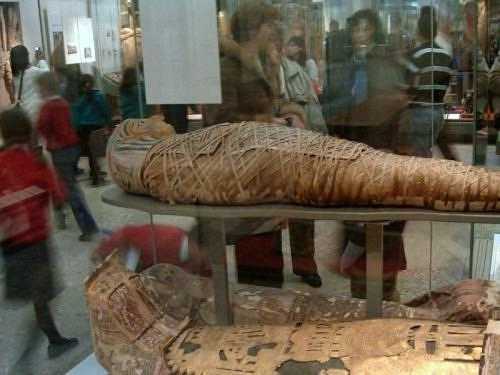
The day before we had stopped in one of the Egyptian Rooms at the British Museum. I gazed at the Mummy of Hornedjitef. I was already a bit depressed at my birthday and I started wondering about the artifact before me, which dated from 246 BC.
Hornedjitef’s religious beliefs would seem absurd to the modern mind. How can one take one’s physical possessions and body into the afterlife. But the thought occurred to me – would not Hornejitef have found our beliefs, such as the virgin birth, just as ridiculous?
The words of Jeremiah, son of Hilkiah:
The word of the LORD came to me, saying: ‘before I formed you in the womb I knew you, before you were born I set you apart; I appointed you as a prophet to the nations.
(Jeremiah 1:1 4-10)
As it was my birthday, my son kindly took me to the Renaissance Drawings at the British Museum. There was one that caught my particular attention – a drawing of the face of John the Baptist. It is a face of expectant longing; every line on the paper etching an emotion.
Jesus replied ‘Who is my mother? Who are my brothers?’
At Mass that morning we were told that this is not a denial of family, but rather a reaching out.
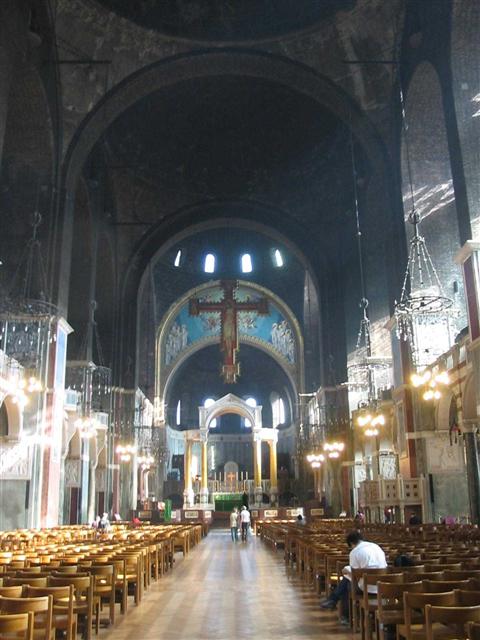
If you go to the 5:30 Mass in the Cathedral on a bright summer’s day, the light streams in from the windows high in the nave on the west side, casting a brilliant luminescence across the black, vaulted ceiling. It is fantastic to behold as the organ sends up its thunderous chords at the end of the Mass.
Out of his infinite glory, may he give you the power through his Spirit for your hidden self to grow strong, so that Christ may live in your hearts through faith, and then, planted in love and built on love, you will with all the saints have strength to grasp the breadth and the length, the height and the depth; until, knowing the love of Christ, which is beyond all knowledge, you are filled with the utter fullness of God.
(Ephesians 3:14–19)
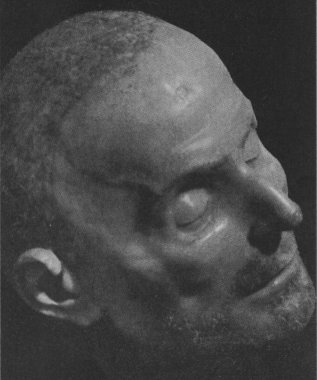
We celebrated St. Camillus’ feast day in the crypt chapel under the Palace of Westminster. St. Camillus, born in 1550, is a patron saint of nurses. After a misspent youth he devoted himself to the Faith.
This is how we know what love is: Jesus Christ laid down his life for us. And we ought to lay down our lives for our brothers. If anyone has material possessions and sees his brother in need but has no pity on him, how can the love of God be in him?
(1 John 3: 14–18.)
The 10:30 Masses in the Cathedral are being held in the Holy Souls Chapel. The Latin Mass at 10:00 comes off much better in one of these side chapels, with the priest facing the altar. The simple dignity and the age old words are so inspiring.
That is not to say that the mass in English is inferior. It is just different; more an intellectual exercise in understanding the readings and less a spiritual experience.
Pay attention, keep calm, have no fear. Do not let your heart sink.
Isaiah 7: 1-9
I watched “Batman” with my children. This is, of course, quite a ridiculous film with the simplest of moral messages of good and evil, the overcoming of fears arising from childhood, of the ends not justifying the means and so on. However, I found it curiously gripping and inspiring.
What I like about it is the concept of a lone crusader, going out to do battle for what he thinks and knows to be right. Going into the chamber and asking an independent-minded question is a lot less heroic than jumping off a building, but it is what I can do and it’s a tiny bit more heroic than asking a planted question pressing the Minister.
The pursuit of justice, rather than the pursuit of office, is a surprisingly rare thing in politics.
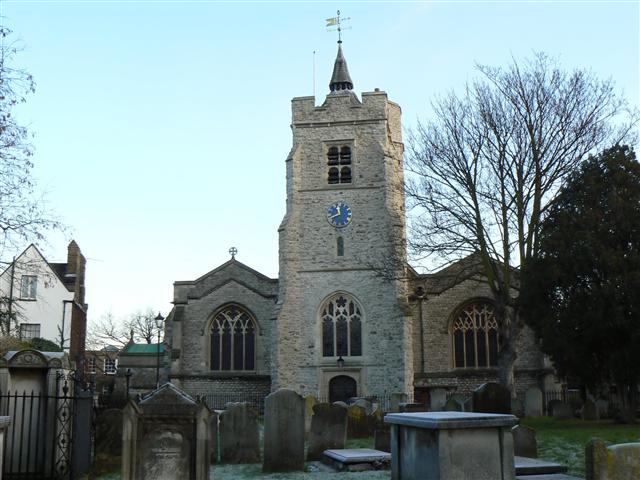
I went to evensong in St. Nicholas Church, Chiswick. It was beautifully done. There is nothing done better in the Anglican Church than Evensong.
The Gospel reading reminded us that its not what comes into our bodies that defines us, but what we say and do. But it is the Magnificat and Nunc Dimittis, even said that never fail to inspire me.
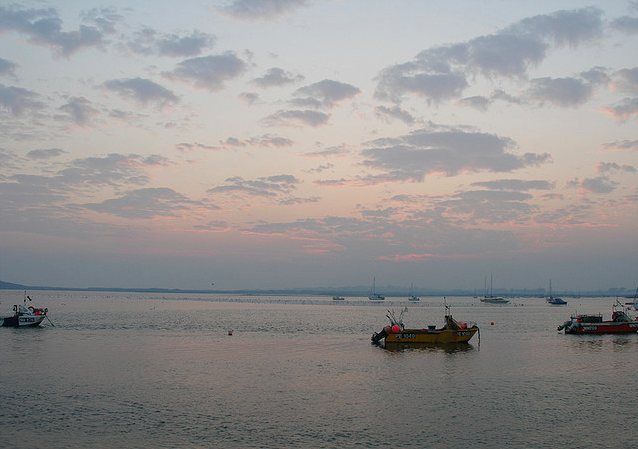
I was sailing; I found a mooring and spent the night in Christchurch Harbour. I got up at dawn. Dawn in a harbour is an extraordinary experience. The tide was at its lowest. The air was absolutely still, the light completely grey in various shades. Not a soul was stirring, not a light was on. The effect was one of magical stillness in almost a spiritual way.
The other day, I was going to communion and just before taking it I had a prick of conscience that I should go to confession. Luckily, the time for confession was now over, but the thought remained.
I therefore arrived in what I thought was good time for confession at the Cathedral. I never know what to say at confession and I am normally in and out in three or four minutes.
The person before took thirty minutes! What could she have to say? Was she a mass murderer?
She came out with no word of apology to the four or five of us still waiting, and then came the priest, without a word, downed tools and walked off.
I finally got to confession and the first thing I had to confess was my profound irritation at the lack of consideration shown to the confessors the night before.
I’m like that – I get irritated by other irritating people. Not a saint, I fear.