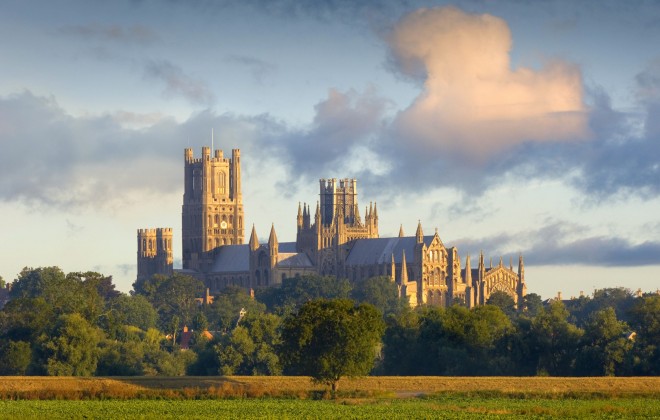
I was in a high place on the Lincolnshire Wolds. The cold was so deeply penetrating. The very bare leaves were frozen into immovability, becoming an ice sculpture. The wind cut my face, my feet slowed on the deep climb, wearyingly. The lake itself is not dark but light, snow-covered, reflecting. Its very depth hidden, its surface all important as a source of light.
Francis de Sales

I chaired a Bill Committee for nearly five hours. This is not rushing and fretting but the need to concentrate enervates and tires. A few minutes at Mass was a welcome relief.
By chance I learned it was the feast of St. Francis de Sales. I am reading about him at the moment. I always think of him as one of the first religious to show that being a full time religious is not a necessary prerequisite to a deep spiritual life. That all life can be encompassed in religiosity.
Rushing About
I had tried shooting prayers at unknowing fellow travellers in the train. There was a chap opposite me who was particularly fidgety. He seemed agitated as he worried on some obviously very serious accounts. He played unnecessarily with his mobile phone but shooting prayers did not work.
Then right at the end of the journey he returned a pen to the guard who had lent him one. A wonderful charming smile of thanks came over his face. Perhaps the prayer helped or perhaps, probably, I first misjudged him as we often do.
Later that day, after rushing about taking my daughter to Heathrow and speaking in the 1922 Committee, I had a short break from rushing in the 6PM Mass in the Crypt. All night the Taize chant kept coming back to me and then the next morning I couldn’t remember any of it.
Prayer-shooting
I was reading my very old book by Norman Peale on the long French journey. I tend to get noticed by young people on trains. I just happened to read that Mr Peale recommended you to shoot positive prayers out at people who irritate you. I shot a prayer at my neighbour.
As we got up to leave the train, he said in French “I have read that book, it’s full of positive thinking.” How strange that a stranger should mention a foreign-language book written sixty years before.
The Stillness of the Faithful

I missed the Mass in the Cathedral but just before it closed I sat in the back. It was empty apart from two people sitting far apart half and three quarters way down the nave. I noticed over some minutes that whilst I was fidgeting, they were still, completely still.
Who were they? An antidote to the crowd who at the half-hour going of the astronomical clock raced to it as if it was amazing and miraculous. The still people had more point and purpose.
The Bridegroom at Cana

I was on a long journey, and it got longer – stretching out to over 8 hours as the train trundled over the snow. By the afternoon I could not remember the wedding feast at Cana. Although later I remembered it summed up the beneficial power of healing water. And then on the way back from the Cathedral I popped into the local Church.
Everyone had left save one who prompted said “Go over to her,” the shrine of Mary, “She’s returned today.”
Their because of the train delays I had an hour to kill in Paris and popped into the Church near the Gare de l’Est. The sermon mentioned the strange fact about this St. John reading; there is no mention of bride and bridegroom at the Cana wedding – aren’t they always the centre of interest?
Then later I remembered that my friend the Wednesday before had mentioned. Read St. John. It is different, every reading has a symbol. The symbol here is that Jesus is the bridegroom – married to his new vocation. It had taken an hour train journey and these Churches to prompt my memory. So although religious healing seems illogical if you work at it logic comes mysteriously to the surface.
We are not alone
I talked to a group from “Catholic Voices”.
They are all young, ready to speak up for their values on radio, television and in the public square. Meeting them was like being galvanized by an electric shock – we are not alone.
The Power of Positive Thinking

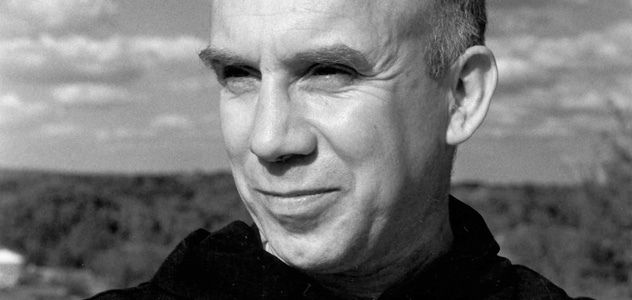
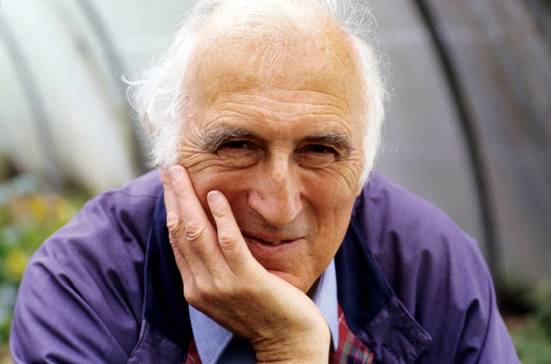
Perhaps here it is. I had picked up an old book from a second hand book stall – The Power of Positive Thinking by Norman Vincent Peale (seen above) published 60 years ago.
Does anyone read it now?
One of his bits of advice is ten times a day repeat “I can do all things through Christ which strengtheneth me.” (Philippians 4:13). Peale calls this the magic statement that is the most powerful antidote on earth to discouraging thoughts.
Christ the Intermediator

A friend of mine has read my book. He is more orthodox and rigorous than me and doesn’t have my struggles with faith.
His advice to me is: “Don’t try and understand God the Father, he is too much beyond our comprehension. Use Christ as an intermediator. He is human, understandable.”
This is the classic Christian argument and of course true but I wonder why are our main prayers – “Our Father, who art in heaven…” or Hail Mary…” – don’t address Christ by name. We need a regular Christ prayer.
The Portland Vase

I went to the British Museum with a friend. He had read about and wanted to see the Portland Vase in Room 70 amongst the Roman objects. It is a quiet room away from the bustling crowds around the Egyptian Mummies. Soon after arrival, it was deliberately smashed into 125 pieces by a visitor and faithfully glued together again.
What does the beautiful object tell us? It tells us, Gabriel, that beauty is worthwhile in itself. It serves no purpose, has no religious iconography, just gentle human forms. There are numerous arguments about what it all means. Does it matter if you look at it from above? A deep black seems to rise up from the penetrating blue shielding the white figures. In its colour it is almost spiritual.
Freedom to Argue
We won today a long standing campaign to remove the word “insulting” from Section 5 of the Public Order Act.
It is now OK to use strong argument even if someone claims they have been “insulted.”
It is a great advance for freedom and for religious people and secular people to argue their case strongly.
Living in Expectation

I went to the Carmelite Church in the evening.
They do a lovely young adult’s service with Taize chants. If you listen to a really good preacher, he seems to be looking at you, addressing his remarks to you. It was the Lord – “There was a feeling of expectancy.”
We should have this sense of excitement about life, thinking that today not only is something exciting going to happen, but it is happening now.
Problems and Perspectives
I was talking to someone whose life, he said, had been ruined by a neighbour’s tree overhanging across his garden.
I tried to reason with him. Why not just cut down the branches overhanging your garden? You’re entitled to do that. No, it was all too difficult. Send a solicitors letter? No, he couldn’t afford it.
Our own problems seem so much greater than they do to others. My advice, Gabriel, with any problem is to imagine the same problem is someone else’s. How would you?
Learning Through Death
Dear Gabriel,
We must learn to think of death and learn by it. I was reading a book commenting on the dead of the Second World War. A small school with sometime perhaps not more than two hundred boys in the 1930s and 20s. Over one hundred names – a picture and a brief description of a short life on each page. One family had lost an only child, another two brothers lost on consequent pages – some killed in May/June 1940. Then a trickle and finally a little flood in the Bocage campaign of the 1944 Normandy invasion.
I came away with a profound sense of depression of the wake of war; these young men staring out at me, none old and none more tragic than a young man with a German Father and British Mother and British life working in London in 1938/9 who decided to return to Germany in the Summer when war became inevitable and was killed on the Eastern Front in 1941.
At the front of the book is a beautiful preface by Lord Peter Rawlinson saying how a group of old men returned for the refurbishment of the war memorial where he had been at school sixty-one years before. The memorial said that in his short life, the German officers’ happiest times were at school. How sad.
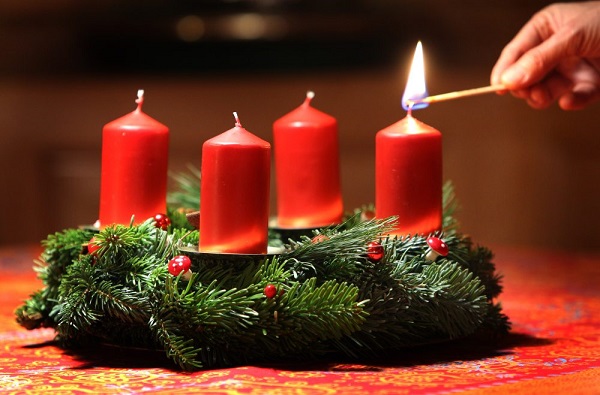
Third Week in Advent

Sunday
A chance to go quietly to our local church.
Monday
I had put down an urgent question to the Secretary of State on same-sex marriage. The media were on the warpath and I had numerous requests to appear. Instead I went to the 5:30 Mass in the Cathedral. It was more soothing.
Tuesday
The day at last: the launching of my book, The Monastery of the Mind. It has taken fifteen years to publish. A reasonable turnout but the high point for me was the kind words of Father Nick King SJ and Archbishop Vincent Nichols.
Wednesday
I was in Paris for our amitié group with the French parliament. With total separation of church and state and education and religion, they seem less fussed by our debates over opt-outs for the church.
Thursday
We went to the carol service at Downside. In the darkened huge abbey with perhaps a thousand people present it is magnificent. It is the power of the plainchant and Benediction with true Advent, not Christmas, readings which impresses.
Friday
I went to a funeral of an old lady and friend in Lincolnshire. The simple dignity of the service, the medieval church cold against the warmth of the congregation. A lady without an enemy in the world.
St John Vianney

This prompted me to read Meditations by St John Vianney. His whole life was centred around the Eucharist.
The Carol Service
The carol service at Stonyhurst ends with Benediction.
This is a thoughtful moment: the service is no longer just a series of readings about a distant myth or pretty folk songs about a legend. This is real here, the real incarnate God amongst us.
Thank God in all things
At mass, we were told to thank God in all things. How rarely we do this and to view all material things with indifference. We think complacently that we do this.
True, I may not care much about clothes, or money, or well-appointed houses but I care about lack of any political power. We are all held in sway by one material thing. We must fight it.
The sands of time
After Vespers, the church clothed in darkness. The Psalmist some three thousand years before had come from those yellow, pink hills I had seen the day before, sandy and rugged. The Psalms were they very sands of time.
The Dead Sea
Afternoon, Amman
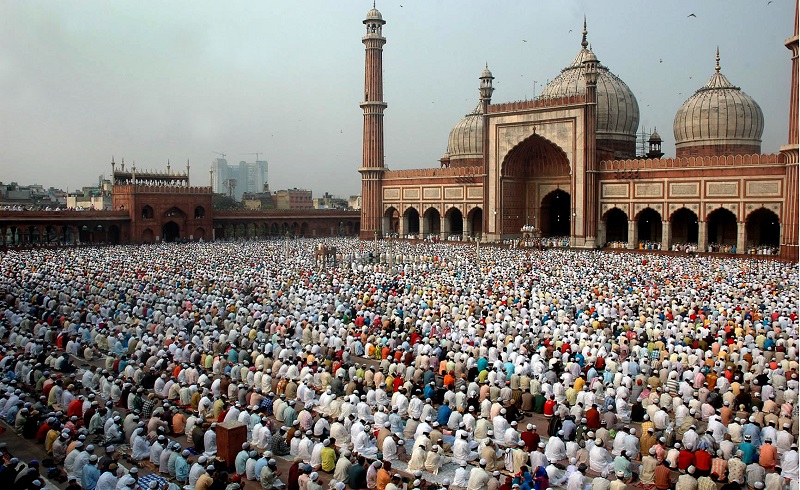
Whereas in the West, the High Street would be dominated by large chains, here was all a lively bustle of small shops. Crowds everywhere. Whereas in the West, the church, a relic of Victoriana, would be locked and closed, here the mosque was open to the street, its courtyard full of men standing, meeting, sitting, praying. Islam has the great advantage of the injunction to all to pray five times a day.
Amman, Jordan

Early morning
I woke to the sound of morning prayers. What a moving experience: prayers ringing out of the city. What is moving is awaking to find it is coming out of the dark into the bedroom. I say awake but I was dozing, saying the Rosary. The two sounds merged as all prayers do.
Campion Day

At the Campion Day Mass at Stonyhurst, the pupils bring in the cart which drew St Edmund Campion to his martyrdom at Tyburn. He had to create a printing press from scratch to publish his “Brag” against the government. Now with all our vast outpourings on this, the internet, we have no more impact individually than he with his four dozen hand-printed copies.
St Catherine Labouré

We were hearing about the Saint Catherine Labouré who created the cult of Mary’s medallion. Mother Teresa left one under a potted plant when she visited Mrs Thatcher at Downing Street. In a sense, a magical medallion seems ridiculous. I’m not so sure. If you believe, anything is possible.
The last two pennies
The reading is about the poor widow putting her last two pennies in the offering bowl. I was taken with what the priest told us at mass that we have to give our last two pence in love. I thought how impossible with strangers that is though.