I happened to be reading about Mary, Queen of Scots, and noticed it was the feast day of Margaret of Scotland. Her main feature seemed to be that she had had a happy marriage.
Again, a place to start.

I happened to be reading about Mary, Queen of Scots, and noticed it was the feast day of Margaret of Scotland. Her main feature seemed to be that she had had a happy marriage.
Again, a place to start.

I went to a lovely Remembrance Sunday parade in Gainsborough. The prayers of intercession were sung. “O Lord, hear my prayer, O Lord, hear my prayer, When I call answer me. O Lord, hear my prayer, O Lord, hear my prayer, When I call answer me.”
I was trying to remember the words in the middle of the night and could not. Eventually I got up and did so. It was a nice way of getting back to sleep.
Yet all this praying to God and begging him to listen. Does he want all this stuff? I know I wouldn’t. But I tried an authentic prayer – “O Lord I know you’re not there. When I call, there’ll be no answer.” Immediately, I had a horrible, almost painful feeling as if I was doing something wrong. I reverted to the Christian prayer and immediately felt much better. To me this is part of my theory that we can only know God rationally by his shadow by his effect on us through the cloud of unknowing that separates us.
As usual when I lit the candle before the statue of Jesus after Compline in the great, dark, empty abbey church, I felt inexplicably moved as I said my prayer dutifully.
But one of my recurring doubts about whether God exists is doesn’t he find all these prayers rather tedious? All those importunate requests, like demanding disaffected clients. All those people never saying thank you. Would he prefer us not to ask for anything, just say thank you politely and be done with us?
Father Alexander told us this rather good story in our oblates meeting. There were some grubs living in the bottom of the murky pond. Every time one would climb up the stem of a plant into the light above it would never be seen again. Eventually one promised to come back and tell the others what it was like up there.
The grub climbed up and went to sleep in the sun. He awoke to horrible pain. He was dying, his skin peeling away but suddenly he realised that the skin was growing a wing. He was transformed. He took off in great delight.
He looked down at the dark surface of the water. I cannot go back. Firstly, he couldn’t. Second, they would never believe him if he could. Of course, it’s what the rich man was told in the story of Lazarus.
I did get to confession and for my penance I was asked to think of four good things God has given me. I can think of four easily. Health, wife and family, a job, and faith (if a bit questioning).

A replica of the famous icon was visiting Westminster Cathedral. I thought it was going to be a normal quiet day and I could go to confession. No chance of that: the place was seething with Poles! The queue was enormous. Actually I quite like Poles, but another thing to confess thwarted by the enthusiasm of others.
The House of Commons was in recess. There were only four of us at mass in the crypt. The reading was from Luke about the ten lepers whom Jesus cured: only one, “The Man was a Samaritan”, turned back to thank him.
The nature of humans is a vague regret about something which is different for all of us. Perhaps one antidote is a thank you.
The first reading today ends with the great Hebrew prayer, the Shema. Listen. What a pity we Christians (sic) don’t have a similar tradition of reading this essential bit of our religion three times a day: “Listen, Israel: the Lord our God is the Lord.”
The priest at Mass reminded us that Jesus draws together this belief from Deuteronomy with his teaching to love your neighbour as yourself. He said something important which struck me and marked a milestone for my spiritual journey. It is not enough to believe in God, you must also love him.
I realise that I have no difficulty in loving God, only in believing in him. But through the cloud of unknowing is this not a start? We can never prove our belief or otherwise in God, but we can feel the effects of his presence through that cloud.
Once again, I read this week that most people nowadays crave spirituality but reject religion. I am the opposite. I have difficulty with unquestionable belief in God. I love religion. We must not agonise too much over belief, only accept the effect.

By chance I went to a full sung mass for All Saints’ and the next day, early in the morning, a small mass for All Souls’. This seemed appropriate.
On All Souls’ I felt everyone in the small congregation was concentrating on their own loved ones. I have a long list: parents, grandparents, friends, a brother. We all do.
In the mass we Catholics have a great gift. Sometimes a tear rolls down my cheek with the emotion of what is presented to us. The real presence of our Creator in our midst. Literally to Hell with rational doubts: enjoy.
I was dreaming that I was on a long walk. I came to a house and for some reason, as dreamers do, I just walked through it. The owners didn’t mind as I tramped through their sitting room but as I was lost coming out of the house I asked the owner the directions.
He pointed back to a huge signpost on the corner of the house where I had entered pointing left and right and straight on. But I don’t think the signpost was there before; or perhaps it was. How does the creator of our dreams work out the end before the dream starts and is the truth and the end always in sight and not just in dreams?
The priest at communion told a powerful story. Perhaps an old one but I have not heard it before.
Some rabbis were spared the gas chambers in a wartime concentration camp for one day. They spent the night, their last night, putting God on trial for having deserted them into bondage and death. After a trial of learned disputation lasting all night, they found God guilty.
But as they were led to their deaths they sang out the psalms joyously. But God is not for us a love, his ways are unknowable. I am who I am. But God exists and that is what is important.
A friend of mine told me this story which illustrates how science cannot answer all our questions. Often a scientist can look at a woman on baking a cake, he can use every kind of sophisticated measurement to find out the ingredients of the cake. But no science will tell why she is baking the cake, that it’s for her son’s birthday.
At Mass in the Abbey the priest told a story which sums up my attitude to faith.
A woman went to stay with her cousin. Arriving on Saturday, her cousin asked her if she would like to go to Mass. No, she wanted to go skiing which she did.
The next Sunday she couldn’t go skiing so she did go to Mass. The priest told how in ancient times if a lamb was prone to straying the shepherd might break its leg and carry it for a time. Then it would never stray again.
At that moment, the woman knew in her heart that God was speaking to her. In truth, God may not direct our lives directly but if we look out for them, there are signs everywhere of His presence.

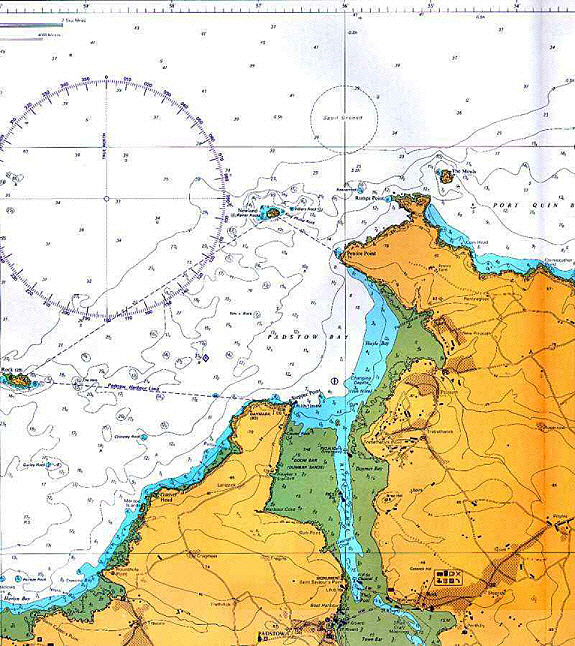
The politician on the television was very irritating, not so much in what he said but in the gulf between the rhetoric and the action. Looking over the waves breaking against the green banked cliffs of Petrie Point was an antidote. Thinking of this later I thought that religion and its effects has three of the four halves. Let me explain.
No doubter, no atheist could doubt that this Petrie Point and the sea at its feet exist. Nor could they doubt the calming pleasant mental effect they evoke. Equally no atheist could doubt that religion can cause similar feelings. They just doubt whether their cause actually exists. Therefore we have four parts and only one of the four is in doubt.
1) Petrie Point and the sea;
2) Contemplation produced of the same is pleasant;
3) Religion/God;
4) Contemplation of the same is pleasant.
Why do we agonise so much about whether God exists? Religion exists. Can we not assume on our contemplation that religion exists and enjoy the feelings it engenders?
I was flipping through channels on the television and came across an American evangelical channel. Of course it was delightfully over the top. Jesus lives and all that. All this is fine for people with belief and certainty but what of the others, like myself? I think we have to concentrate not on religion as a fact but as a means. Not as a finished product but as a journey.
Set at a stunning location, a creek running down to the sea. Old photographs show it as an intensely industrial landscape of miners and shipbuilding. What is the true reality? Industrial past or present quaint beauty?
The talk at the “tube station” church was on the theme of faith. I have always before seen faith as an insurmountable problem. Faith in God, a certainty I lack, but faith as the story from Luke of the foaming of the waters of Galilee as also about having faith that things will be alright and having faith that one can make a difference. That’s about faith in one’s mind, less of a mountain to climb, more knowable. Do not worry about faith in the existence of God, concentrate on faith in your existence.

Our oblate master was telling us how our attachment to “things” just brings unhappiness. He had given away some gold cufflinks someone had given him and a valuable watch.
The trouble is that we all have a thing which we find hard to give up. I may have no interest in smart clothes or watches and am happy to give them up; but maybe I am more attached to political power. Not that I have ever had that either.
So we can be high and mighty saying “things” mean nothing to us, but we all have a thing.
As usual when at the Parliamentary Assembly of the Council of Europe, I sought out the 6:30 Mass in the Cathedral. I was told they were about to have their first ever ecumenical service. The Protestant Pastor gave the sermon. It was on the text of Jesus saying we must be like little children to enter the Kingdom of God.
He described the story of two boys climbing a ladder to scale a small cliff. The ladder fell down: a man came up. Jump, he said. One of the boys did, the other did not. Why? Because the first boy was the son of the man who came up. In other words, we have to have confidence and jump into our father’s arms, from whatever height. But he was saying something else. That if we could be more like little children, our problems and dissatisfaction and jealousy would fade away. It seems that this problem of conflict, of comparing ourselves with others is our greatest human weakness.
Next day at Mass the priest was describing how in the war, as a small boy, he had to ride his bicycle without lights because of the blackout. Suddenly he was told by someone or something to stop. By inches he missed an enormous hole in the road left by workmen. The day was the feast of the Guardian Angels. Are they always there? Do we have our own one watching over us? It is a lovely idea.

I went to a service in Nairobi. I could not find a Catholic Mass. It was upstairs, an unlikely ‘church’ with a corrugated tin roof and open sides. 6,000 feet up the sky was cloudless, the air coming through the open sides cool. I was the only white person there.
The sermon was in Swahili and English. I wasn’t sure I understood the English any more than the Swahili. At the end of the long sermon I left but, in the road, heard them singing. I returned. The chant was endless, repeating, rhythmic. I went with flow. I was wondering whether to put my last 1,000 Kenyan shillings note in the box. I left, then returned to do so. As I walked down the stairs, they were singing ‘Jesus is the Truth’ or something like it. That service was more memorable and did more for me than two dozen traditional liturgies in England.
I was steering a small dhow made entirely of bits of wood attached to a hollowed-out tree trunk, the sail with many holes. A young man was balancing gracefully on the outrigger. For some reason religion came up. This young Mombasa fisherman seemed very well informed. He said ‘The human race is the tree, religions the branches, and we are the leaves.’ I suppose it is a cliché, I don’t know. I have not heard the phrase before. It seemed remarkably apposite and full of wisdom to me. We are all a unity. The human race is one great tree and all religions stream from us and flow back to the same roots.

Photo by Stephanie Kalber (copyright)
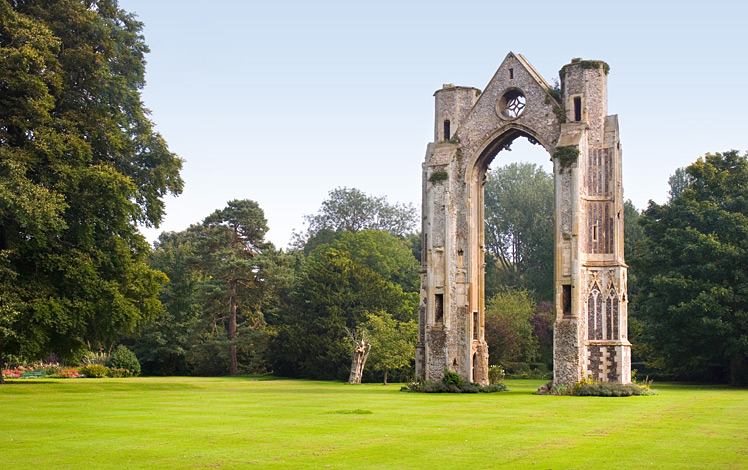
A pilgrimage even to Walsingham always takes off slowly in the mind. I was wondering whether to go to confession and didn’t really have the energy. Sitting in the rebuilt church of St Mary’s, an acceptance slowly came to me. I went and talked about my inability to accept things as they are and my place in it. The priest was kind. He said something which made a deep impression on me. “Man is measured not by what he can be but by what he is.”
In other words we should accept that. Yesterday indeed is history tomorrow is a mystery, today is a gift. But we have to ask ourselves what do we really want. I was thinking of this that night in the pilgrims’ hostel.
I don’t really want to “do God’s will”. I find that trite, but I do want to find God. The emphasis being on the word “find”. I don’t yet with all my belief believe in a transcendent God and therefore the most important thing to do is to find him. It might happen tomorrow or it may happen as I lie dying but that is the most important thing. And then we can concentrate on what is the most important “ambition”. All the other disappointments fall into place. They are merely busy byways along the main road.
We think we come to a place like Walsingham by accident but such perceptions and insights are vouchsafed to us in a place like this that perhaps Our Lady did really appear to Lady Richeldis in 1081. Certainly Richeldis believed so; and in a very real sense we feel her here.
As we lighted our candles and processed home down the quiet high street and said our night prayers in the garden, a deep happiness and peace descended on all of us. I went to bed and the others went to the pub!
My son was working in the British Museum and showed me round the back areas. In one of the rooms, under an old polythene sheet one of the curators showed me an ancient bronze door. He thinks it might have come from the Temple in Jerusalem and been looted by the Babylonians. It still has the axe mark where it was cut in half. It was strangely moving to look at this. What had it seen?
We went to the Cathedral in Sion in the Valois of Switzerland. The church is up a hill with a small opening into the choir. It has an ancient simple Romanesque air. We were visiting an old lady in a nursing home. She is very old, inside the room it was silent, outside children could be heard playing. The end and the beginning of life, connected by a slender thread. We were travelling through Dijon. In the cathedral there is an ancient medieval statue of Our Lady of Dijon. She is credited with saving the main town from destruction as the Germans withdrew in 1944. She seems worth praying to and I have tried it. It seems to work.
A friend in London was asked me during the day as a device for useful meditation to think on the presence of God. It seems to work.
I sat on a tree trunk in high fell country and tried to settle my mind. Every time I got angry or felt resentment or jealousy. I would say ten Hail Marys. That would be a lot of Hail Marys but the fear of it seems to work a bit.

I went to the small Westminster chapel of ease near our home. For many the concept of the Body of Christ being in the bread of the Communion is absurd. Rationally it is, but why when one goes into a Catholic church do you feel a kind of strange presence or power? Is it real, is it illusion, but the feeling is there. On Monday I went to a reception at Speakers’ House raise money for the new museum of Catholic history at Stonyhurst. A reliquary cross belonging to Thomas More was on display together with a Book of Hours that one of Mary Queen of Scots’ ladies in waiting carried at her execution.
I touched the cross. People scoff at relics but some bones turned up recently in Bulgaria by legend those of John the Baptist, absurd yet recent carbon dating puts them as coming from the first century.
Anyway the search for proof is tiring and pointless. That this relic has been handled for three, four, five hundred years is enough.
On Tuesday I went to a pray-in in the crypt where a multitude had assembled to pray for guidance for the nation. It sounds corny but I have never sat for so long in any meeting in Parliament with no one saying anything. It was curiously powerful. Perhaps there is something commendable in silent politicians and silent politics or just thinking instead of doing and talking.
Wednesday was the feast day (13 June) of St Anthony of Padua. He seems a charming chap. He sort of wandered into the Franciscans as St Francis was getting going. A good theologian, they put him to use. We all have our uses.
For the rest of the week I had to test Spinoza’s theory. Is bobbing and down in a small boat, walking high fells or opening the Lindsey Trail with a two-hour carriage drive behind two lorries as good as going to church? Of course it is!

I will not forget this Pentecost in a hurry. Perhaps it has always passed me by a little. The facts are well-known: wind, tongues of flame, the Holy Spirit descending. The drive was long. Up early to drive to the Abbey from Lincolnshire, but it was not the dignified service and its well-known readings that was memorable but the “Fun Sunday” at the local village. The churches had come together to put it or to explain Whitsunday. It was all free, homemade, and rather moving. In the ‘interactive’ part we were asked to wait awhile in the porch as the Apostles waited. There were bits of paper to represent wind and fire, a little earth in a pot to represent planting the seed. But at the end it had more resonance than just seedings. The show was packed. I liked the Christian bikers too.
In the City of London opposite Mansion House tube station I came across St Mary Aldermary. The City is noisy outside. The doors were open, people chatting. Inside, it is quiet. The church is built on its medieval foundations. The ceiling is intricate in tracery. The yacht Belem was moored in the Pool of London for the Jubilee. Standing on one of these, the last of the great sailing ships, the great masts rising up, the great wheel – what an experience!
On Friday we were at Stonyhurst listening to Zadok the Priest. Can you imagine this type of music being composed for a modern Jubilee? But it never fails to inspire. I think Stonyhurst does the best Mass. It is the combination of a full church of young people, a brilliant choir, and rousing hymns that does it.
Before watching the Queen’s River Pageant on Sunday, I calmed down in the Sunday Mass in Westminster Cathedral. This is austere and traditional but moving all the same. Is the Royal Family England’s religion? No. But it does provide a cement, a focus, a feeling of togetherness that all can feel part of. There is no republican equivalent. President Hollande may be a good chap but when on his inauguration day he was soaked to the skin, he didn’t have the same appeal as the singers in the boat serenading the Queen with ‘Rule, Britannia’.
In its sheer eccentric Britishness this was the highlight of the whole Jubilee. On Monday & Tuesday I went to seven Jubilee fetes in Lincolnshire. Away from the high pomp and massed crowds, this is community.
On Monday I stood in front of Walesby church on the edge of the wolds. As sunset fell looking at over thirty miles of Lincolnshire plain one could see new pinpricks of light coming up as beacons were lit. Perhaps not quite as impressive as the beacons lit in The Lord of the Rings, but impressive anyway. I can’t remember which day but one of the readings this week was the familiar two central commandments. This always makes me feel woefully inadequate. I find great difficulty in loving everybody, particularly people different from myself. But, we were told, the important thing is to try. I have tried. I have been found wanting.
Waiting to pick up a son from Air Cadets, I spent an ideal half an hour listening to Radio Four, a programme on moral dilemmas. I never knew that Blaise Pascal coined my fundamental view. No one, he said, can rationally prove or disprove the existence of God. But if you were going to bet it makes sense to bet on him. Why? Because if he exists and you deny him, you might spend an eternity in the doghouse. If he doesn’t exist and you die, then nothing is lost. I think it was Pascal who suggested too that it is only in trying, in praying, that we can gradually become more convinced. Spinoza also expressed another fundamental belief of mine that if God exists, he made everything. If God is in everything so that we can achieve almost as much walking in a wood for an hour than going to church. The light failing then on a summer evening or the edge of the woods is almost as valuable a religious experience or spiritual experience than turning round and going into the church for an hour.

Ascension is about going but leaving a message. Better to think on those terms than Christ rising like a rocket which jars with modern sensibilities. After Mass at Stonyhurst chapel, I walked from Hurst Green for eight miles in a great circle up and over Longbridge Fell and back again. This countryside is glorious. You could be in Switzerland. Vast panoramas shade into woods fells rising high out of the green shaded valleys. The fells blooming, greying, vanishing into mist and rearing up into bright sunlight, far away the smudge of Blackburn. The rushing rivers of Hodder & Ribble, white ribbons, no great prairie fields of wheat and barley here. It is a countryside of gentle fields, crumbling stone walls, young lambs, ancient farmsteads, and the silence of great woods of conifer.
This is the countryside of Gerard Manley Hopkins and Tolkien. Is that the Ribble there or the Brandywine? The path really did seem to go ever on. After eight miles, I was exhausted. Without the dog even more so.
By Monday I was back in Market Rasen in our small weekday Mass. Our priest was telling us of his chicks he keeps in his garden and about how the mother hen covers them with her wing when alarmed by strangers. A delightful rural appreciation of today’s Gospel:
“Listen, the tune will come. In fact it has come already when for will be scattered.” [John 16]
On Tuesday I was late for Mass at the Oratory and too late to put aside a wafer for Holy Communion. Did I dare go to Communion? But leaving it so I was the last, there were still five to spare. There is always something of everything to spare.
On Wednesday I was asked to do the first reading. I don’t like to put any emotion into readings in church but this text is so moving it speaks for itself:
“When he had finished speaking, he knelt down with them all and prayed. By now they were all in tears: they put their arms round Paul’s neck and kissed him; What saddened them most was his saying they would never see his face again.”
No time for Mass on Thursday only a long drive through traffic to Lincolnshire. Church was walking over the highest peak in Lincolnshire – a staggeringly high four-hundred feet! A great hot vast sky of blue ahead, the fields brightly yellow and poor William crushed by heat.
Saturday. I am reading Malcolm Brown’s Imperial War Museum Book of the Somme. It is a very moving and balanced account and despite its awfulness we shouldn’t doubt that many or perhaps most who fought in it felt they were doing the necessary and right thing. But there is a sad chapter about two brothers killed – Willie and Percy Robins. Willie killed age 21 and Percy only 19. Their distraught parents bound together a little memoir of their letters home. This is the true awfulness of war: those that are left behind.
I dislike having to spend Sundays in London normally but it gave us an opportunity to go to Mass at St Patrick’s Soho Square. Afterwards we processed the Virgin around Soho Square to celebrate SOS Soho. Our little procession had an archbishop, the papal nuncio to Ireland visiting, and all types, ages, races. We passed by a group of leather jackets celebrating lunch with a lot of alcohol, some old ladies watercolouring – a charming stream of London life.
Monday: Confession is a strange thing. Irrational but we feel so much better after it. I was thinking of the two commandments and confessing to a lack of success in these simple but not easy tasks – Love one another and believe in Jesus Christ – and the priest reminded me of what was also in John’s gospel: that we all fall short.
Tuesday: I was dreaming that I was with a well-known politician – a household name – approaching a cricket match. I was pleased that at last I would be able to give him my idea. I started expounding, no doubt in a very boring way. He barely paused and carried on to an enthusiastic welcome from those waiting by the main stand. I veered off to the boundary where an official shoved me off on account of being with my dog William!
On Wednesday in this week, John’s Jesus says “I still have many things to say to you but they would be too much for you now.”
Indeed, I found myself asleep at Mass.
There is a priest at Mass in the Cathedral who merely in his homily repeats and re-repeats aspects of the Gospel very slowly. He was doing this on Thursday. But it works well with the great speech of Jesus in John 16:16-20 – “We don’t know what he means. … You will be sorrowful but your sorrow will turn to joy.”
We should take note when strangers come up to us on the street. You never know who they are, however odd, they might be an angel.
On Friday, someone came up to me and said this: “I think this is much more important to you than politics.” But when we are lying in our coffin, this is all that is important. Let’s not be too dramatic. I had just heard the combined choirs of Westminster Abbey and Westminster Cathedral sing evening vespers. At one level, beautiful, even inspiring. At another, deeper level… perhaps the only thing that is really important.
So many fields round our home in Lincolnshire have young lambs at the moment. On a long walk on Saturday I stood by one. He looked at me for some time, before gambling off. Perhaps they are more intelligent than we think. They are certainly timeless. The village of Kirmond comes from a Norman name. Chevre Le Mont – Goat’s Hill – shortened to Kevremond, then Kirmond, then Kirmond le Mire (it is by a muddy stream). The Norman conqueror has left few names, unlike the Anglo-Saxons, Stainton, or the Danish Tealby.
And on the hill are terraces, lynchets, remains of medieval farming. As I was walking through the village and a coach bounced past me at great speed. I wonder how many stop and think of the centuries accumulating in our countryside and the virtue of history and tradition and knowledge of things past.
I was in Mass in the Cathedral on Sunday and it started to make sense. If I was to take this advice and open each day with asking God what He wanted. But what He wants is in the words of the Gospel. God will give us what we want if we give Him what He wants. What does He want? That we recognise the name of His son, Jesus Christ, and that we love one another. Simple, obvious, right, but not easy. Still, at least I know what to ask for…
The readings are from John this week and they compliment that of Sunday.
If we give God what He wants we will receive what John offers us in Tuesday’s reading: “Peace I give to you, peace I bequeath you.” And as in Wednesday’s reading we will receive it as a branch on the vine. I am the true vine.
Tuesday. Peace I bequeath to you, Peace I give you. Wednesday. I am the vine and my father is the vinedresser.
I see all the readings from John this week as interconnected with the vine, so Tuesday leads into Wednesday and into Thursday so the vine connects us to each other and then to his father.
“As the Father has love me, so I have loved you.”
And then into Friday:
“This is my commandment: love one another as I have loved you.”
And then finally into Saturday: the challenge “if the world hates you, remember that is hated me before you.”
On Friday I walked over two hours from Market Rasen station, over the Wolds, to Stainton le Vale, or Stainton in the Hole as it was known in previous centuries. And then on Saturday I walked back to the station. The sun was blazing, the fields yellow with oilseed rape, huge distances versed in tinges of blue and green. Distant smudges of power station smoke far into the horizon. Drying wet earth beneath the feet. Sheep providing life, cars hurtling back on an occasional road crossed.
Intent on business while tired miles toiled by, the dry flinty road from Walesby leading on into the shade of Willingham Woods, the small one-carriage train coming up its straight line, from the thin line of hills past the new temple of Tesco.
Monday: A long drive down. Was there time to go to Mass? No, I had to vote. But I missed the vote anyway. Always go to Mass first – it’s more important.
But on Tuesday I was so involved in my own thoughts that I couldn’t remember at all what was in the readings. I wanted desperately to go into the sacristy after Mass and peer at the book but the little gate was locked and I didn’t dare. How often are we deterred from seeking the truth by a little locked gate about one foot high.
Anyway, when the verger came to extinguish the candles and take away the book, he pushed the gate open with his foot. It was unlocked!
On Wednesday I was on the boat so I only had sky and sea for a church, which is as good.
I decided to go to confession on Thursday and the priest gave me some useful advice: “Remember, one morning you won’t wake up.” Indeed, I had felt a bit ill that day.
Open the day every day with a prayer: What can I do for you, God? How can I dedicate my day more to you? How can I think more of others and then close the day with a little review of how much you have achieved.
I had told him of my experience of the Sunday before. So certain when I was reading of the Resurrection experience of the Apostles; that they could not have lied, or been misguided, they must have been feeling the truth. Then beset with doubts, confounded with the enormity of the universe, I was tired by the time I arrived at the monastery on Friday.
I couldn’t find my place at Vespers; the Compline book had gone missing. It was only when the darkening abbey church was completely empty that sitting in front of the Crucifix and peering down, the stones seemed to merge into a greyness, that reality in the form of the stones was merging with unreality in the shape of the Crucifixion, where they were all one reality and there forever.
By Saturday I was like the crowd at Antioch in the reading. I could not accept that we, I, are worthy, capable of eternal life but we can only take refuge in what Jesus tells Philip today: Ask of Christ and he will grant you what you want. What do I want? To believe.