Us and the Poor

I was doing an Adjournment Debate on the BBC’s decision to cut back the Hindi radio channel. It is of importance to some of the poorest Indians who cannot access television or internet.

I began to wonder how we confront our relationship with the poor. Are we unknown for wanting to help them with other people’s money?

Of course not, and we must we help others even when we have less to spare than usual. I feel a conflict between cutting services and our current season for giving – Lent.

The Great Mass of Stars and Galaxies

The story of the choice between Good and Evil in Genesis and Christ’s choice between temptation and right in the desert always seem so pertinent.

But I am a doubter.

Despite the undoubted authority of what I read in the Gospel, I still struggle to understand how it relates to the vastness of the universe. The inflexible laws of gravity and the great mass of billions of stars and galaxies seem hugely distant. How can the creator of all that is be begotten as a preacher in Bronze Age Palestine?

Lying awake, I took refuge in the thought of the Trinity. What at first seems the most impenetrable of mysteries is actually a clue to truth that Jesus is not the whole God but part of God.

Norbertine Ruins

As we walk in the present, it is no bad thing to feel echoes of the past.

I was on a long would walk north of Thorganby – the name itself perhaps an echo of Viking raids.

I came upon a valley that seemed particularly inviting and well shaped.

Looking at my map, I saw marked at the far end: ‘REMAINS OF PRIORY (PREMONSTRATENSIAN)’, where Priory Farm can now be found.

I wandered what history had happened there five hundred years before.

The False Door

If you go to the Ancient Egyptian galleries in the British Museum, you will find examples of the ‘False Door.’ There is one there belonging to the Egyptian courtier Tjetji and his wife Debet. The ancient Egyptians believed that through these false doors in the middle of their elaborate graves, their spirits could pass through to the afterlife.

They buried their dead on the West side of the Nile – the side of the setting sun. The dead passed with the God of the setting sun down into the West before passing underground and rising again in the East.

To us, this seems absurd. To them, our concept of a God born of a virgin might seem equally absurd.

Surely, three or four thousand years ago, they were just trying to find a spiritual way. And surely, the seeking of a spiritual way is valid in itself.

The important thing is not to give up but to go on seeking.

Giving Up

What is the point of giving up something for Lent?

Does it achieve anything?

Of course, it is a statement. It says I care enough about Lent or God to give up chocolate or Alcohol. I have often dreaded Lent because of this moral pressure.
But it can be better put this way:

We should try to give up something, or things, which separate us from God. That, of course, is a tall order, like giving up all one’s possessions. It is easier to find a symbol – something mildly inconvenient but useful in itself.

So I am giving up dairy products – cheese, or milk in my tea and coffee and milk, (not dark) chocolate – which I prefer anyway.

But it is part of a slow, modest statement to myself.

Ash Wednesday

This is a good day to start thinking about essentials. I had Question No. 6 to the Prime Minister. I had one question in mind, but the Prime Minister’s people wanted me to ask something else.

Then I thought: this is a direct clash with the Ash Wednesday Mass at my son’s school. He is only at that school for a year. It’s more important to do that – and I did.

Allegre’s Miserere was sublime. This is just a small personal experience, but you will have many other examples.

Persevere

One of the ways I find belief comes is to assume that it is true.

I was sitting in Mass and as usual it was passing me gently by. Not an unpleasant experience. But then I decided to ‘assume’ that it was all true – that something extraordinary was happening now, just a few feet from me. That God was manifest in the bread I was to eat. I still don’t have the absolute belief that this is indeed the case, but a wonderful experience made the whole thing come alive. Of course, one can only keep this up for so long.

But you need to persevere.

Tobit

One of the ways we can be inspired in our search, of course, is to look at people in the past.

A person I find quite attractive in the Bible is Tobit. He seems an ordinary kind of bloke. He was sleeping outside when a pigeon dropping blinds him. He had all sorts of other misfortunes, but overcomes them – mainly through perseverance. He seems determined to have faith. Finally, his sight is resolved.

I can see, my son, the light of my eyes.

Faith

As Lent approaches, it is a good time to look at one’s faith. If, like me, you are a natural doubter, it is an even better time for reflection. Of course, we would all like to believe and would all like to be saved from death.

But how do we achieve this?

Is it though faith and good works?

In the Letter of St. Paul to the Romans, 4:18-25, we read that Abraham’s faith in God ensured he could become a father despite his great age.

This is the faith that was considered as justifying him.

My problem – and it might be yours – is that we neither have this monumental faith, nor do we ‘justify’ ourselves by our paltry good works. So, we are neither one thing nor another.

But of course, the thing to do is to persevere. And that is a good point at which to start.

The First Fruit of Spring

The tiny church was alone.
An early morning dawn enveloping.
But unlocked I sat awhile
In my sight one bowl of daffodils
The first of this year
Very still. Perfect.
Distant, shapeless.
And behind the planed leaded window
A glimpse of white sky and free.
No sound, a distant call.
No sight, no movement.
Time stopped still.
But I could not resist
And move forward
Now each flower, petal, stem stood and sharply focussed.
But beyond through the window
an ancient tilting gravestone.
Now time moved forward again
The moment of still peace gone.

Lincoln Cathedral

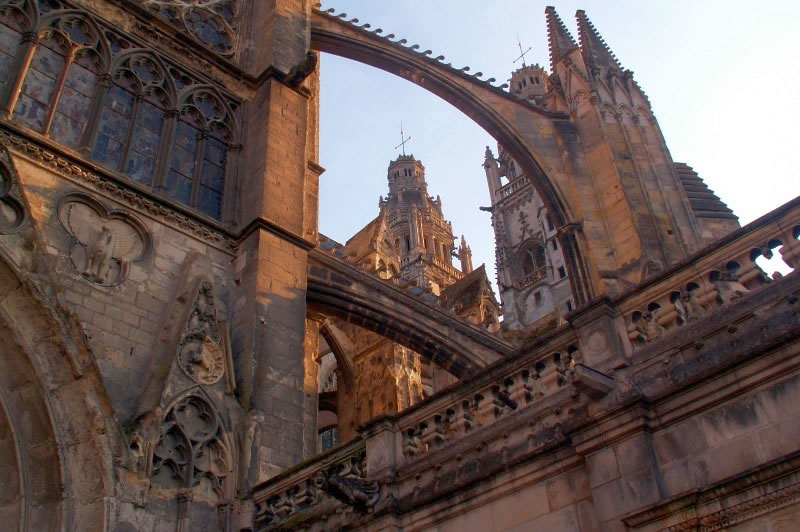
After the meeting of Lincoln Cathedral chapter we were taken on a tour high up in the sky on the walls and under the roof of the south transept.

What a wonderful experience, standing in the scaffolding high above Lincoln and look at the new grotesques and gargoyles which the excellent Cathedral Works Department are carving. There is one of a dragon, another one of a monkey, and one in the likeness of the architect, grinning hugely.

What I think is wonderful about all this painstaking work is that it is 100 feet above the ground and hardly anyone will be able to see it. It is a kind of allegory. The best work is often the most hidden.

Prayers in Parliament

Someone has proposed eliminating the prayers we have in the main chamber at the start of every day on the grounds that they take up a whole three minutes of time.

I said:

whatever one’s religious views-or lack thereof-apart from the fact that they are beautiful poetry, what is wrong with meditating on things other than politics for three minutes a day? Anyway, our wonderful Chaplain does them very beautifully.

Rugby

I went to watch my son play rugby. The air was crisp, the sun bright.

What a delight and a great pleasure to stand in the back line and see one’s son play a game.

Insults

I spoke in the debate on the Protection of Freedoms Bill.

I am supporting a campaign by Liberty to amend section five of the Public Order Act to remove the ban against “insulting” as opposed to “threatening” or “abusive” speech, which is having such a chilling and deadening effect against free speech, public demonstrations, and street preachers.

Actually I don’t think we should use “insulting” language. Nobody does. But the problem is my “strong point” is your “insult”.

If there had been a modern Mr. Plod in the Temple when Jesus shoved away the money-changers, He certainly would have been arrested under section 5 of the Public Order Act.

Remember me when You come into Your Kingdom

I was still thinking of the reading the day before when I went to a memorial service.

The reading was about the good thief. “Remember me when you come into your kingdom.”

The words of yesterday’s and today’s readings seemed to turn over in my mind and complement each other.

They do not sow or reap or gather…

This reading from Matthew 6:29-34 about the need not to worry is at once poetic and impossible to abide by.

Look at the birds in the sky. They do not sow or reap or gather.

The truth is we will never stop worrying.

But if by some great effort we will stop for a moment and focus on an ultimate reality, things will always turn out right in the end anyway.

Off Hats!

I always love the reading from Mark: 10:13-16; ‘Let the little children come to me.’

Over many years I am slowly ploughing through Patrick O’Brien’s twenty Aubrey & Maturin books. The characters are often becalmed, tacking slowly towards port. The wealth of eighteenth-century detail is so tight packed that sometimes I only read only one page before going to sleep.

In The Reverse of the Medal, there is a most moving passage when Aubrey is put on trial, shaved, and put in the pillory.

The man was slowly fumbling with the bolt, hinge and staple [of the pillory] and as Jack stood there with his hands in the lower half rounds, his sight cleared. He saw that the broad street was filled with silent men… all perfectly recognisable as seamen… He heard the clack of the bolt and then, in the dead silence, a strong voice cry ‘off hats!’ With one movement, hundreds of broad brimmed hats flew off and the cheering began.

I could hardly stop a tear rolling down my cheek.

Let No Man Put Asunder

I didn’t have enough energy to drive in the country or go to mass during the week, but today I did.

Today’s reading is all about marriage and divorce. The reading from Mark 10:1-12 is clear. Do we follow it?

And he answered and said unto them, What did Moses command you?
And they said, Moses suffered to write a bill of divorcement, and to put her away.
And Jesus answered and said unto them, For the hardness of your heart he wrote you this precept.
But from the beginning of the creation God made them male and female.
For this cause shall a man leave his father and mother, and cleave to his wife;
And they twain shall be one flesh: so then they are no more twain, but one flesh.
What therefore God hath joined together, let not man put asunder.

Risk

After five days of play, more off than on, I succumbed in the game of Risk to my son. Legions of his troops were amassing at the borders of my crumbling empire. My army was left stranded in one last country – Indonesia – to face the inevitable. A few moves beforehand, I had controlled half the world.

Meanwhile in the real world Colonel Gaddafi is holed up in his barracks in Tripoli – having lost half his country.

When thou vowest a vow unto God, defer not to pay it; for he hath no pleasure in fools: pay that which thou hast vowed. Better is it that thou shouldest not vow, than that thou shouldest vow and not pay.

(Ecclesiastians 5:1-8)

February Day

It was the worst kind of February day. A constant stream of drizzle and cold wind.

I took shelter at the start of the walk in Tealby church. There are collected the wonderful memorials to the Tennyson d’Eyncourt family. Charles Tennyson, I read, was an MP for 35 years. No doubt hugely wealthy, he extended Bayons Manor into a huge Gothic pile. It was blown up in 1964 after being requisitioned and no doubt ruined during the Second World War.

Charles Tennyson adopted the d’Eyncourt name. This was seen at the time as something of an affectation. I wonder if Thomas Hardy took his inspiration for this of Tess’ father adopting the name d’Urbervilles.

Anyway, the family restored the church and the school, which still survives. What a tragedy that Bayons Manor went. I could not resist walking home that way, along way about through Kirmond le Mire and it took me the best part of three hours.

At the Cathedral

I took the children to the cinema at Lincoln and, waiting for it to start, decided to go for Evensong at the Cathedral.

I was disappointed at first to find only evening prayer. But the language was so simple, so profound. There were some words from one of the hymns that we sung which I tried to keep in my memory:

Help me lead my life
that I may no more dread
My grave than my bed.

It’s a nice thought, but difficult to accept. I must admit, I enjoy going to bed and spend a lot of time there.

Grey and Drizzling

It was grey and drizzling.

I got set off from the Caistor High Road. As I walked away from it, I could hear the mournful droning of great trucks hurtling inro the gloom.

I descended a valley, but it was featureless and depressing.

I had walked to turn South and home, but the constant bangs of shot forced me further north than I wanted.

Tired, I now walked south from Rothwell on the road, cars flashing past at speed. But before Thoresway, I turned off the road. There, in front of me, was a magnificently beautiful valley, steep, with sheep dotted about under the sky of light greys and whites. Suddenly, the whole walk seemed worthwhile. I passed down the path to Stainton le Vale in the twilight and saw the tiny Norman church nestling amongst the trees.

After two and a half hours, I returned gratefully to hot soup and Patrick O’Brien.

Bearing Grudges

The readings today are all particularly difficult.

…Nor must you bear a grudge against the children of your people.

(Leviticus 19:1-2, 17-18)

I seem to do that all the time.

And if any man will sue thee at the law, and take away thy coat, let him have thy cloak also.’ (Matt 5:38-48)

I am about as far away from that as anybody.

During this week, the sun did not appear at all except on Thursday. It was going to be a hard week.

To cap it all, I woke up in the middle of the night with an absolutely certain feeling that there is no God and that the assertion there was amounted to pleasant, moralising, claptrap. The feeling passed, but it had been there.

In Monday’s reading, the disciples ask Jesus why they could not cast out somebody’s demons. Jesus replies:

This kind can come forth by nothing, but by prayer and fasting.

(Mark 9:14-29)

All I could do to confront this feeling was to pray and fall asleep.

Shouting Matchs

A week of thoughts about marriage ended with my wife shouting at me because once again I had left the lid not crewed on properly on the honey jar, which she had then dropped on the stone floor.

What irritating habits we have in marriage. Some people cannot screw the top on to tooth paste tubes. I have a maddening laziness about doing up the tops of jars I raid from the fridge.

Today’s reading from Mark 9:2:13 is about the Transfiguration. It has never really gripped me and I hurtle past it immersed in John Paul II’s Mysteries of Light in the Rosary. However, through Lectio Divina, it starts to grow on me.

What does the text mean in itself?

Marriage

In the same gallery of the V&A is a tiny scrap of fabric from the Byzantine era.

It is a tapestry of an Ankh – a cross shape topped with an arch – a symbol abundant in Egyptian art. It was adopted by the Christian copts as early as the Fourth Century.

Symbols transcend language and today’s reading from Genesis 11:1-9 is about Babel and the understanding of language.

Today was the marriage of a friend and once again I heard that text from St. Paul and the Corinthians:

Love is patient,
love is kind and is not jealous;
love does not brag and is not arrogant,
does not act unbecomingly;
it does not seek its own.