Smokestacks

Gabriel was travelling and he saw a great industrial land before him. Mighty power stations were belching forth plumes of smoke, the sun setting behind the chimneys, enveloping everything in a pink, fiery, glow.

The curious thing was that even the mighty smokestacks were made beautiful – just by this light. Then he wondered whether the beauty arose from this light, or from a state of mind. Was beauty tangible or intangible, relative or absolute? Or was it, perhaps, directed from afar?

His help is near for those who fear him and his glory will dwell in our land.

Psalm 89

Walking to St Peter’s

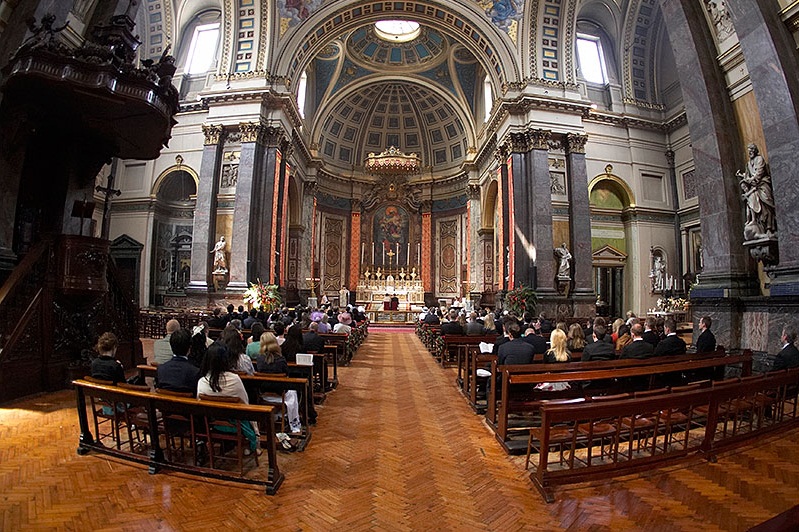
I walked across Rome to St. Peter’s. The sun was setting and a small crowd was gathered around the enormous life-size crib in the square. It was late afternoon and the queues were gone. I hurried into the great empty space and as is the way in St. Peter’s immediately found a Mass and it was being taken by a cardinal.

I struggled with the Italian a bit – which I am trying to learn – but it didn’t matter. Latin is so close to Italian that if you give your responses in Latin while the rest of the congregation give theirs in Italian the words don’t jar and scrape as in English or even French, they just merge into each other.

Pater noster qui es in coelis / Padre nostro che sei nei cieli

After Communion, I stood at the side of the nave and looked up and down this soaring space. It is a stunning experience to walk past the high altar and look into the grave of Peter who started and completed his life so modestly and ended up under all this. I thought of the previous day’s reading from the Acts of the Apostles.

Peter sent them all out of the room and knelt down and prayed. Then he turned to the dead woman and said ‘Tabitha, stand up!’ She opened her eyes, looked at Peter, and sat up, and Peter helped her to her feet.

(Acts of the Apostles 9:31-42)

Pray!

Gabriel was lying awake. His thoughts gathered like waves and in his mind’s eye until, at last, he seemed to kneel before his Guardian Angel.

‘Help me!’ he pleaded, but no answer came, so he persevered. Eventually, one word came from the figure:

Pray!

So he prayed, and the decades of the Rosay came and went – Joy, Sorrow, Light and Resurrection. And then sleep closed in, but one point of light appeared. He felt the presence of the Virgin Mary, who consoled him and seemed to tell him to accept.

Consciousness

Gabriel was wandering what directed his consciousness. Could it just be a chemical impulse in the brain? That might explain how he might lift his right hand, but what was it that made him know that he was? It came from nowhere and in his consciousness he met Melchizadek, who had also come from nowhere.

Without father, without mother, without descent, having neither beginning of days, nor end of life; but made like unto the Son of God; abideth a priest continually.

Hebrews, 7:1-3

So his awareness of self came from nothing being. It came, perhaps, from something in the depths of his soul. Consciousness cannot be seen or measured. There seems no first mover in this metaphysical world. It just exists.

You are a priest for ever. A priest like Melchizadek of old.

Psalm 100

And this sentence rang like a mantra in Gabriel’s mind, striking something deep on his being.

Professor Richard Dawkins seems perplexed by the same idea.

Thinking

Gabriel was thinking on today’s Psalm. ‘The Lord keeps his covenant ever in mind.’

He thought that maybe there were different levels of insight. At the first level, we exist and stay alone. At the second, we are tested intellectually by day to day problems of life. At the third, we begin to think spiritually and enlarge our outlook away from ourselves to our soul and to the eternal. At quiet times, he tries to push his way of thinking to the third level.

Conceptions of Reality

Gabriel was watching a programme on the BBC, Horizon, on the different conceptions of reality.

Apparently reality is not as certain as it seems. Advances, particularly in the field of quantum physics, point to inexplicable phenomena which don’t follow the rules of conventional science. Perfectly respectable physicists argue for parallel universes and strange links between time and space, further complicated by curious physical effects of observation. The straightforward, textbook physics I was familiar with no longer seems to hold the entire truth.

Perhaps we are moving toward a realisation that the architecture of the universe, including ourselves, stems from a will of a single, powerful entity. These curious advances at the edge of knowledge seem hugely more mesmerising than the questions of daily life.

Mean and ugly thoughts in the middle of the night

Gabriel woke in the middle of the night. Some mean or ugly thought had passed through his head – but it had done some good, because at that moment, as clear as the strongest daylight, he seemed to know something for certain.

What was clear was that he must love those closest to him and show his love. The thought was absolutely clear. It was as if there was a right battling against a wrong.

Monastery in Twilight

I was hoping to go to Mass. Instead, I had a chore to do. I went on a Boris Bike through the pouring rain to collect the car from a service station. When I arrived, I couldn’t find a docking port for the bike anywhere nearby. I was forced to walk for what seemed like miles through South London in the pouring rain, only to find the garage closed. I took a bus home and arrived wet and cold.

At home, I leafed through the National Geographic news section. One of the photographs was of a monastery in Bhutan. It was twilight, and only the monastery was lit up by the dying sun. The rest of the hills were dark blue grey with a thick mist enveloping them. The caption mentioned that the Guru Rinpoche flew into the Himalayas on a tiger to dispel evil.

Looking at this monastery, bright in the landscape on a distant hill, embattled yet enduring, was reassuring.

The Rosary

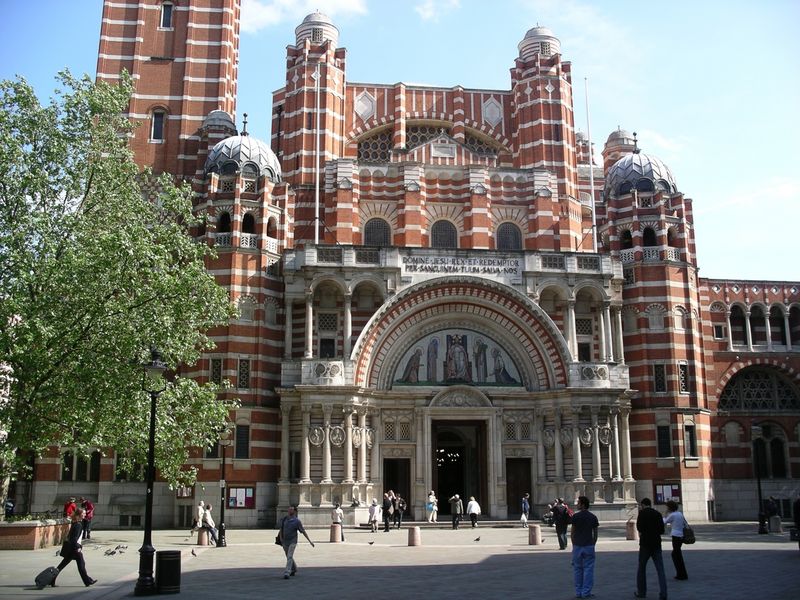
There was some row at home about nothing and I went for a walk to the cathedral and the liturgy was over and only the evensong Rosary group was left.

The Rosary at first sight seems either pointless or a mere mantra, but the repetition is deeply soothing precisely for that reason. It was coming to the end of a sorrowful mysteries. They rolled by – the compelling and violent story: The agony in the garden, the Trial, the flogging, the crowning with thorns, the carrying of the cross and the crucifixion. Each reached its inevitable conclusion, interspersed with the quiet decade of five Hail Marys – a gentle counterpoint to the struggle of defeat and of life.

11:00, 11th, 2011

Gabriel glanced up at the clock and the strange time and date. The eleventh hour of the eleventh day of the first month of the eleventh year. He wondered if he could ever just be truly happy in the present.

He remembered the words of the priest on Sunday and the advice that the first thought of the day should be:

‘Lord, let me dedicate this day to you. Let me live it as you would wish.’ And he thought of today’s psalm, No. 104:

Give thanks to the Lord, call upon his name, make known his deeds among the people.

Would he have the courage to do it?

Fishers of Men

Gabriel was half asleep during the night, thinking about today’s reading:

And Jesus said to them: Follow me and I will make you into fishers of men.

(Mark 1:14-20)

He saw in his minds eye himself now walking along a river at home. He saw himself fishing as a boy and a young man and a friend of his, Mark, was fishing with him.

And Mark’s thoughts seemed to penetrate into his own.

‘If we follow him we can become fishers of men.’ And the call strangely seemed insistent. It kept coming back to him – try as he could to avoid it.

The Baptism of the Lord

Gabriel stood in front of the crib in church. Previously, cribs had struck him as being a harmless piece of pap; naïve imagery, perhaps for the greater benefit children. But sitting in front of this crib, he was overcome by its profound beauty and symbolism.

He thought on the psalm of today:

With joy you will draw water from the wells of salvation.

The Monks of Tibhirine

Gabriel thought of the courage of the French monks murdered in 1996. They had been given every opportunity to leave, but their courage had sustained them. Ultimately, they had decided to confront violence with a love of all people and of peace. Gabriel paused in his journey and watched the story retold in ‘Of Gods and Men.’ In one of the last scenes, when Brother Luc puts on a tape from Tchaikovsky and they await their fate with resignation, tears poured down his cheeks.

The abbot of the small community leaves a message full of hope and reconciliation with Islam. A truly great man, living a life not in some great European monastery with a fine Abbey Church, but only with a complete moral simplicity, caring for his neighbours – the local Arab villagers.

In one touching scene, a Mullah sings from the Koran of the love of god and a Christian monk listens entranced.

When the film ended not a single person in the cinema – not Gabriel nor anyone else – stood up to leave as the credits rolled. They were too dumbstruck by the story of love and courage.

Dreaming Again

Now Gabriel was dreaming again. He was in a busy city again. He set off early and parked his car because in a nearby shop was something of great value. For free, he could have a book which introduced a text in English and another language so skilfully, it seemed, that he could have learned it effortlessly.

But the only book left was torn and marked and did not seem to work as well as the others. This saddened Gabriel because he always wanted to be skilled in foreign languages. To his horror, when he left the shop, his car was gone – she space obvious and bare. It had been towed off to the car pound. There was no alternative but to go home and admit defeat and heavy expense.

And then he woke.

To his great relief it was all a dream. The car was not lost! A way out of the dilemma had been found totally unexpectedly.

And he thought upon today’s reading about the wedding feast at Cana:

Fill the jars with water… Draw some out… The steward tasted the water and it had turned into wine.

(John 2:1-11)

Someone is Following Me…

Gabriel was still perplexed. His vision of the two cities, the town and the cathedral, had left him wondering what should be his course now . That night, he had a dream. A publisher was talking to him in some room (it seemed to be underground).

“I have great news for you,” He said. “That book of yours – the fantasy novel – I will publish it. I am sure it will be a great success.”

But Gabriel thought: “I have written no such novel… This is a dream! I have written something serious and no one is interested in it. He continued on his journey sadly, but once again he met John. The old man was sitting by the side of the busy road as the drivers sped by indifferently on their business. Although John’s soothing words could not comfort him, he did say one thing and Gabriel pondered long on it:

Someone is following me, someone who is more powerful than I am and I am not fit to kneel down and undo the straps of his sandals. (John1:6-13)

Out of Death Into Life

Gabriel dreamed that he was lying on a great stone slab. The slab was floating in a vast, turbulent sea.

It was not sinking, yet his thoughts were sinking into sadness. So he stepped off the stone and plunged deeper and deeper into the icy depths. He had always loved water. Here he was suspended, free, the cold barely touching. It seemed as if he swam down and across many miles and he was with nature. And the words of John came back to him: ‘We have passed out of death into life.’

Wondering at the Words of John

Gabriel walked slowly from the city and wondered at the words of John. Today – ‘As John stood there with two of his disciples, Jesus passed and John stared hard at him and said: ‘Look, there is the lamb of God.’ Hearing this, the disciples followed Jesus [John 1. 35 – 42]

Gabriel thought:

‘how lucky to be alive at that time. Surely no one would have passed up the opportunity of following the corrective force of world history, whether you believe in him or not.’

‘Surely,’ he asked himself, ‘if I had been alive then, whatever position was open to me at the Emperor’s Court, whatever the power and glory available – whatever riches at the Greatest Phoenician trader – I would have given up anything to be there. And when I arrived at that little sandy, impoverished village, there would have been thousands, if not hundreds of thousands there before, if everyone else at that time had been given the opportunity.”

But Gabriel stopped a while in the City’s supermarket and thought as if of a sudden: ‘But that message is still there. I am the passer by. Why don’t I; why can’t I follow the way painted by John too?

The Salutation of Our God

Gabriel consoled himself. Perhaps we should be happy with small things.

His Christmas tree was tiny – only about two feet tall. But it stood in the window sill and if he looked past it he could see a valley to great rolling hills. His eye could wander from the thing of beauty two feet away to hills a mile away.

And he asked John then what does it meant. John said that all things great and small have their place.

“All the ends of the Earth have seen the salutation of our God.” [Psalm 97]

Around Durham

On the Way Back, Gabriel travelled to the city.

The streets were cold and windswept. The shops were shut after the bustle of ‘Shopmass,’ known to some as ‘Christmas,’ and the January sales.

The cinema seemed bright and modern when he saw the film: ‘The Way Back’ – of man’s inhumanity and will to be free – on the way home. Gabriel wandered round the Cathedral. Here it stood, floodlit against a great, black sky. Indomitable, unmoving for a thousand years. Pile upon pile of bright yellow masonry; great buttresses leaping upwards – statues staring down.

It was wondrous, still and dark. Children playing before the arc lights and their vast, ghostly shadows, flickered on the ancient stone. Where was the spire? One asked. Gone now for four hundred years, in an earthquake.

Now, in the midst of these modern times, stood this great symbol – her towers rearing up against the frigid January night a symbol of light, faith and hope.

Before, many times, he had paced around its base at Durham, his thoughts enlarged and lightened. And now, to his joy, the great bells chimed the hour. Nine times, the deep clang resounded, ringing out a message of continuity.

By its side Gabriel met an old man sheltering.

‘Who are you? What does this mean it is said john – ‘A voice crying in the wilderness.’

New Year’s Eve

Dear Gabriel,

The Shepherd walked on the high Wold. Bare trees, snow patched grass.
Rounded hills, all rising from a ghostly fog.
A great quietness and then, tired,
He stood at last above the valley.
Mute tiny yellow welcoming lights
And yellow glares on distant hills.
And in his house that night
He forgot the joy of wide open spaces,
And was fraught in the small room
In Cold and poverty.
And then he remembered:
‘God is light. There is no darkness in him at all.’
If only he could bend his mind to this transcendence.
Than no unhappiness could touch him.

Yours Ever,

Thomas

A Time to Keep Silence

Dear Gabriel,

As I walked down towards my village in the dark last night, the scene was timeless. There was no traffic on the lane – only a few dotted yellow lights. The hills were open and empty under the pale mist. I could have been a shepherd watching his sheep on a hillside a thousand years ago. And that small yellow light below was a lantern at the door of a cattle shed long ago.

Today we heard of the words of the Prophetess Anna from Luke 2:36-40:

She came by first at that moment and began to praise God, and she spoke of the child to all that looked forward to the deliverance of Jerusalem.

I am reading again Patrick Leigh Fermor’s A Time to Keep Silence. At the end of the book he visits La Grande Trappe, the founding Trappist Monastery in France. The life of the monks there is unbelievably austere. They rise at 1 or 2 am, after just six hours sleep, and start over 6 hours a day in the chapel. No heating, constant backbreaking labour in the fields, yet the monks are gloriously content.

He describes one:

The first was the guest master, the young, auburn haired monk who was responsible for the part of the abbey where I lived: a young man of extreme good looks , great charm and a glare of the most disarming integrity and friendliness. He was surrounded by an aura of composure and peace rarely encountered among laymen.

I have always found this when staying in a monastery. After a few days, one is filled, for no obvious reason, with a great feeling of acceptance and just happiness. One just goes to bed confidentally happy. I think it is the leaving behind of all the fake friends of power, money, want, self regaurd and of becoming so much nearer to God.

“God is light; there is no darkness in him at all.” St. John 1:5-22.

Yours,

Thomas

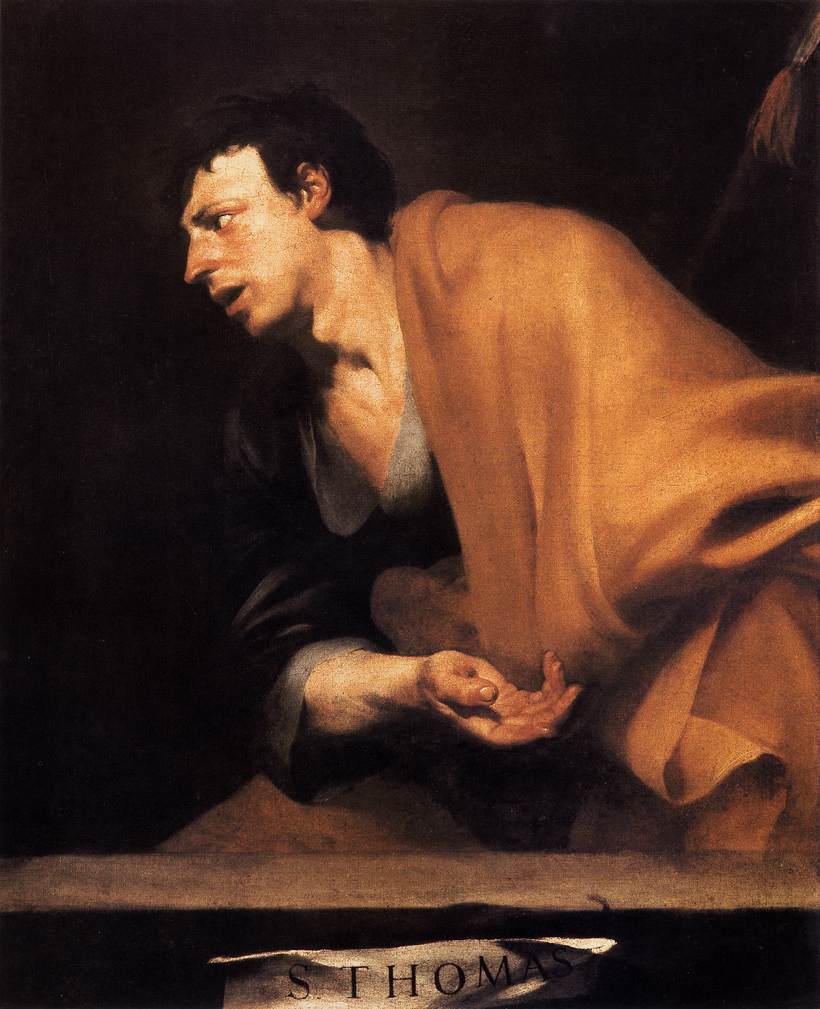
Feast of St. Thomas Beckett

Dear Gabriel,

St. Thomas did chose his Martyrdom in 1170. Perhaps he even deliberately provoked it. To me the most attractive reading of this day are the words of Simeon from Luke 2: 22-35.

I always think this would be a nice way to go:

‘Now, master, you can let your servant go in piece, just as you promised, because my eyes have seen the Salvation.’

But do I believe that my eyes have seen my salvation?

That is the question that I grapple with.

Yours,

Thomas

Simeon with the Infant Jesus

Slaughter of the Innocents

Dear Gabriel,

Is this slaughter of all the firstborn in Bethlehem and surrounding districts to be believed?

After all, even tyranny depends to a certain extent on logic and the consent of the governed.

Could such a bloodbath and wanton act actually have been carried out?

But does it even matter now?

Even if only one innocent baby had been killed, that would provide the juxtaposition between the hope of the Nativity and the brutality of the other act.

As in so much of the Christian story, a seemingly difficult story to believe reveals a greater truth.

These babies could and did not chose their martyrdom. They are forerunners of all those others who did not chose either.

Yours,

Thomas

He Saw and He Believed

Dear Gabriel,

John is supposed to be the author of the fourth Gospel and three epistles, but was he? Perhaps these were the work of several people. Does it matter?

It seems to me that you, like me, attempt to rationalise things too much.

Perhaps its better to focus on the beauty of his (or their), deeds as in today’s reading from

John 20:2-8:

So Peter set out with the other disciple to go to the tomb. They ran together, but the other disciple, running faster than Peter, reached the tomb first. … Then the other disciple who had reached the tomb first also went in. He saw and he believed.

I think the concise elegance of this last sentence makes it one of the most overwhelming in the gospels.

Yours,

Thomas

Boxing Day

Dear Gabriel,

I love the mass at 10:30 in the Cathedral on Boxing Day. The sun streamed in through the East Windows, blinding me and giving atmosphere to the introit music. The Archbishop, in his Pastoral Lecture, told us that the best Christmas present we could give each other was Joy.

A lovely idea, but does he mean that believing in the Nativity gives us joy naturally or that we should independently dispense it. Or perhaps both, or perhaps one leads to the other. At that moment, I could believe and have joy, but would it last? I envy those of such faith that they do not need beautiful music, fine architecture or a powerful homily to have belief. This is the fate of so many of us.

Yours,
Thomas