Over the Wolds

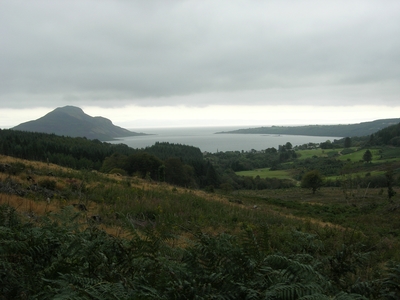
I walked with the dog from our home, over the Lincolnshire Wolds and to Market Rasen. The snow was deep, even the roads were covered, and the sky was bright and blue.

At Walesby our dog William had one of his little fits. Luckily the church was open so I took him in and sat down exhausted in the porch. Thank you Walesby for leaving your church open during the day for tired travellers such as William and myself.

Because today’s reading was from the Song of Songs I was inspired to read it all. I don’t think however, that poor old William quite matched the description.

I hear my beloved
See how he comes
Leaping over the mountains
Bounding over the hills
My beloved is like a gazelle
Like a young stag
(Song of Songs 2; 8-14)

When William and I finally got to Market Rasen I think we both felt far removed from the description in the scripture, at least physically.

Christianity in Modern Britain

Over the past week or so it has been encouraging to see comments being made by a number of high-profile individuals on the subject of Christianity in modern day Britain.

Last week we had the Prime Minister encouraging individuals in the public domain to be open about their faith and the former Archbishop of Canterbury Lord Carey advocating a “tougher church” which should not be afraid to stand up and speak out. This week BBC Radio presenter Simon Mayo has spoken out against the Corporation’s marginalising of religion.

This is an encouraging step forward. Of course one would expect the former Archbishop of Canterbury to speak out for Christianity, but comments by the Prime Minister and a well known radio presenter of a popular show are less expected. One hopes that this is a sign of things to come and that the stigma which currently surrounds speaking about religion, especially Christianity, will become a thing of the past.

A Time to Keep Silence

I am reading Patrick Leigh Fermor’s A Time to Keep Silence, a book about his visits to monasteries in France and given to me as a Christmas present. I was struck by what Karen Armstrong says in her introduction.

In the West, we have developed a culture that is rational, scientific and pragmatic. We feel obliged to satisfy ourselves that a proposition is true before we base our lives on it and to establish a principle to our satisfaction before we apply it. In the pre-modern period, in all the major faiths, the main emphasis was not on belief but on behaviour. First you changed your lifestyle and only then could you experience God or Nirvana as a living reality.

This exactly sums up my belief that the decline in belief is fuelled by an obsession with it in the modern world. To be viable something has to be believed and proved. Because faith cannot be proved it is not viable. In fact religious thought or observance has value in itself without or before any conscious belief in the object of its worship. Indeed faith can often only follow from long hard work; it does not come as a flashing light from the sky.

Russian Christmas

Today as my wife is Russian Orthodox we all troop off as a family to the Russian Orthodox Cathedral in Chiswick. There is a magnificent new Iconostasis there newly installed by Russian craftsmen and I enclose a (rather grainy Blackberry)picture below.

Yesterday evening the priest read the Gospel in English aswell as in Russian.
At last after years of not understanding a word of the ancient Slavonic Liturgy, the text came alive. But it does not matter too much as the whole service is a riot of colour, smell and sound that invades all the senses.

Walking to Evensong in the Cold

It was cold. I was cold and was tempted to stay in the warmth, but instead walked across the freezing road to Evensong in the Abbey. Though the choir stalls were full I still found it extraordinary that in the middle of London there were not more people in the congregation. The music was literally magnificent. The Magnificat, the beautiful canticle magnifying the Lord by extolling his might and virtues, and the Nunc Dimittis, the Song of Simeon when he saw the baby Jesus, were sung in Latin.

The reading was from Corinthians and about the triumph of the spirit. Captured by the words, splendour and history of my surroundings during the reading I found myself falling into a kind of trance.

Perhaps inspired by the trance-like state I found myself in during the reading, that night, as I lay awake, I tried to imagine myself away from my body. We spend so much time concerning ourselves with ourselves that I found this an interesting exercise. I tried to suspend thought and concern for myself. Imagining myself to be someone else, I found it a challenging but worthwhile exercise.

Having experiencing the unselfish words of the Magnificat earlier in the day the exercise seemed entirely appropriate.

Solemnity of Mary, Mother of God

The New Year is supposed to be a time of looking forward and back, as well as a time of parties and company. Gabriel sat for a time in the small local church, just to be content with the present, pondering neither the past nor the future.

He had a surfeit of family and friends.

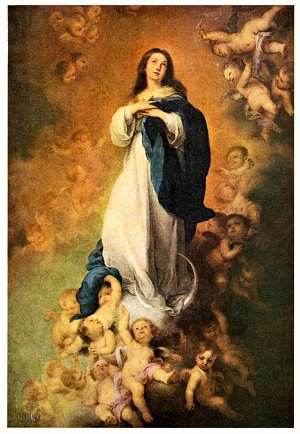
There was a picture of Mary in the corner. He gazed at it as he had often done before.

When depressed, he had found a peculiar and unexplained comfort in turning to her.

Now he remembered that today’s psalm he had often heared before, but the words had passed him by.

O God, be gracious and bless us
and let your face shed its light upon us.
So will your ways be known upon earth
and all nations learn your saving help.

Let the nations be glad and exult
for you rule the world with justice.
With fairness you rule the peoples,
you guide the nations on earth.

Let the peoples praise you, O God;
let all the peoples praise you.
May God still give us his blessing
till the ends of the earth revere him.

A Russian Funeral

My wife and I went to the Russian Orthodox funeral of a friend of ours. There is nothing simpler and more beautiful than the Orthodox funeral liturgy. The Orthodox services invade all ones senses with sight sound vision and smell of incense. They are wonderful.

As one of nature’s doubters I wish that I could be easily and permanently convinced that ones soul lives on. There is no doubt that our body does not; “For dust thou art, and unto dust shalt thou return”. (Gen. 3:19) But I suppose that the impossibility of knowing will always engender at least the smallest of doubts, even for those of immaculate faith.

However in this beautiful Orthodox setting, coupled with scripture; “Then shall the dust return to the earth as it was: and the spirit shall return unto God who gave it”, (Eccl. 12:7) it seemed impossible that our soul cannot. Perhaps by sheer belief we can steer our souls into Heaven.

Though, if this is the case where does this leave the agnostic or atheist? Will they get an almighty shock when their time comes, or simply first encounter annihilation?

The Curious Comfort of the Faithful Departed

This week there have been a couple of blows, though it seems one should scarcely expect anything else from a week in Parliament nowadays.

That aside, the most reassuring thing I heard all week was from the priest in a Mass for the Remembrance of the Departed. He asked the congregation to remember all our dead friends and relatives in our prayers, and specifically list them by name.

This process was curiously comforting. After doing it I had the distant feeling that I was not only praying for them, but that they were praying for me.

The North American Martyrs

St John de Brébeuf and his fellow missionary Father Gabriel Lalemont, both Jesuit priests, were martyred in North America in the seventeenth century. Their mission was to convert the indigenous American Indians and they underwent terrible hardship and eventual death for their beliefs. Perhaps if we were to meet them now we would think them unbelievably stubborn but they were men of undeniable spirituality and no little courage.

There is a reading from the Second letter of St Paul to the Corinthians Chapter 4, which relates well to these two men.

Brothers and sisters:
We hold this treasure in earthen vessels,
that the surpassing power may be of God and not from us.
We are afflicted in every way, but not constrained;
perplexed, but not driven to despair;
persecuted, but not abandoned;
struck down, but not destroyed.

When I think of our little problems compared to the steely courage of these two martyrs I really do feel that the things that trouble us in today’s society are often much ado about nothing.

The Transience of Earthly Kingdoms

After meeting King Nebuchadnezzar Daniel is asked to interpret his vision.

You, O king, were watching; and behold, a great statue, whose splendour was excellent, stood before you; and its form was awesome. This image’s head was of fine gold, its chest and arms of silver, its belly and thighs of bronze, its legs of iron, its feet partly of iron and partly of clay. (Daniel 2 31)

For evermore this vision of the weakened structure summed up the transience of earthly kingdoms because like statues earthly kingdoms can come crashing down. This image is not dissimilar to the “two vast and trunkless legs of stone” found in the desert proclaiming “My name is Ozymandias, king of kings: Look on my works, ye Mighty, and despair”. This great poem by Shelley like the Book of Daniel reminds us that man alone can only fall and become decrepit. Only God is infinite and omnipotent.

Plucky Daniel

Last week we followed the book of Daniel. It is one of my favourites. He’s a plucky sort who always fights and wins against the odds. Everyday I went to mass and followed his activities. On Monday, as a mere lad he refuses at risk of death to follow the pagan dietary laws. “At the end of the ten days they looked healthier and better nourished than any of the young men who ate the royal food.” Later the King was to take Daniel with the utmost respect into his confidence and Daniel became a most trusted advisor. The Old Testament can be very positive in demonstrating the way in which God looks after those who suffer and make sacrifices for him.

A Question of Simplicity

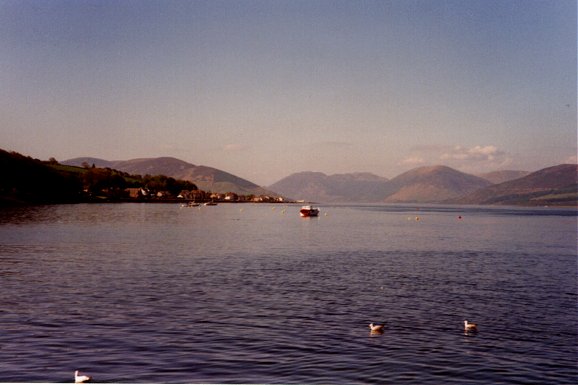
The lake at Stainton le Vale Oil by Edward Leigh

At Mass today there was a very simple hymn. Try as I might I cannot remember the exact words, but I think it went something like; “O Sacrament Divine, O Sacrament Sublime.”

The simplicity of the hymn, caused by the repetition of the words, acted on me like a tonic. All my thoughts and doubts about life and faith; what is true? what is pure? receded into the background, as I let the words wash over me.

Images of water pervade Chinese art and philosophy. They symbolise. Simplicity, memory and human virtues. A Woodblock by Chen Qi which I saw this week at the Victoria and Albert museum invites one to contemplate the abstract qualities of water.

The above image, an oil on canvass, is one my attempts to paint water.
I also found this quote in the museum.

The three refuges
I take refuge in the Buddha, the perfectly enlightened one, the shower of the way.
I take refuge in the Dharma, the teaching of the Buddha, which leads from darkness to light.
I take refuge in the Sanha, the fellowship of the Buddha,s disciples, that inspires and guides.

The Bright Promise of Immortality

I was still thinking about the faith of Jesus and the book of Maccabees. Their most profound conviction in the afterlife and how it is shown in all their actions.

The beautiful passage in Latin and English which is sung at the Mass for the deceased clergy in the Cathedral sums up our hopes for redemption.

In quo nobis spes beatae resurrectionis effulssit, ut, quos contristat certa moriendi condicio, eosdem consoletur futurae immortalitatis promissio.

In him who rose from the dead our hope of resurrection dawned. The sadness of death gives way to the bright promise of immortality.

Maccabees

The readings this week, the third week of ordinary time are from The Book of Maccabees. They are particularly gruesome but also uplifting because Jesus despite being persecuted refused to give up the faith. I love the passage where the mother of seven children sees six of her sons die for their faith and then says to the seventh,

My son, have pity on me. I carried you nine months in my womb, and nursed you for three years, and have reared you and brought you up to this point in your life, and have taken care of you. I beseech you, my child, to look at the heaven and the earth and see everything that is in them, and recognize that God did not make them out of things that existed. Thus also mankind comes into being. Do not fear this executioner, but prove worthy of your brothers. Accept death, so that in God’s mercy I may get you back again with your brothers.

My own faith is but a weak reflection of the mountainous faith of these people. Can we imagine a mother giving up her sons lives and her own for the sake of religious principle?

The mother’s point is that through their actions they will gain something more wonderful than any earthly offering, the gift of eternal life.

The readings left me a little cold at the time but when at the end of mass in the cathedral I paused for a moment in the tomb of St. John Southworth something unaccountable happened. I felt inexplicably moved.

Debating Christian Values at Oxford

Last Thursday evening I debated at the Oxford Union alongside the Bishop of Winchester and Jonathan Aitken. At a well attended debate we won by ten votes, 145 to 135, proposing the motion “This House believes that Britain needs a return of Christian Values”.

Everything conceivable was thrown at us, even the slave trade. It was interesting that we didn’t talk about homosexuality, but our opponents were adamant that Christians are obsessed by it.

I just concentrated on the teachings of Christ; a better guide than the life of most Christians since!

Hugh and Elizabeth

Yesterday was the Feast of Saints Hugh of Lincoln and Elizabeth of Hungary.

I had a dream a few nights ago that someone had said to me that it was not difficult to love the whole world. One just had to write “if” a few times, like writing lines at school. Presumably as in “if only I could ignore this other person’s mobile phone on the train”.

Of course I readily agreed. But, although in this dream, I started to write the oh so easy ifs without effort, very soon it seemed as difficult and wearisome as pushing a boulder up a hill and I gave up! The story of our lives.

Yesterday I had been totally lost in the music of the Mass. Today I couldn’t concentrate because every two or three minutes, with monotonous regularity, someone cleared their throat behind me.

Then I remembered my dream of the “If” the day before.

These two Saints gave up everything for prayer, wealth, power, families, but we will never be the same.

The music was Ex Ore Innocentium by John Ireland. If I could be distracted even from that sublime music, what hope is there? Then I went home knowing I had heard it recently. Played it and precisely at track five in Music from Christchurch Priory, the CD collapsed and I couldn’t hear any of it. Teaching me a lesson, I suppose.

St. Cuthbert

I visited Durham at the end of last week. Every time I go into the Cathedral there, I pray at the tomb of St. Cuthbert. It is extraordinary that this great Anglo Saxon Saint is still there all these years after his initial wanderings. There is a simple prayer written there which acknowledges his role as a shepherd of his flock in troubled times. It is both moving and simple.

That evening the whole of the Cathedral on Palace Green was lit up as a son et lumière. It is when these Cathedrals are lit up in bright colours that they begin to come back to the way which they might have looked in medieval times, each Saint decked out in colour for maximum effect.

Welcoming Thérèse

I was just reflecting on the Mass at Westminster Cathedral where the Relics of St Thérèse of Lisieux were received. Any kind of Relic is considered ridiculous in this modern world. Indeed I feel a bit embarrassed by it. Even so you could not fail to be moved by the sight of thousands walking past the remains of this ordinary nun who simply wanted to find love and God in all things, even the smallest and most insignificant. I am sure Calvin would not have approved of the Mass for the Relics, but perhaps he would have approved of the life of this good lady.

Can we not then admire her simplicity and celebrate her life in the presence of her remains? By her travels around the country, Theresa has reminded many people about the simple way she lived and the simple way she loved. The amount of people who venerate her remains are a testament to the wonder of her life. She will have led many to consider God in a new light.

A Final Word About Prayer

A final word about prayer. Jack Sullivan says that prayer to Cardinal Newman cured his serious spinal condition. Whether Newman intervened or not we will never know and what does it matter. Jack thought the prayer worked and he thereby demonstrates the power of prayer.

After two services in the Anglican and Catholic Churches and a Remembrance Sunday service at the War Memorial my own energy was flagging.

And then we came to the last hymn, Jerusalem, and these words:

I will not cease from mental fight till we have built Jerusalem here.

Well its going to be a long fight.

Prayer

A thought occurred to me about the power of prayer. If there are 6 billion people in the world and if one percent of them prayed to God at any one time that’s 60 million people. How could God cope with so many prayers? This is a rather impious thought, but isn’t God driven crazy by our prayers? Shouldn’t we give him a rest? It’s this sort of reasoning that convinces many people that the idea of God is ridiculous.

I’m not so sure. Google can receive many millions of requests simultaneously, but of course, it doesn’t have one mind. However, if God exists, could he not have a single directing purpose and an unlimited capacity to receive our prayers?

Awake in the Night

Once again I awoke in the night and this time I had more success in engaging in conversation with God. I gradually went through the entire life of Christ using the Rosary as a guide. I included the mysteries of light, but didn’t tie myself to any number of Hail Marys, perhaps only one for each Mystery. I used the method of St. Ignatius, imagining myself there, hearing and seeing with my own eyes. It seems to have worked because although again my mind wandered and my doubts came and went, I became happier and composed myself for sleep.

Feast of St. Charles Borromeo

St. Charles Borromeo had the most unprepossessing of beginnings. He was made a Cardinal at the age of 22 by his uncle, the Pope! However, to everyone’s amazement he refused to stay in Rome, and instead became an outstandingly holy and committed Archbishop of Milan.

St. Charles had one central message which was that of the vital importance of daily mental prayer, not reciting the Hail Mary by rote, but engaging in a conversation with God. This I have always found the most difficult thing to do. What does one say? And most of the time its rather one sided. But I shall try and persevere!

The week had been full of bad news. So on waking in the middle of the night I tried St Charles’ advice. However, every time I tried to pray my mind wandered into the difficulties. I tried again and again but kept wandering off. I finally gave up, but one important thing occurred to me. It is not necessary to be sure that God exists to pray to him. You just have to make the leap of faith!

Mass at Osgodby

We went to Mass in the tiny upstairs chapel at Osgodby in Lincolnshire. It is one of the earliest Roman Catholic chapel Houses built as a result of an Act of Parliament in 1791 which allowed Roman Catholic churches to be built “without bell or steeple”.

The reading was from the Beatitudes, or the Blessed Attitudes as our priest called them. I have always wandered what the first line means.

How happy the poor in spirit,
Theirs is the Kingdom of Heaven

Who are the poor in spirit? And if their’s is the Kingdom of Heaven it begs the question, should we not be full in spirit?

Corringham Church

This weekend I went to Corringham Church near Gainsborough for the unveiling of a plaque to honour a group of airmen who were killed in a wartime crash near the village.

Corringham is a beautiful church with a fine ceiling and Victorian rood screen built up from the medieval original. There are few rood screens left in our medieval churches but when one comes across them they are a joy to behold.

The accident in question happened in December 1943 on a training flight in thick fog after the plane had taken off from Blyton Airfield. The interesting thing about the ceremony was that it was commemorating just one of seventeen aircraft crashes in Lincolnshire that night.

The whole church was full sixty-six years after the event to remember this one little-known tragedy of a previous generation, which would have occurred together with all the other great tragedies around Europe that day. This was a fitting tribute and absolutely right.