The Ark of the Covenant

Today’s reading describes the travails of the Ark of the Covenant. It was lost after Solomon’s time and the tablets which had been given to Moses and upon which the Ten Commandments were inscribed have never been found.

What would we make of them if they were discovered today? No doubt that we would insist that they were carbon dated. Let’s just accept history as it’s written and be thankful.

Victorian Dream

I had a dream that I was transported back in time one hundred years to a Victorian church I know well. What was strange about the dream was that I was obviously in the Victorian era, the building was brand new and period characteristics such as horse and carts rolling past outside confirmed this. Yet the internal decoration of the church, its participants and liturgy were aspects and people I knew. It was as if the dream was an allegory, that the church transcends time and can be in all eras at once.

The Light of the World

Ask, and it will be given to you;
Search, and you will find,
Knock, and the door will be opened to you. (Matthew 7: 7-12)

I think today’s reading is my favourite. It always reminds me of William Holman Hunt’s painting The Light of the World. The painting, which now hangs in a side room off the chapel of Keble College, Oxford, depicts Jesus carrying a lantern and preparing to knock on an unopened door. It is a favourite of mine because it’s not about having faith but seeking it.

De Profundis

I was thinking of today’s psalm.

Out of the depths I cry to you, O Lord.
Lord hear my voice
O let your ears be attentive
To the voice of my pleading. (Psalm 129)

Three of my best friends, including my two best friends from university, have already died and of natural causes. I was lying awake and thinking of them. I just knew that they were present, not in a spooky, ghost-like way, but in an intellectual and emotional presence.

They may have died and been cremated but they still exist. I just knew it. They are not gone.

Following the Hunt

I followed the Hunt on foot, walking for over three hours, coming up after them and seeing the field streaming over the distant hills, brought closer and into sharp focus by my binoculars.

Finally, tired I came over the side of the Wolds with the Lincolnshire plains spread before me.

In the near distance, amid the subtle winter greys, greens and browns lay the steeple of Tealby church, beautiful and proclaiming under a blemished blue grey sky.

St. David’s Day

Today is St David’s day. He is of course the Patron Saint of Wales and he also holds the distinction amongst the other patron saints of the British Isles of being the only patron saint to have been a native of their country. At Mass today we were reminded that St David’s followers were called the Watermen. This was due to their penitential habit of standing up to their neck in freezing cold water and reciting all 150 of the psalms.

Having taken a dip in the Serpentine this morning I can vouch for the arduousness of their task. I only lasted about 3 minutes, scarcely long enough for a Pater Noster, let alone 150 psalms. I think that from this hardly scientific experiment we can safely conclude; 1. that the legend is a bit far fetched; 2. that St Benedict was wise to introduce a more benign routine for his monks. Joking apart, today’s psalm is beautiful:

Happy the man who has placed his trust in the Lord. Happy indeed is the man whose delight is the care of the Lord and who ponders his law day and night. (Psalm 1)

St. Blaise’s Day

After the mass today we got our throats blessed. I have often wandered if the good that comes of this only comes to our throats because of St. Blaise’s special care for them. I hope not!

The Death of David

In the Old Testament reading today David dies.

David’s reign over Israel lasted forty years, he reigned in Hebron for seven years and in Jerusalem for thirty-three. (Kings 2:1-4 10-12)

This reading strikes me as showing the importance of dying at the right moment. David’s life has been far from perfect, not least his shameful murder by contract of his rival in love. And now after his heir, things in Israel and Judah were going to go pear-shaped, but he chose the right moment.

The Presentation

Today is the Feast of the Presentation of the Lord, or Candlemas as it used to be called. I am reading Eamon Duffy’s The Stripping of the Altars. There is a long passage about the extraordinarily large role played but Candlemas in the life of the community. There were, for instance great parades of people carrying candles to illustrate the words of Jesus.

Now master, you can let your servant go in peace. Just as you promised; because my eyes have seen the salvation which you have prepared for all nations to see. A light to enlighten the pagans and the glory of your people Israel. (Luke 2:22-40)

To me this is one of the most beautiful parts of the whole Gospel. One can picture it in our mind, the old man, his eyes lighting up, the majestic poetry which he utters. What a contrast to the reading of the day before. Perhaps it is supposed to be.

Pig, Candle, Throat, and David

This week I remembered what the days meant to me by recalling the following words: Pig, Candle, Throat, and David.

Today’s reading is about Jesus’ exorcising of the Gerasene demoniac whose spirit he freed through the device of transporting the demon into a nearby herd of pigs, who promptly hurled themselves off the cliff.

I have always asked myself “what have the pigs done to deserve this?” I suppose that to take this story literally is a mistake. It’s really about the Jewish notion of transforming evil to something unclean. To be honest I have never liked this story.

Mass in Westminster Cathedral

In the sung Saturday morning Mass in Westminster Cathedral, the sun shines through the east window directly into my eye. This means that the altar is blacked out apart from some twinkling lights.

The priest says Christ has abolished death and sin. Suddenly, for a moment I believe. It seems right and obvious.

Beauty and Solemnity

I remember little of the words of the Mass, but that isn’t important because the priest celebrating it says the Eucharistic Prayer with such beauty and solemnity that nothing else matters. He says it in Latin not English, but pronounces every syllable carefully without a trace of affectation or pomposity, but with great sincerity and beauty. Who is he? Is he the visiting Abbot of a monastery? He has that sort of natural stature.

Dawkins and Disaster

Richard Dawkins, writing in The Times, mocked Christian reactions to Haiti. Clearly the earthquake, he says, was caused by two plates of the earth’s crust moving. They are utterly indifferent to mankind’s trials. His prose is always powerful. There is no logical answer for how a loving God could permit this.

But again I found the day’s reading comforting.

What shall we say the kingdom of God is like, or what parable shall we use to describe it? It is like a mustard seed, which is the smallest seed you plant in the ground. Yet when planted, it grows and becomes the largest of all garden plants. (Mark 4:26-34)

We just have to accept that our understanding is the tiniest of mustard seeds.

Belief

Surely the following reading is relevant to the debate on belief.

There is nothing hidden but it must be disclosed, nothing kept secret except it he brought to light. (Mark 4:21-25)

Do we have the courage to put our flickering camp-light belief on public display?

The Road to Emmaus

The Gospel reading at the ecumenical service on Sunday had been my favourite – the disciples talking to Jesus on the road to Emmaus. For me, belief is like them only recognising Christ in the instant of the breaking of bread. Suddenly, just for an instant, then it passes; then one tries again.

Today’s reading about the parable of the Sower points to the major challenge. It is not so much those on the path who never believe or those entangled by the thorns of life’s cares that are the problem. It is those who:

Have no root in them, they do not last; should some trial come or some persecution on account of the word, they fall away at once. (Mark 4: 1-20)

The “trial” is the modern notion of scepticism.

Practice Makes Perfect

I have said this before, but a way forward to the quandary of belief lies in the ancient practice that behaviour and practice were more important than belief. That we should start with religious practice and obedience then belief may follow. After all, few people nowadays are fortunate enough to receive some unflinching belief as a bolt from Heaven.

Part of today’s Gospel reading is instructive:

Anyone who does the will of God, that person is my brother and sister and mother. (Mark 3. 31-35)

Hugeness of Desire and Smallness of Reality

I reflected on this crisis of belief. One of the reasons for thinking people is the increasing realisation of the sheer size and diversity of the Universe. As JBS Haldane once said, “the universe is not only queerer than we suppose, but queerer than we can suppose.”

I was reading the latest article in National Geographic magazine on the extraordinary discovery of some 700 planets in other solar systems over the last decade. The article compared finding these tiny distant objects to like looking for a firefly in a fireworks display. Astronomers now reckon that there may be a billion planets like ours out there. The article ended with a quote from the Spanish philosopher Miguel De Unamuno. The mysteries of the religious visionaries of old arose from an “intolerable disparity between the hugeness of their desire and the smallness of reality.”

Now the reality of the Universe is infinitely greater than our own imagination. Where does that leave the incarnation? How can the God that created the Universe of a billion planets like ours be the God that arrived in a manger in Palestine two-thousand years ago? This was the problem of the mismatch of belief that I was referring to at Market Rasen the day before.

An Ecumenical Matter

I was a bit nervous at the thought of giving the address at Market Rasen’s ecumenical service. But I think it went all right. I made the obvious point that the things that divide us are minimal compared to those that unite us. But what interests me is the richness in diversity. The exuberance of a Latin Palestrina Mass, the poetry of Thomas Cranmer, the energy of the evangelical New Life Movements, the work, literally, on the street of the Salvation Army, and I said all this.

However, I feel the problem lies with the young. Churches assume faith too much, but faith for the young is a massive and growing problem. As someone who struggles with belief myself, we have to convince the young that you can’t believe in something only if it can be proved. Faith is a leap into the dark but if you make it, great joy can follow.

The Apostles

I went to mass in the evening. The reading was about the appointment, if that is the right word, of the Apostles. Nowadays we would make such a meal of it. “Open interviews” and “gender balance” spring to mind.

But here, for the twelve most important jobs in world history, people just came and approached Jesus. They either felt that they liked the look of him or just went on the word of John the Baptist, “Behold the Lamb of God”, and, without hesitation, devoted their whole life, and literally their life, to this man.

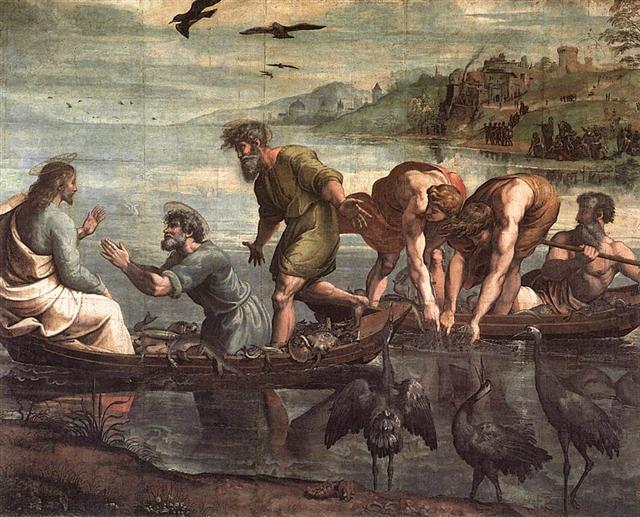
Simon Peter the fisherman, came to Jesus in this way. He had heard the word’s of John the Baptist and upon his very first meeting with Jesus he was ready to sign up to become a “fisher of men.”

This demonstration of the leap of faith by the Apostles is what we encounter daily in the search for faith. In the same way that we have no way of proving God exists, so the Apostles had no way of proving that Jesus was the Son of God. They simply had to rely on their faith to believe.

The Faith of the Leper

There were some words in the Gospel that stayed with me today.

The leper says: “Sir, if you want to you can cure me.”

It is worth remembering that these words, they can apply to us. For all our troubles great or small, God, you can cure me.

It is the faith of the leper which is striking.

The Wolds

I walk over the Lincolnshire Wolds on a misty, rainy day. A tree is black with water flowing down it, the glistening trunks snagging in every direction. It is actually quite beautiful, like a quivering animal about to leap.

Just taking a moment to stop and look at the intricate carving of nature is finer than any artefact of man. It is an almost spiritual moment.

Baptism of the Lord

The instruction in the letter of St Paul to Titus is a hard one.

“One must avoid” says St Paul, “Anything that does not lead to God.”

How can we do this, especially in modern-day living? Must one give up all the pleasures of life?

“All worldly ambition.”

One can’t become a monk in ordinary life. But surely all good things can lead to God and can still be fulfilling and pleasurable.

Doing a job, any job, can lead to God. Watching television or going for a walk can be a lead to God. Well, perhaps not most television, but I think the point is about seeing God in everything.

Today I went to Vespers in Westminster Cathedral, something I have not done before. Vespers is the precursor of Anglican Evensong. Much as I like Evensong, it is less formal. Somehow I am more spiritual during Vespers’ Benediction and Veneration of the Blessed Sacrament.

Would We Know Him?

And his teaching made a deep impression on them because he spoke with authority. (Mark 1,21-28)

I have always wondered what this means exactly. What was his obvious authority? Was it his intellect, his delivery or his charisma? Did they immediately guess who was teaching them?

Would we know him?

Second Monday in Ordinary Time

I love this reading because it is such a strong visual image. Who ever heard of someone being so keen on hearing a preacher nowdays that they make a hole in the roof to do so.

… As the crowd made it impossible to get the man to him, they stripped the roof over the place where Jesus was; and when they had made an opening they lowered the stretcher on which the paralytic lay… (Mark 2: 1 – 12)

Five Temples of the Lord and Faith

First Week in Advent — Retrospective

Advent is the season of the readings of Isaiah, that masterful poet whose words reach a crescendo as the month passes.

During a week in Advent I went to five very different churches. On Monday I arrived at Westminster Cathedral to find that Mass was to be held in a side chapel. Why there I wondered. It seemed a somewhat dark, even dreary side chapel. Then the priest arrived and explained. Of course, it was St Andrew’s day. This was his chapel. The priest described it as, in the opinion of some, the finest chapel in the cathedral. He discussed the mosaics depicting where St Andrew had lived out his life of the Gospel. I realised how the subtle understated nature of the chapel captured its beauty. It occurred to me that this was a sort of parable of our faith – what seems to be ordinary, even banal at first comes to life with faith.

On Tuesday I was invited to St Paul’s for Evensong to mark English Heritage giving £250,000 to Lincoln Cathedral for much needed repair and maintenance work. There is no slowly awakening hidden beauty to be found here. As I walked up from the crypt and sat in the choir, the Renaissance glory of the richly gilded and exuberant ceiling hit me like a blow. The Magnificat was in Latin and echoed across the giant space. Here was a parable for me – that faith can hit one like a thunderbolt, not always something slowly awakening, as on Monday.

On Wednesday I went to the Brompton Oratory where I meet a friend for a little prayer meeting every month. I happened to read the account of John Sullivan, an American Deacon who was lecturing recently on his amazing cure from an excruciating back illness through prayer to Cardinal Newman. I had been under whelmed by his story before, but his prose was so moving, so transparently honest and so accurate in its description of an inexplicable pain that I was moved to tears. Here we find a parable that faith can come from prayer and not always like on Tuesday with an invasion of the senses

On Thursday I travelled up to Lincolnshire to go to a carol service at the tiny church of Upton. As we walked towards the church the bells were peeling, the village was dark, the church lit, the readings much loved, the carols familiar. Here it seemed to me that faith can be something deep within us. Traditional, sometimes comfortable seeming and no less good for that than any sudden revelation or insight.

On Friday I went down to Downside for an oblates retreat. The moment I walked into the Abbey I felt as I always do; that this is a second home. That evening as I sat alone in this vast space, with the lights turned off and only a hint of moon light coming in to the sanctuary I felt close to God. Yet even this great building is but a dot of architecture in stone, our galaxy lost in hundreds of millions of other galaxies? Once more the old doubts returned. How could the God of Abraham have created all this? Faith is therefore not a fixture in our minds. It ebbs and flows.

On Saturday I got up early for Vigils. Again the church was utterly black but one of the young Novitiates came in to light a single candle. Its lonely light seemed to hover and flutter for a moment and the rose up, confident – as in the light of Christ. “Lumen Christe”. It reminded me of the single light being lit at the start of the Easter Vigil.

Later on we were asked to read Hebrews 11.

Now faith is the assurance of things hoped for, the conviction of things not seem… By faith we understand that the world was created by the word of god, so that what is seen was made out of things which do not appear.

It seemed to sum up the week.

When it was dark again after Vespers I sat alone in the church. For the first time I felt that God was close. I didn’t try and pray or talk to God. One doesn’t always need to talk to someone you know and love well, a spouse or an old friend. You can sit in companionable silence. And it felt like that then. No words came or were necessary. I have often found that in a monastery, even staying for a short time, one’s spiritual awareness is brought to a new plane.

Later that night I lay awake thinking about this experience. I wondered if it was chance that in difficult times God brought me to this quiet place.