Day 8: Kettlethorpe

We travelled to Kettlethorpe. Here survives, in the shape of a gatehouse, the remains of the house of Katherine Swynford. She worshipped here with her second husband John of Gaunt and through him this ordinary lady is the ancestor of Kings, Queens and even Presidents. Her sister Philippa was married to Geoffrey Chaucer and she died in 1403.

One of the locals pointed out to me a cross in the churchyard which some think is a pagan site. How do they know? It is interesting to note what obscure echoes of history survive as well as stories of the great.

Day 7: Claxby

I was canvassing Claxby. The church there, St Marys, has some interesting features and provided a good guide to the village. It tells us that it is believed the village rests in a hollow at the foot of the Wolds. Bits of Roman mosaic have been found near the church and a Roman kiln for making pottery was also found.

Claxby is old Danish and the village is mentioned in the Domesday Book. There was a lead mine here between 1864 and 1882. The war memorial gives, unusually, the names of those who returned home. It is humbling to think of this long 2000 year history. All of those forgotten people who lived out their lives quietly and unobtrusively; probably with very few possessions, but with rich traditions, also now forgotten.

Good Shepherd Sunday

We went to church in Market Rasen. Today is Good Shepherd Sunday. Later, as I was re-reading the words they made a deep impression on me.

The sheep that belong to me listen to my voice
I know them and they follow me
I give them eternal life
They will never be lost.

(John 16:27-30)

Inspired by these words, I called out to my dog William to follow me for a walk. He resolutely stayed sitting still in the warmth.

Day 6: Gainsborough

We campaigned in Marshall’s Yard in Gainsborough. We first contented ourselves with saying Good Morning and talking to those who wanted to stop. I find this is a better approach than trying to hand out leaflets which people usually don’t want.

Gainsborough is, thanks to recent regeneration, a bustling, pleasant place. In addition to this those gems, the Old Hall and parish church are always there. In the afternoon I drove to Durham to take my son back to university. I just managed to get into the Cathedral before it closed. I then ambled around Palace Green and the Old Bailey. On Prebends Bridge is inscribed the following poem which I managed to remember.

Grey Towers of Durham
How well I love thy mixed and massive piles
Half church of God, half Castle ‘gainst the Scot
And long to wander in these venerable aisles
With records stored of deeds long since forgotten.

— Sir Walter Scott (1771-1832)

It is indeed a great delight to wander these quiet and almost deserted places. To listen to the bells of the Cathedral chiming the hours, there is even a distinctive smell to the place that brings back memories of friends now gone.

Day 5: Thoresway

We stopped to canvass at Thoresway and luckily the church was open. The very words Thors Way point to a time when this part of Lincolnshire was firmly under Danelaw.

Opposite my cottage in Lincolnshire is a buried medieval village. Amazingly, my village had a higher recorded population in 1086, 39 peasants, than at any time until the late twentieth century. The paper, “Change and Continuity” – Rural Settlement in North West Lincolnshire, published by the Royal Commission says that “the remnants of Stainton le Vale are probably of the most extensive medieval excavations in the country.”

But back to Thoresway. My change and continuity book tells me that Thoresway has had a long history of change and acceleration, but the details of which are perhaps beyond recovery. However, the church is delightful. It is small and built from yellow sandstone. From the outside it appears to be a small church but it is impressive and seemingly spacious inside. A kind of Doctor Who Tardis.

Day 4: Scotton

We arrived in Scotton. The Church is St Genewys, named after a Bishop of the Clermont Ferrand region in France during the seventh century. My maternal grandmother was French and her family came from the La Puy Clermont Ferrand area in the Massif Central. Several villages in the region, St Genest, St Geneix and St Genes are named after the Bishop.

At the back of the church I found a very good guide to the building which also included a detailed and interesting section on St Genewys’ life. It was said that when he died his face glowed with happiness as though he had seen a marvellous vision.

The immediate impression on entering the church was one of great light and space. There are enormous plain windows which shower the interior with clear light and the nave is lined with slender columns. But perhaps most importantly, the church was open and is well worth a visit.

Day 3: Reepham

We went to Reepham. Around the church are some lovely stone houses and the Old Rectory. The main body of the church dates from the thirteenth century and in the Victorian chapel there are the remains of a delightful window. On the wall are listed all the “Incumbents” from 1253 up until the present day. Here is living history.

The reading of today seems to suit these churches.

I am the bread of life,
He who comes to me will never be hungry.

(John 6:35-40)

Day 2: Keelby

We canvassed through the villages of Keelby, Cabourne, Nettleton and the town of Caistor. I tried to go into the churches to have a look but every single one was locked. We really must get a movement going to keep these beautiful churches unlocked during the day, particularly in the larger villages like Keelby, and have some sort of life going on around and in them.

Today’s psalm is instructive:

Be a well of refuge to me,
A mighty stronghold to save me,
For you are my work, my stronghold,
For your names sake, lead me and guard me.

(Psalm 30)

Canvassing Waddingham

We started our canvassing in the village of Waddingham. In the village there is the church of St Mary and St Peter apparently built in the middle ages to serve not one but two villages, those of Waddingham and Stainton.

It has a thirteenth century chancel and a fifteenth century tower. Its interior is fairly stark but beautiful and inside we found a lady cleaning. She may know little of this buildings’ 800 year history but she loves and cares for the church.

These Medieval churches are an extraordinary oasis of calm in a changing world.

Do not work for food that cannot last, but work for food that endures to eternal life. (John 6:22-29)

London to Durham

It took me seven and half hours to drive from London to Durham. I hate driving. The constant need for concentration, the traffic jams. On trains one can read, work, and, above all, sleep. I listened to the news two or three times, it was full of depressing talk of strikes on the railways and in the air. Even my CD of Gregorian Chant couldn’t provide the soothing effect required when faced with another crawl around Wetherby.

Finally I arrived and drove straight to the Cathedral. Luckily although past six it was still open and I sat gratefully at the back. However often I go back, it never changes; the same stark Norman grandeur, the twilight lit cloister, some of the choir practising in the distance. What interests me about religion is not the endless theological disputes but the numerous moments like this when one has the sudden sense of being in the presence of God.

Later that evening I had another sensation of time standing still. I went to a student play at the university theatre on the Old Bailey. I had last been in this room forty years before when I had directed, in a rather hapless way, The Importance of Being Earnest. Like the cathedral, nothing, from the furniture to the colour scheme, seemed to have changed. It was a sensation of being ghosts in time. The buildings stay, we move on and pass away. The students were the same as forty years ago, with shorter hair. We had moved on. They had stayed.

Dream

I had a dream that I was walking in a village looking for a service to attend. The Anglican Church was open so I went to the Eucharistic service there. It was an enjoyable and welcoming occasion. There didn’t seem to be a Catholic service anywhere but, typical of a dream, when I came out of the Anglican one I saw to my joy that across the road there was a Catholic priest about to give out communion in his church. I hurried over to find my way barred by an officious verger asking if I was a visitor, in which case could I stay at the back of the church! I asked him why the service was not advertised and he said it was only for regular attendees. All this conversation was going on with our backs to the priest. Finally I broke through and got my communion. All this seemed to tell me that here was too exclusive a set.

Easter Retreat at Downside

We arrived at Downside on a cold 1st April. This year unusually, Western Easter, Orthodox Easter and Passover fell on the same day.

The routine is always the same. Some of the best three days in the whole year. The whole family can go, and does.

We got to the school and the familiar smell of polished wooden floors greeted us. I spent a moment in the quietness of the Abbey. The Mass of the Lord’s Supper is a glorious celebration. My two youngest sons got their feet washed and a two pound coin for Maundy money. After the service we sat for a time in the Lady Chapel for the Adoration of the Blessed Sacrament. The weather forecast for Friday was really bad and I wondered whether to go on the Cross Walk, carrying two wooden crosses the nine miles or so from Wells to Stratton-on-the-Fosse. In the end I braved it, but we ended up getting completely drenched cold and wet from the persistent driving rain which seeped into every pore. Despite this, there was a lovely moment when I was carrying one of the crosses. The rain flowed down the knotted brown wood and for a moment as it hit an orange seam, it became almost like the blood of Christ.

After five hours walking I was too exhausted to survive the reading of the Passion at Mass, but the 3pm service ended with the marvellous hymn

When I survey the Wondrous Cross
On which the Prince of Glory died
My greatest gain I can’t but loss
And pour contempt on all my pride

The words are so beautiful and appropriate that it is one of the few hymns that I know by heart. They bring back the image of the cross in the drenching rain flowing down the wooden cross the day before.

See from his head, his hands, his feet
Love and sorrow flow mingled down
Did ere such love and sorrow meet
Or thorns compose so rich a crown.

The next day at the Easter Vigil the Abbey started in complete darkness as the Abbot blessed the Paschal candle. Is there anything more beautiful than the sung Exultet? Strange to think that before the Reformation in a thousand parish churches across England the Exultet was sung from atop a Rood Screen.

The readings from the Old Testament which are interspersed with sung psalms take over an hour. My son thinks that I am asleep. Perhaps I am half asleep. It is late, but as the priest sings the psalm Preserve me God I take refuge in you I feel an extraordinary upsurge of love and oneness with God. My doubts are swept away. He is surely here. My heart overflows and then the moment is gone. Later there is another moment of delight as the psalm is sung.

Like the deer that yearns for running streams
So my soul is yearning for you my God.

The words of the psalm, “Bring me to your Holy mountain” moved me to the core. At that moment my soul really did seek God

This is the high emotional moment of the Easter Vigil. What ever one’s doubts, the enduring appeal of the story of the Passion and Resurrection is that it is the perfect allegory of the challenge of the human condition, of suffering, rejection, death and resurrection.

On Easter Sunday we went to the children’s Mass in the Old Chapel. A delightful folk mass of modern hymns and full of joy, in stark contrast to the majesty of the services in the Abbey.

As you can see, the three days or so spent at the Retreat were particularly enjoyable and also contained a rare event for me. People actually showed an interest in my book The Nation that Forgot God.

Click here to read a selection of the homilies and talks given by members of the Community during the Retreat.

Turner at the Tate

I had no time to go to Mass today, but the previous day I had managed to make time to go to the Turner Gallery in the Tate. There, amongst the colours and abstract light, particularly of the sea, I found myself more inspired than I have been by any speech or comment I have heard recently. The paintings managed to penetrate the soul. Again the words of Isaiah are particularly apt.

I will make you the light of nations. So that my salvation may reach to the ends of the earth. (Isaiah 49:1-6)

A Tortured World

The night before I had tuned into the BBC to watch the amazing story of one of Jupiter’s Moons, Io. This is a tortured world. Despite being so far out in the cooler part of the solar system it has hugely active volcanoes. Given its size and location we would have expected these, like those on Mars, to have run dry long ago.

But the volcanoes appeared to have been formed by the huge forces of gravity exerted on Io by the vast mass of Jupiter and the other moons. As always I questioned how God alone could have created such wonders. However, the extraordinary virtues of Jesus described to us in the Passion the day before somehow makes it possible.

The reading from Isaiah, perhaps our greatest poet, is appropriate.

Thus says God, the Lord who created the heavens and spread them out. Who gave shape to the earth and what comes from it. Who gave breath to the people and life to the creatures that move in it. (Isaiah 42:1-7)

Chilworth Priory

I was staying with my sister so I went to the Chilworth Friary, Surrey for Sunday Mass. Sadly the Friars are leaving at the end of the year because of a lack of vocations. This is a beautiful church where we held the funeral for my mother.

The homily of the priest stuck in my mind.

The Passion of the Lord, which of course was read out to us, emphasised the meekness, obedience and love of Jesus. Obedience because at the start of the Passion Jesus says in his anguish, Father, “if you willing, take this cup from me. Nevertheless, let your will be done, not mine.”

Meekness because when insults are being hurled at him and he is asked for an explanation as to his conduct he says simply, “It is you who say it.”

And love because despite his suffering, he says, “Father, forgive them; they do not know what they are doing.” Luke 22:14-56

I thought on these three qualities a lot – Obedience, Meekness, and Love and how much we fall short of them.

Jupiter’s Moon

I started the week by reflecting again on how a single entity – God – could create the universe. I was watching a programme about Jupiter’s moon – Titan – an extraordinary place where lakes of methane gas have been discovered. And this week scientists have discovered a galaxy whose light takes over a billion years to reach us! Who or what could ever create this?

But then I thought that God may not be part of this physical universe at all and no less existent for all that. We know that just as love exists as well as justice and peace, so hatred and pride and jealousy and envy exist, although they have no corporate form. So if God is love, he exists no less than the methane lakes of Titan.

But how could a non-corporate God create a corporate universe. Perhaps the words of Jesus regarding how if one had faith the size of a mustard seed one could move mountains is the key. Could God, whose faith is obviously huge, because he alone knows for certain that he exists, have by sheer will created or started the process of a physical universe, even though he is nowhere a part of that physical universe?

This was a busy week for me and it was difficult to get to mass. On Tuesday I couldn’t really be bothered. However I made the effort, but then couldn’t get a feel for the service in the allotted tiny chapel where we had been squeezed in like sardines because of a concert being prepared. It didn’t matter that I could hear little and see nothing. There is no need to intellectualise the process, it just is. One is in the presence of the communion and therefore it is almost not necessary to see or hear anything.

On Thursday the process was reversed. I went to a huge mass taking an hour and with the full works of sung glories. Until I had communion it made no more impression than the Tuesday’s.

And on Saturday I had time only for a three minute visit to a county chapel in Lincolnshire, but even that was useful.

What I can draw from all of this is that intellectual conundrums are fascinating, but they ultimately prove little by the way of experience of God.

Continuous Adoration

I had about an hour to kill before going to Mass and I stupidly read a newspaper which, being a newspaper, was just depressing. This was a mistake because I should have spent more time at the Brompton Oratory.

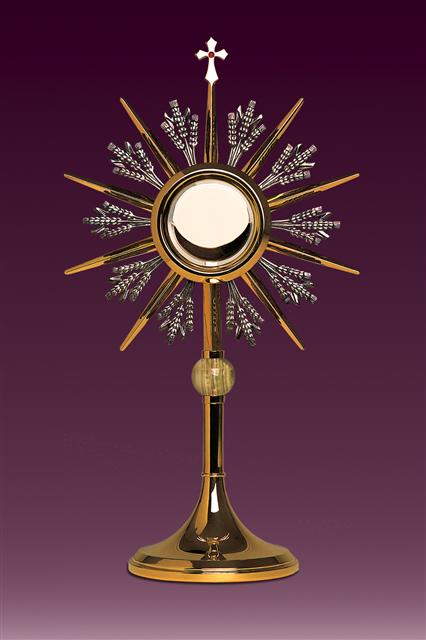
When I arrived at the Oratory, Quarant’ Ore was taking place. This is the Catholic practice where there is forty hours continuous worship to the Blessed Sacrament. The alter this week was ablaze with candles and looked utterly beautiful. It was St Patrick’s Day and the reading from The First Letter to St Peter was apt.

Each one of you has received a special grace, so, like good stewards responsible for all these different graces God put yourselves at the service of others. If you are a speaker, speak words which seem to come from God; if you are a helper, help as though every action was done at God’s order. (4: 7-11)

Oh dear, how horribly I have fallen down on this. Unfortunately it is all too easy to sit in front of the blaze of candles and simply think!

The Pool at Bethesda

The reading from John 5: 1-3 5-16 is about the miracle of the invalid man at the pool at Bethesda. The spot alongside the pool was populated with the paralysed, blind, and unwell who would enter the pool in an attempt to get better. For thirty-eight years the invalid man had lain alongside the pool, but had never succeeded in getting in when the waters had been stirred, despite the fact that he believed that entering might cure him.

I thought a lot on this, how we wait for “the waters to be disturbed” for belief to come. It may indeed take a lifetime and we never have the time or the courage or the opportunity to jump in.

Wonders of the Solar System

The BBC are currently running a wonderful series about the solar system, aptly titled Wonders of the Solar System. These are the type of programmes which I think the BBC do very well. In the series there was a piece about one of Saturn’s amazing moons, Enceladus, and its extraordinary geysers which shower out ice particles into its atmosphere, thus helping to create one of the rings which makes Saturn instantly recognisable.

When I survey this extraordinary universe, I know that I should marvel at God’s creation. Instead I doubt how one intelligence could ever have created all this. I should have the faith of the court official whose son was close to death in the reading from John 4: 43-54:

‘Go home’, said Jesus ‘and your son will live’. The man believed what Jesus had said.

Belief is so easy to describe, yet so difficult to implement.

Not Seven, But Seventy-Seven

I was at Mass and we were read the demanding passage from Matthew 18: 21-35:

Peter went up to Jesus and said, ‘Lord, how often must I forgive my brother if he wrongs me? As often as seven times?’ Jesus answered ‘Not seven, I tell you, but seventy-seven times.’

I doubt if I can easily achieve this once, let alone seventy-seven times!

The following day I was at Mass in the Chapel of St Mary Undercroft. The Chapel is situated in the Palace of Westminster, just off and below Westminster Hall and whilst the House is sitting, Catholic Mass is celebrated there once a week. Suddenly I was stuck with a positively horrible thought that I had a rather large bill to pay.

Fortunately at that moment however, Canon Pat Browne was reading the Psalm in his strong and beautiful tone.

Be with me Lord when I am in trouble.
Be with me when I pray. (Psalm 91)

Remembering Desmond Plummer

I went to the Memorial Service of Desmond Plummer, Lord Plummer of St Marylebone. It was held at St Margret’s Church, Westminster which unfailingly does Memorial Services very well.

Desmond was my first ever boss; fresh out of Durham University thirty-five years ago I was his political assistant. He had just completed six years as leader of the Greater London Council. A man who got things done in a big way, under his tenure the GLC initiated sales of council houses at discounted rates and invested heavily in the Capital’s transport, in the process demonstrating what could be achieved by local government if given the backing of central government. He was also thoroughly kind to me in a thousand separate ways, given my inexperience.

At the service one of the readings was taken from the beautiful General Prologue of Geoffrey Chaucer – The Canterbury Tales:

There was a Knight, a most distinguished man,
Who from the day on which he first began,
To ride abroad had followed chivalry,
Truth, honour, generousness and courtesy …
And though so much distinguished, he was wise,
And in his bearing modest as a maid,
He never yet a boorish thing had said
In all his life to any, come what might:
He was a true, a perfect gentle-knight.

It stuck me that the verse could have been written specifically about Desmond and perhaps appropriately he was, along with his various other titles, a Knight of the Order of St John.

An Old Countryman

I was out walking in the Lincolnshire hills and started talking to an old countryman about where one was and wasn’t allowed to walk. He told me that there was an ancient law that whenever one was in the countryside, when the church bells rang out one could make a direct line to the nearest church. It is interesting to observe that so many of our “rights” are rooted in our Christian teachings.

He then told me another interesting anecdote. When he was young he had spoken to an old shepherd. The shepherd had told him that when he himself was young there were 16 men working on the five-hundred-acre farm which he worked. Now he was the only one. In those days all the shepherds were required to go to church on Sunday by their boss. I made no comment on whether that was a good or a bad thing! It’s just fascinating how these two social customs have changed and how within living memory the countryside was such a different place, with its religious obligations thoroughly embedded. Now the countryside has become nothing more than a dormitory for the cities.

Early, For Once

The Archbishop of Canterbury the day before on television had, in his powerful and soothing tone, stressed the value of prayer.

Today, for once, I arrived early for Mass. I had nothing to read, nothing in particular to do and not much apparently to think on. So, perhaps inspired by the Archbishop, but admittedly somewhat reluctantly, I went to the Blessed Sacrament chapel and looked at the crucifix and simply prayed. I tried to concentrate uniquely on the crucifix. The solid gold figure seemed to grow in significance and presence. This powerful feeling brought the Archbishop’s words into my reality. Then disappointingly the moment passed and it was time for Mass.

Questioning Faith

Recently there was a programme on television about the history of the Reformation. As we know, Luther’s principal contribution was to argue justification by faith. He argued that the giving of indulgences, which was common practice by those hoping to get to Heaven during his time, was useless because we do not achieve salvation by good works, but by faith.

Where does that leave those of us of questioning faith? Often when I look at the night sky I am filled by doubts that no single intelligence could have created a universe of such magnitude. But Luther may have a point. Anyone can do good in their lives. An atheist can be as “good” a person as a fervent believer. By doing good does he get to Heaven quicker than the believer who has done less good? Can we get to Heaven without believing? I do not know. I just know that we just have to go on working on our belief.

Committee Dreams

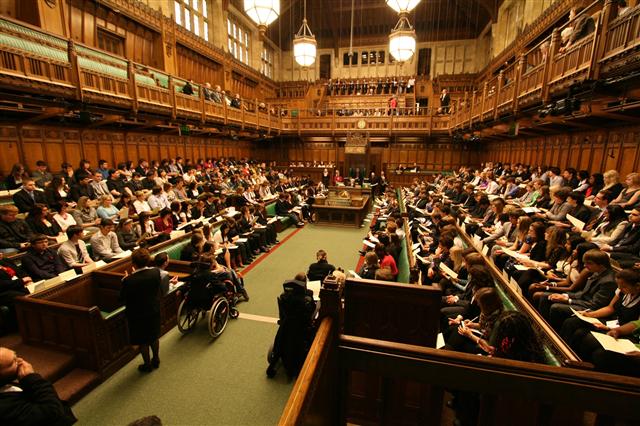
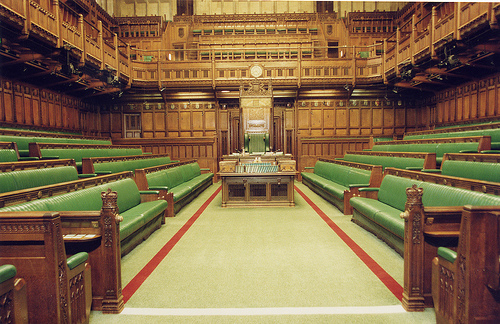
I had a dream that I was attending a hearing of the House of Commons Committee of which I am Chairman, the PAC. It was all a bit of a disaster. First I started fighting with one of the other committee members, literally grappling on the floor, for fun!

Then I asked a Catholic priest to say prayers before the hearing began. (Prayers are said immediately before the daily debates in the Commons Chamber, though not prior to committee hearings.) However, he did it in a ludicrously over the top manner, in Latin, with the full works and dress! This inevitably led some of the more atheistic members of the Committee to start grumbling.

I then looked down to my desk and realised I had left my briefing notes in my office. My mind went blank and I had not the slightest idea what to ask the distinguished witnesses who sat patiently before me. There was an awkward silence, but fortunately I then woke up!

All this begs the question; does this dream reveal a deep insecurity? Or is it simply the result of my different thought processes becoming intertwined?